

Sean Lauber: Is Non-Invasive PGT-A as Effective as Embryo Biopsy?
Sean Lauber, Founder of Remembryo, shared on LinkedIn:
“PGT-A is used during IVF to screen embryos for chromosomal abnormalities. Traditionally, this involves removing a few cells from the embryo for genetic testing. However, researchers are developing a non-invasive alternative (niPGT-A) that analyzes DNA released by embryos into the culture media they’re grown in, avoiding the need for a biopsy.
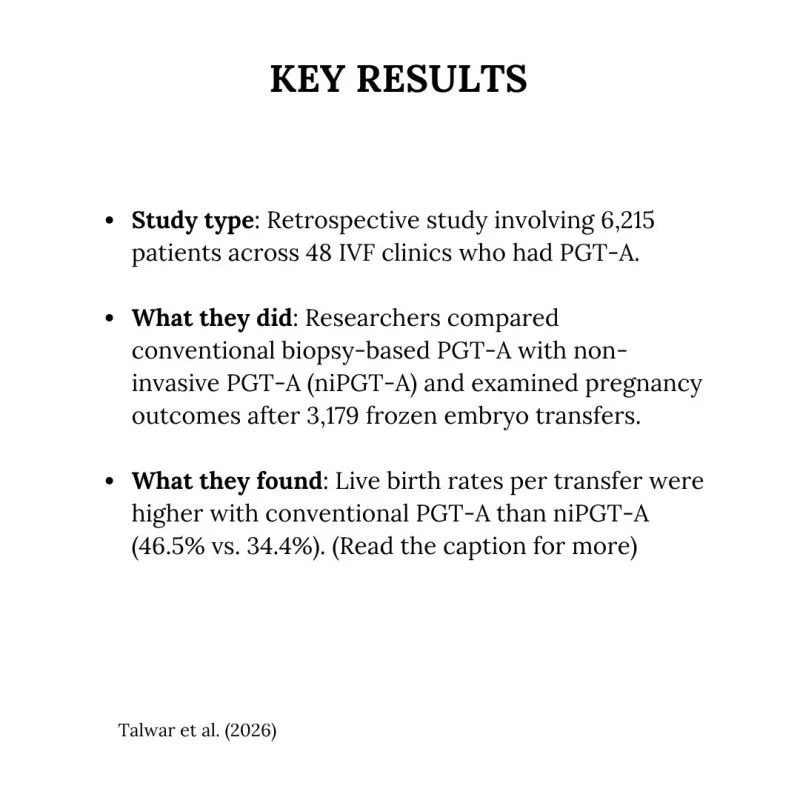
In a new retrospective study, Talwar et al. (2026) compared conventional PGT-A with niPGT-A in 6,215 patients across 48 IVF clinics in India.
Among 2,517 frozen transfers of embryos classified as euploid, live birth rates were higher with conventional PGT-A than with niPGT-A (46.5% vs. 34.4%). Clinical and ongoing pregnancy rates were also higher with conventional PGT-A.
One possible explanation is that niPGT-A may be less reliable at identifying chromosome abnormalities. DNA collected from embryo culture medium can be affected by contamination, technical problems, or DNA released from abnormal cells that may not represent the embryo as a whole.
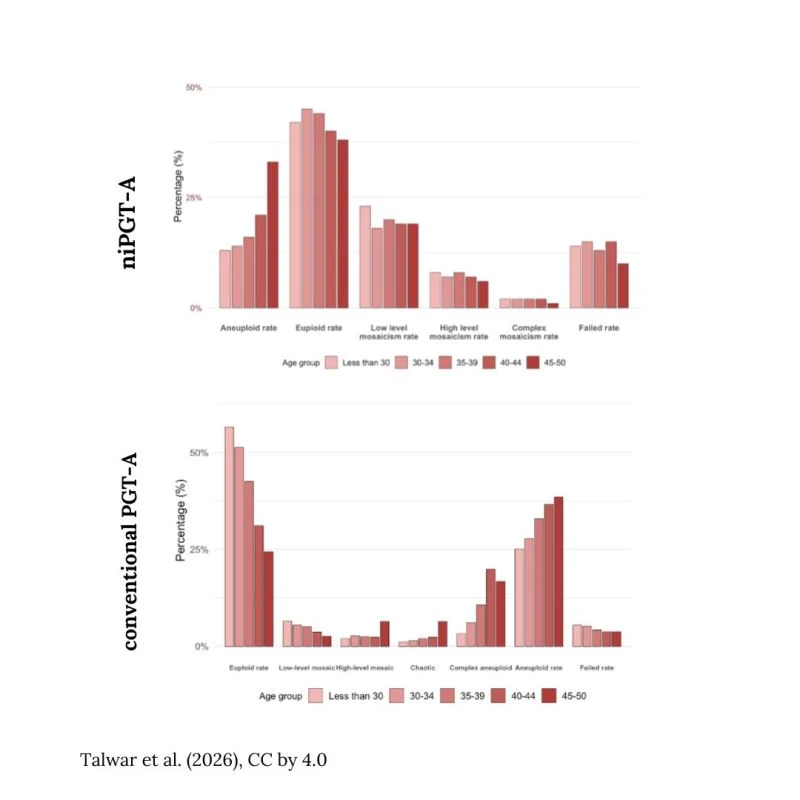
The two testing methods also showed different patterns in how embryos were classified as women got older. With conventional PGT-A, euploid rates declined substantially with age (56.5% to 24.4%), while they changed much less with niPGT-A (42% to 38%). The reason for these differences isn’t clear.
Overall, the results raise questions about whether niPGT-A is as effective as conventional PGT-A for embryo selection. However, this was a retrospective study, and the researchers didn’t directly compare the accuracy of the two methods. Better quality studies are needed to see if the testing method itself explains the differences.
This post is a quick look at one study, rather than a full breakdown on Remembryo.
Like this post? Get a free weekly summary of the latest IVF research.”
Title: Comparative clinical and reproductive outcomes following non-invasive versus biopsy-based preimplantation genetic testing for aneuploidy: a multicentric cohort study
Authors: Divreena Talwar, Naval Shah, Marcos Meseguer, Ritesh Aggarwal, Kshitiz Murdia, Nitiz Murdia, Bhagwat Singh, Sourav Rathore, Vipin Chandra
You can read the Full Article in Scientific Reports.
Other articles featuring Sean Lauber on Fertility News.
-
Oct 19, 2026, 17:08Shweta Mendiratta: A Baby Boy Was Born From an Embryo that Had Been Frozen for More Than 31 Years
-
Oct 19, 2026, 17:06Partha Sarathi Das: Fertility Begins Before Birth – The Role of Developmental Biology, Genetics, and Epigenetics
-
Oct 19, 2026, 17:04Khalil Faaed: What Morphological Abnormalities Reveal About Oocyte Competence in IVF
-
Oct 19, 2026, 17:01Daniel Plaksin: HLA-G Glycosylation Emerges as a Potential Mechanism in RPL
-
Oct 19, 2026, 16:59Justin Houman: 4 Checks Before Anyone Starts Testosterone
-
Oct 19, 2026, 16:57Sonia Khourta: Proud to Be Part of the ART Fertility Family
-
Oct 19, 2026, 16:55ACOG Is Moving the Needle on Menopause
-
Oct 19, 2026, 16:53Gila Zarbiv: Why Isn’t Continuity of Midwife Care Happening Everywhere?
-
Oct 19, 2026, 16:50Laura Eyeh Anwah: Why Pregnant Women Should Attend 8 Antenatal Visits Instead of 4