
The Sperm Centrosome After Fertilization: What Embryologists Need to Know in 2026
“The sperm centrosome contributes to microtubule organisation, pronuclear movement and early human embryonic development. For clinical embryologists, it highlights an important limitation of conventional semen analysis: sperm concentration, motility and morphology do not directly assess every sperm function required after fertilization.
Research has established the centrosome’s biological importance, but evidence supporting routine clinical testing remains limited. Understanding this distinction is relevant when investigating unexplained fertilization failure or abnormal early cleavage. The challenge is to translate biological knowledge into responsible clinical practice without treating an unvalidated marker as an established diagnosis.
What Does the Sperm Centrosome Contribute to Fertilization?
Human sperm delivers specialised centriolar structures that interact with oocyte-derived proteins and pericentriolar material. Together, these components organise microtubules and support sperm-aster formation, pronuclear positioning and early cell-cycle events.
The sperm basal body contains specialised centriolar structures and associated proteins. Centrosome-associated proteins, including centrin, γ-tubulin and pericentrin, participate in centrosomal organisation and microtubule regulation, although their localisation and specific functions differ.
Simerly and colleagues provided foundational evidence for paternal centrosomal inheritance during human fertilization. Subsequent structural investigations have demonstrated that the human sperm basal body is more complex than previously understood.
Centrosomal organisation contributes to the first mitotic spindle. Nevertheless, early human embryonic spindle formation involves dynamic paternal–maternal interactions and cannot be explained exclusively by sperm centrosomal function.
What Does Research Through 2026 Demonstrate?
Terada and colleagues investigated centrosomal function by injecting human sperm into rabbit oocytes. Three hours after injection, sperm-aster formation was reported at 35.0 ± 1.5% in fertile donors and 25.4 ± 14.8% in infertile patients (P < 0.05).
Among infertile patients, sperm-aster formation was associated with cleavage rates following human IVF, despite showing no correlation with conventional semen parameters.
These findings suggest that centrosomal activity may reflect sperm functions not captured by routine semen analysis. However, heterologous ICSI remains an experimental model, not a validated clinical diagnostic assay.
Amargant and colleagues subsequently characterised the human sperm basal body through microscopy and proteomic investigations. Their findings supported the developmental relevance of centrosomal components, although their experimental model involving sperm basal bodies and parthenogenetically activated human oocytes did not reproduce normal fertilization.
The 2026 systematic review by Parrella and colleagues evaluated 83 publications published between 1986 and 2026, addressing centrosomal organisation, protein composition and reproductive outcomes.
Importantly, the review did not undertake formal risk-of-bias or certainty-of-evidence assessments. Therefore, its synthesis strengthens understanding of the research landscape but does not establish the predictive accuracy or clinical effectiveness of centrosome testing.
Why Are Oocyte Factors Also Important?
Sperm-centrosome activity after fertilization depends on the oocyte’s cytoplasmic environment.
Oocyte-derived components participate in microtubule organisation, calcium signalling, cell-cycle regulation and early embryonic development. Consequently, abnormal pronuclear movement or early cleavage cannot automatically be attributed to paternal centrosomal dysfunction.
Oocyte competence may influence centrosome-related developmental events, but clinical evidence is insufficient to conclude that improved oocyte quality reliably compensates for structurally defective sperm centrioles.
A comprehensive evaluation must therefore consider both gametes and the laboratory environment rather than treating early developmental failure as an exclusively sperm-related problem.
How Should IVF Laboratories Approach Fertilization Failure?
The updated 2026 ESHRE recommendations emphasise validated laboratory procedures, appropriate gamete handling, quality assurance and systematic fertilization assessment.
Following unexpected total fertilization failure or recurrent very low fertilization after ICSI, laboratories should review oocyte maturity, sperm viability and selection, injection technique, fertilization observations and relevant laboratory conditions.
Such investigations may identify procedural or gamete-related explanations, but they cannot establish a centrosomal diagnosis without specific supporting evidence.
Is Artificial Oocyte Activation a Solution?
Artificial oocyte activation (AOA), commonly involving calcium ionophores, is recommended by the 2023 ESHRE add-ons guidance for selected circumstances, including complete activation failure (0% two-pronuclear fertilization), very low fertilization (below 30%) or globozoospermia.
However, AOA targets oocyte-activation pathways rather than repairing sperm centrosomal structures. Its use should not be presented as a centrosome-specific treatment.
Routine AOA during ICSI is not recommended. Clinical decisions should consider the indication, available safety evidence, laboratory protocols and informed patient counselling.
Can Advanced Sperm Selection Improve Centrosomal Function?
Physiological ICSI (PICSI), intracytoplasmic morphologically selected sperm injection (IMSI) and microfluidic sperm-selection techniques have been investigated for various laboratory objectives.
However, these approaches do not directly establish centrosomal integrity. Evidence that they specifically prevent or correct centrosomal dysfunction is lacking.
Their use should be evaluated against appropriate clinical indications and patient-relevant outcomes rather than assumed benefits for sperm-centrosome function.
What Should Embryologists Prioritise in Daily Practice?
For IVF laboratories, the most defensible approach is to apply established quality-assurance principles while recognising the limitations of centrosomal assessment.
Priorities include appropriate sperm preparation, assessment of oocyte maturity, consistent ICSI technique, accurate fertilization scoring, documented laboratory observations and validated environmental controls.
Temperature, pH and gas conditions should be maintained within laboratory-validated ranges appropriate for the culture system. Carbon dioxide settings must be compatible with the medium and laboratory procedures rather than treated as universally fixed.
Unexpected outcomes should prompt structured laboratory review and appropriate clinical discussion rather than immediate attribution to an unconfirmed centrosomal abnormality.
What Evidence Is Needed Before Centrosome Testing Becomes Routine?
Translation into clinical practice requires standardised assays, reproducible measurements, reference ranges and prospective validation in human IVF populations.
Research must establish whether centrosomal measurements add predictive information beyond existing sperm, oocyte and clinical parameters.
Crucially, studies should evaluate whether testing changes treatment decisions and improves patient-relevant outcomes, particularly ongoing pregnancy and live birth.
Until such evidence is available, centrosomal assessment remains primarily a research approach rather than a validated standalone diagnostic tool.
What Is the Take-Home Message for Embryologists?
The sperm centrosome is biologically important for human fertilization and early embryonic development, but its clinical diagnostic and therapeutic applications remain insufficiently validated.
The strongest current approach combines understanding of paternal–maternal interactions, systematic evaluation of fertilization failure and adherence to evidence-informed IVF laboratory recommendations.
Biological importance does not automatically establish diagnostic accuracy, treatment effectiveness or improved live-birth outcomes.
For embryologists in 2026, the priority is to recognise the sperm centrosome’s potential relevance while maintaining rigorous, patient-centred clinical practice.”
Written by Saadat Hassan
Senior Clinical Embryologist/IVF and Embryology
BSc (Hons) Medical Laboratory Technology
King Edward Medical University, Lahore, Pakistan
References
Title: The paternal inheritance of the centrosome, the cell’s microtubule-organizing center, in humans, and the implications for infertility
Authors: Calvin Simerly, Gwo-Jang Wu, Sara Zoran, Teri Ord, Richard Rawlins, Jeffrey Jones, Christopher Navara, Marybeth Gerrity, John Rinehart, Zvi Binor, Ricardo Asch, Gerald Schatten
You can read the Full Article in Nature Medicine.
Title: Centrosomal function assessment in human sperm using heterologous ICSI with rabbit eggs: A new male factor infertility assay
Authors: Yukihiro Terada, Sou-ichi Nakamura, Calvin Simerly, Laura Hewitson, Takashi Murakami, Nobuo Yaegashi, Kunihiro Okamura, Gerald Schatten
You can read the Full Article in Molecular Reproduction and Development.
Title: The human sperm basal body is a complex centrosome important for embryo preimplantation development
Authors: Farners Amargant, Aïda Pujol, Anna Ferrer-Vaquer, Mercè Durban, Meritxell Martínez, Rita Vassena, Isabelle Vernos
You can read the Full Article in Molecular Human Reproduction.
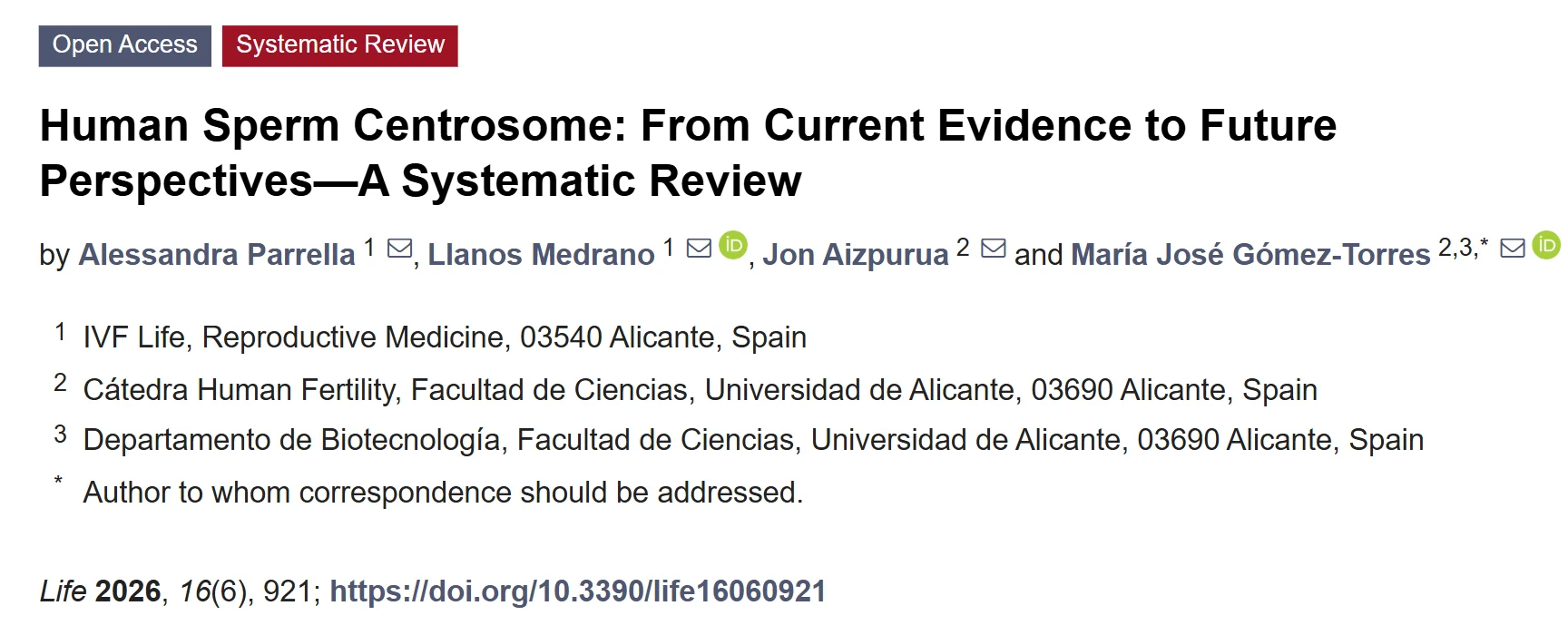
Title: Human Sperm Centrosome: From Current Evidence to Future Perspectives-A Systematic Review
Authors: Alessandra Parrella, Llanos Medrano, Jon Aizpurua, and María José Gómez-Torres
You can read the Full Article in Life.
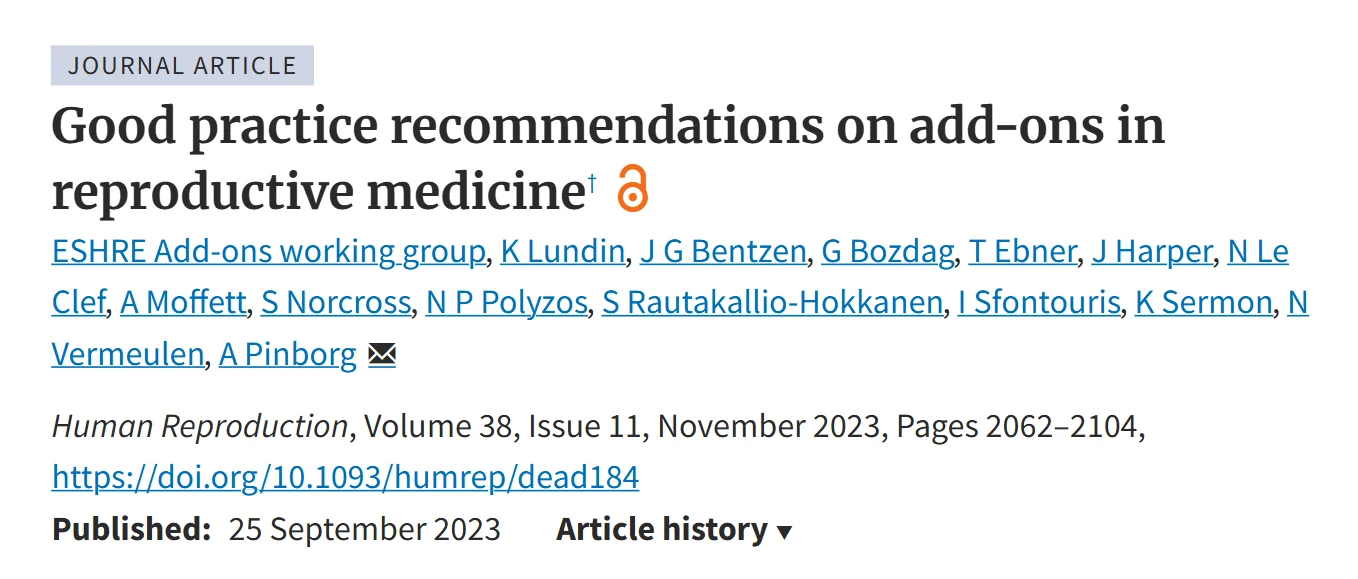
Title: Good practice recommendations on add-ons in reproductive medicine
Authors: ESHRE Add-ons working group, K Lundin, J G Bentzen, G Bozdag, T Ebner, J Harper, N Le Clef, A Moffett, S Norcross, N P Polyzos, S Rautakallio-Hokkanen, I Sfontouris, K Sermon, N Vermeulen, A Pinborg
You can read the Full Article in Human Reproduction.
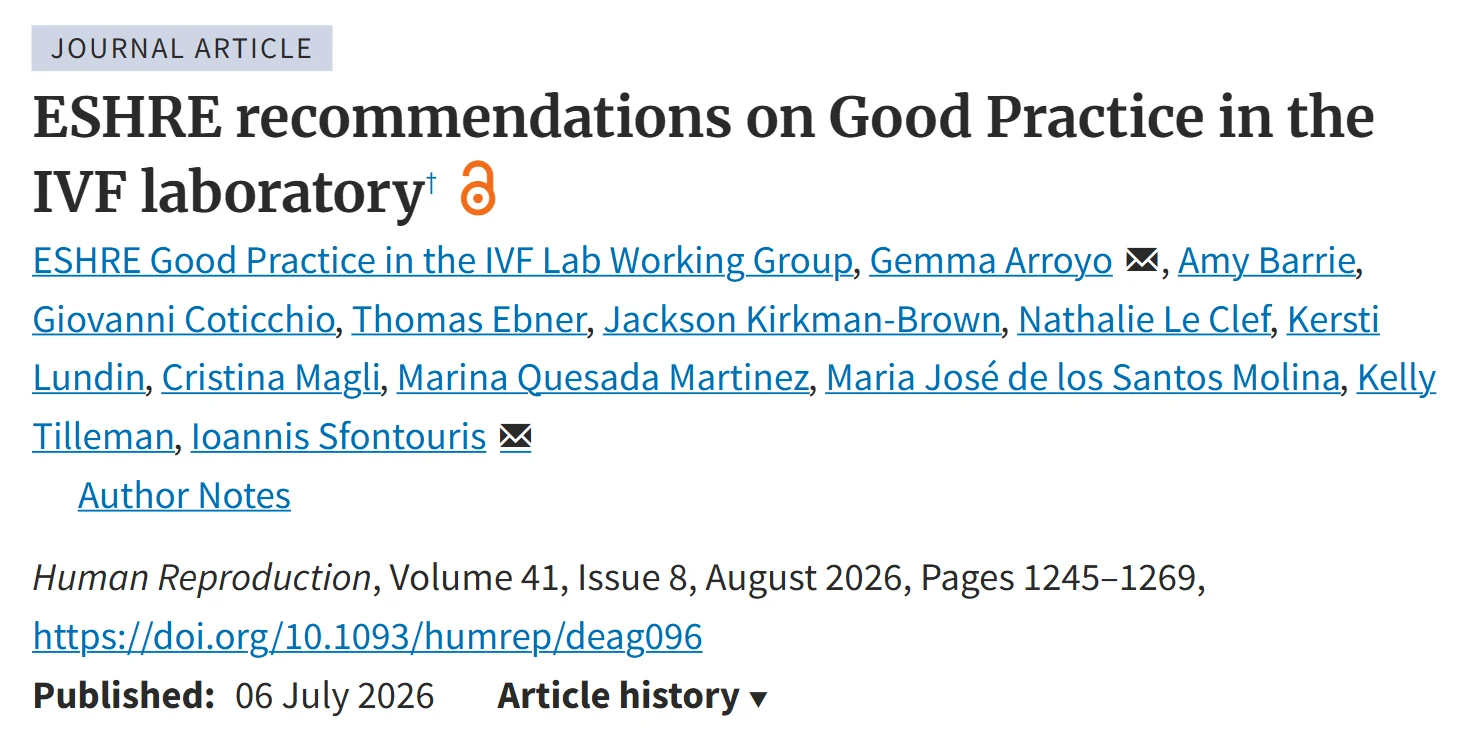
Title: ESHRE recommendations on Good Practice in the IVF laboratory
Authors: ESHRE Good Practice in the IVF Lab Working Group, Gemma Arroyo, Amy Barrie, Giovanni Coticchio, Thomas Ebner, Jackson Kirkman-Brown, Nathalie Le Clef, Kersti Lundin, Cristina Magli, Marina Quesada Martinez, Maria José de los Santos Molina, Kelly Tilleman, Ioannis Sfontouris
You can read the Full Article in Human Reproduction.
Other articles featuring Saadat Hassan on Fertility News.
-
Oct 18, 2026, 18:01Ting Yuan: Attending a Locally Organised Reproductive Medicine Conference in Malaysia with My Team
-
Oct 18, 2026, 17:55Khalil Faaed: Ovarian Rejuvenation with PRP
-
Oct 18, 2026, 17:49UCLA Law Center on Reproductive Health, Law, and Policy Hosts Panel on Menopause and Women’s Health Equity
-
Oct 18, 2026, 17:41Arora Suhani Gagan: Everyone Was Discussing Her Pregnancy, but Nobody Asked What She Wanted
-
Oct 18, 2026, 17:07Robert Borowczyk: Fertility Questions Need Different Answers
-
Oct 18, 2026, 17:05Farah Yasin: Another Successful ART Fertility Clinics Conference in Abu Dhabi
-
Oct 18, 2026, 17:01Hilary Friedlander: Excited to Offer NeedleFree IVF at Atlantic Fertility
-
Oct 18, 2026, 16:59Rabih Chaoui: New Edition of “First Trimester Ultrasound Diagnosis of Fetal Abnormalities”
-
Oct 18, 2026, 16:56Arsiak Vartenian: My Daughter Was Born Through Surrogacy, and That Is a Story Worth Telling