

Tanya Williams: Watching Embryos Implant Could Change IVF
Tanya Williams, Reproductive Endocrinologist at Dr Create Fertility Centre North York, shared a post on LinkedIn:
“One of the biggest mysteries in reproductive medicine just became a little clearer.
We know that up to 60% of miscarriages or failed IVF cycles occur because embryos cannot successfully implant in the uterus. Until now, we could only guess why, largely because this crucial process happens deep inside the body, out of view.
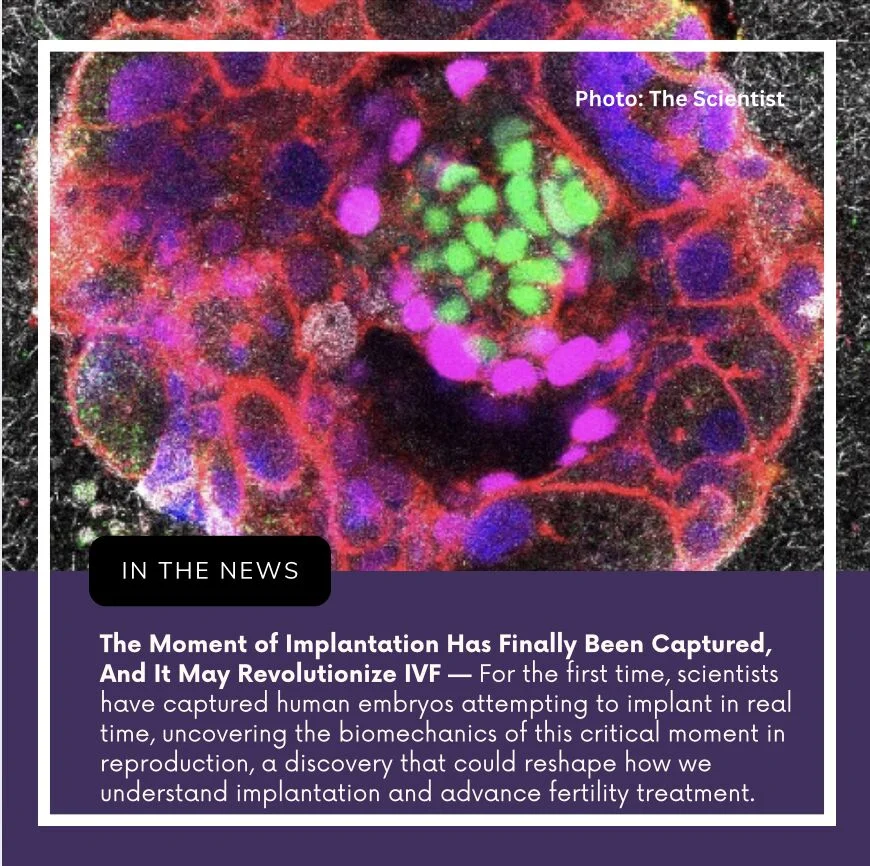
But for the first time, scientists have filmed human embryos attempting to implant using artificial uterine tissue. By recreating a collagen-rich uterine lining and capturing images every 20 minutes for 24 hours, they revealed how embryos actually burrow into the uterine wall, release enzymes to break down tissue, and connect with maternal blood vessels to begin implantation.
The surprising discovery?
The more force an embryo exerts against the uterine lining, the greater its chance of successful implantation. Even more fascinating, embryos seem to respond to disturbances in the tissue, almost as though they are following signals or cues to guide them toward nutrients.
Why does this matter? For patients, this research could reshape how we approach fertility treatments. It could help us better understand why some embryos implant while others do not, guide new techniques to support implantation, and potentially reduce the heartbreak of repeated IVF failure and miscarriage.
For me, this breakthrough raises important questions:
- Could embryo selection in IVF one day include assessing implantation ‘force’ or response?
- Might we discover new ways to prepare or support the uterine lining to improve outcomes?
- How can this science translate into compassionate care for patients who have endured the pain of loss?
We have just witnessed one of the most fundamental processes in human biology for the very first time, and it could change how we care for patients in the years to come.
I would love to hear your thoughts: how do you see this shaping the future of fertility treatment?
Resource.”
-
Mar 21, 2026, 19:55Rebecca Mallick: Fertility Must Become Standard in Endometriosis Care
-
Mar 21, 2026, 19:48Kendra Batchelder: The Momentum Behind Women’s Health Innovation
-
Mar 21, 2026, 19:44COVID-19 Vaccination During Pregnancy in 2026 – Weence Health Content Services
-
Mar 21, 2026, 19:37Endometriosis and the Endocannabinoid System – ANTG
-
Mar 21, 2026, 19:35Corina Carpenter: A Guide to Clinical Trial Compensation in San Antonio
-
Mar 21, 2026, 19:31The Signals Behind PCOS – PCOS Awareness Association
-
Mar 21, 2026, 19:26Paternal Impact on Embryo Morphokinetics and ART Success – RBMO
-
Mar 21, 2026, 19:19Christopher Robinson: Maternal Fetal Pharmacokinetics of Azithromycin in Preterm Premature Rupture of Membranes
-
Mar 21, 2026, 19:13Lori Brumat: Why Women’s Health Should Matter to Everyone Right Now