
Personalised Diagnosis Could Transform Care for Rare Pregnancy Tumours – Wellbeing of Women
Wellbeing of Women shared a post on LinkedIn:
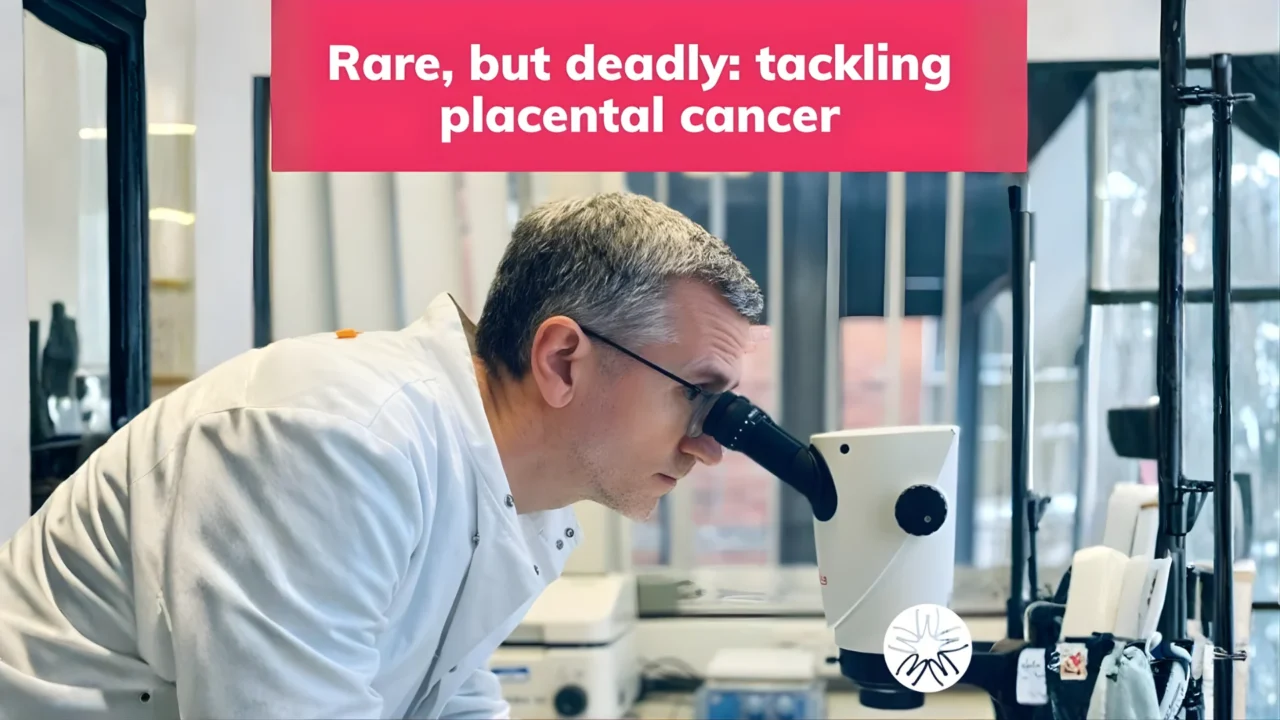
“The placenta is a temporary organ that helps the baby develop during a pregnancy. Some cells from the placenta remain in the patient’s womb following a pregnancy – usually this isn’t a problem, but in rare cases these cells can become cancerous.
Most of these cancers (which together are known as gestational trophoblastic neoplasia, or GTN for short) are curable. However, two rare types that represent just 5% of GTN cases account for almost all deaths.
At the moment, the only way to determine the survival of someone diagnosed with one of these rare GTNs is to genetically test the tumour and then test samples from each pregnancy. Funded by Wellbeing of Women, Dr Geoffrey Maher and collaborators at imperial college are researching how to personalise this testing to better support the individual needs of affected women – if successful, this research could mean that up to 85% of affected women are spared unnecessary surgeries, fertility loss and distress.
Read more about the research.”
Stay updated on all scientific advances in the field of fertility with Fertility News.
-
Sep 13, 2026, 15:11Sachintha Alwis: From Impaired Sperm Motility to Microrobotics
-
Sep 13, 2026, 15:08Laurence Orbuch: Before Endometriosis Surgery, Ask…
-
Sep 13, 2026, 15:05Ademola Ayodele: IUI, IVF or Egg Freezing – Which One Is Right for You?
-
Sep 13, 2026, 14:59Fiona Pathiraja-Møller: Tennis Players No Longer Have to Choose Between Career and Family
-
Sep 13, 2026, 14:571-Day Virtual Experience for People Impacted by PMOS – PCOS Awareness Association
-
Sep 13, 2026, 14:53Ozor Victor: Behind Every Embryo Is a Story of Science, Precision, and Hope
-
Sep 13, 2026, 14:50Diana Kayal: What They Don’t Tell You About IVF
-
Sep 13, 2026, 14:44Vikram Sinai Talaulikar: A Heartfelt Thank You to All Who Donated and Supported “Menopause and Cancer”
-
Sep 13, 2026, 14:41Nicole McPherson: Changing IVF Practices Is Hard – Integration Needs to Be Easy