

William Wallace: How Your Gut Microbes Help Set Your Body’s Internal Clock
William Wallace, Director of Product Development and Scientific Affairs at ProHealth Longevity, shared a post on LinkedIn about a paper by Jhommara Bautista et al. published in Frontiers in Psychiatry:
“How your gut microbes help set your body’s internal clock
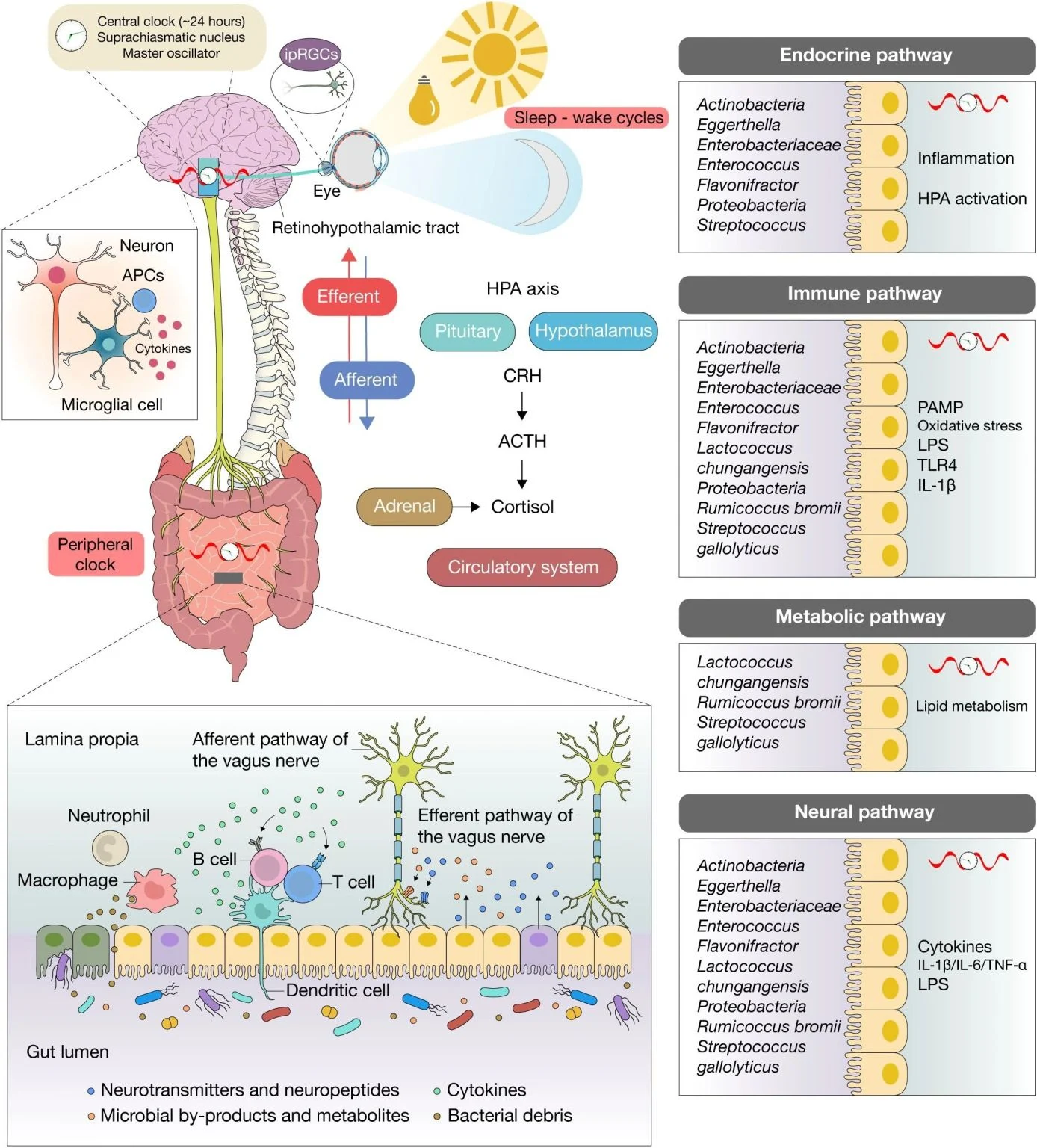
This figure shows how the gut and brain communicate through neural, immune, endocrine, and metabolic pathways that are influenced by the body’s internal clock. The microbiome, hormones, and light–dark cycles interact to coordinate sleep, metabolism, stress responses, and inflammation across the gut–brain axis.
Central and peripheral clocks
The brain’s master clock in the suprachiasmatic nucleus (SCN) aligns daily rhythms with environmental light through the retinohypothalamic tract. Peripheral clocks, including those in the gut, follow signals from the SCN but also respond to feeding times and microbial metabolites.
Example: Disrupted light exposure or irregular eating can desynchronize the gut’s circadian rhythm, altering microbial composition and metabolic regulation.
Endocrine pathway
The hypothalamic–pituitary–adrenal (HPA) axis links stress and circadian timing through hormone signaling. Gut microbes influence HPA activation by releasing metabolites and cytokines that affect cortisol release.
Example: Certain bacteria such as Actinobacteria and Streptococcus modulate HPA activity, contributing to changes in inflammation and stress hormone output.
Immune pathway
Microbial components interact with immune cells in the intestinal mucosa, producing cytokines that reach the brain through circulation or vagal signaling.
Example: Lipopolysaccharides (LPS) and pattern-associated molecules from gut bacteria trigger IL-1β and TNF-α release, linking dysbiosis to neuroinflammation and altered sleep quality.
Metabolic pathway
Microbes regulate lipid and glucose metabolism through production of short-chain fatty acids and other metabolites that follow circadian patterns.
Example: Species like Lactococcus chungangensis and Ruminococcus bromii affect lipid metabolism, aligning energy use with the body’s day–night cycle.
Neural pathway
The vagus nerve transmits microbial and immune signals bidirectionally between gut and brain. Neurotransmitters and microbial by-products influence mood, stress, and cognition through this circuit.
Example: Cytokines and bacterial metabolites act on vagal afferents, shaping neural activity in regions that regulate alertness and emotional balance.
Together, these pathways demonstrate how the microbiome acts as a peripheral clock that integrates environmental cues, diet, and stress signals with the brain’s circadian system. When alignment breaks down, it contributes to insomnia, metabolic dysfunction, and inflammation across multiple organ systems.”
Title: The gut–brain–circadian axis in anxiety and depression: a critical review
Authors: Jhommara Bautista, Camila Hidalgo-Tinoco, Miranda Di Capua Delgado, Juliana Viteri-Recalde, Antonio Guerra-Guerrero, Andrés López-Cortés
Read the full article.
Stay updated on all scientific advances in the field of fertility with Fertility News.
-
Mar 21, 2026, 19:55Rebecca Mallick: Fertility Must Become Standard in Endometriosis Care
-
Mar 21, 2026, 19:48Kendra Batchelder: The Momentum Behind Women’s Health Innovation
-
Mar 21, 2026, 19:44COVID-19 Vaccination During Pregnancy in 2026 – Weence Health Content Services
-
Mar 21, 2026, 19:37Endometriosis and the Endocannabinoid System – ANTG
-
Mar 21, 2026, 19:35Corina Carpenter: A Guide to Clinical Trial Compensation in San Antonio
-
Mar 21, 2026, 19:31The Signals Behind PCOS – PCOS Awareness Association
-
Mar 21, 2026, 19:26Paternal Impact on Embryo Morphokinetics and ART Success – RBMO
-
Mar 21, 2026, 19:19Christopher Robinson: Maternal Fetal Pharmacokinetics of Azithromycin in Preterm Premature Rupture of Membranes
-
Mar 21, 2026, 19:13Lori Brumat: Why Women’s Health Should Matter to Everyone Right Now