
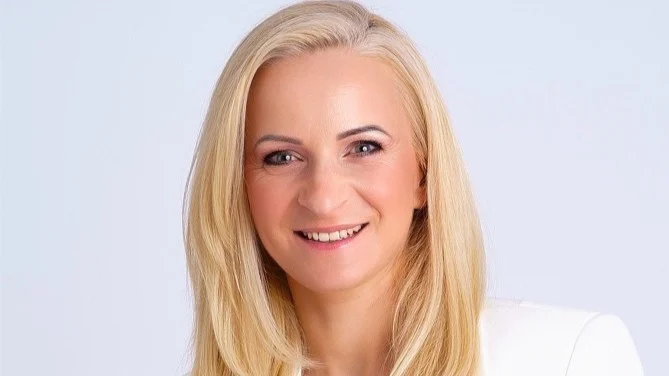
Magdalena Depa-Martynow: Dogmas, Dilemmas, and Psychological Safety in IVF
Magdalena Depa-Martynow, Director, Global Clinical Science and Education at Nexpring Health, shared a post on LinkedIn:
“Dogmas, Dilemmas, and Psychological Safety in IVF
Over the years, I’ve witnessed thousands of embryo transfer procedures across clinics around the world. Different countries. Different cultures. Different clinicians. Different embryologists.
Same procedure yet performed in strikingly different ways.
And every time I asked the simplest question:
‘Why do you do it this way?’ the room went quiet.
Then came the most common, confident answer:
‘Because we’ve always done it like that.’
Dogmas (also discussed at ALPHA Scientists In Reproductive Medicine in Dubrovnik). In IVF, dogmas feel safe. They give us the illusion of certainty in a field where outcomes are never guaranteed.
But the moment a dogma is questioned, a dilemma appears:
- Should we load the embryo transfer catheter with air pockets or without?
- Should the clinician withdraw the catheter slowly, or does speed not matter?
- If the catheter is removed quickly after embryo expulsion, does it impact outcomes?
These are not trivial questions.
They shape consistency, influence results, and ultimately determine success.
But here is the uncomfortable truth:
Dilemmas only surface in teams that feel safe enough to ask them.
A team that is curious, encouraged and ready to take responsability.
A team that challenges the status quo.
A team where an embryologist can say: ‘I’m not sure this is the best way – can we discuss it?’ knowing it won’t be taken offensively
This is where psychological safety becomes non‑negotiable.
The latest Fearless Report 2025 shows that when people believe decisions are driven by status rather than idea quality, psychological safety collapses.
When safety collapses, questioning stops.
And when questioning stops, dogmas rule the lab including those without clinical evidence behind them.
In an IVF environment, that silence is costly.
Low psychological safety means an embryologist may hesitate, for example, to ask a clinician why the catheter is withdrawn so quickly.
Not because they don’t know better but because they don’t feel safe to ask.
Dogmas thrive in silence.
Dilemmas thrive in curiosity.
Curiosity thrives in psychological safety.
If we want to elevate standards in IVF, we must build cultures where ideas outrank hierarchy, and where every embryologist junior or senior feels empowered to ask the question that could improve a procedure, prevent an error, protect an embryo, or spark clinical research that moves the field forward.
and You? How much do you think the culture in your IVF clinic shapes the way dogmas are treated?”
Stay updated on all scientific advances in the field of fertility with Fertility News.
-
Sep 13, 2026, 15:11Sachintha Alwis: From Impaired Sperm Motility to Microrobotics
-
Sep 13, 2026, 15:08Laurence Orbuch: Before Endometriosis Surgery, Ask…
-
Sep 13, 2026, 15:05Ademola Ayodele: IUI, IVF or Egg Freezing – Which One Is Right for You?
-
Sep 13, 2026, 14:59Fiona Pathiraja-Møller: Tennis Players No Longer Have to Choose Between Career and Family
-
Sep 13, 2026, 14:571-Day Virtual Experience for People Impacted by PMOS – PCOS Awareness Association
-
Sep 13, 2026, 14:53Ozor Victor: Behind Every Embryo Is a Story of Science, Precision, and Hope
-
Sep 13, 2026, 14:50Diana Kayal: What They Don’t Tell You About IVF
-
Sep 13, 2026, 14:44Vikram Sinai Talaulikar: A Heartfelt Thank You to All Who Donated and Supported “Menopause and Cancer”
-
Sep 13, 2026, 14:41Nicole McPherson: Changing IVF Practices Is Hard – Integration Needs to Be Easy