

Sharon Davidesko Highlights the Need to Normalize Vulval Anatomy Education
Sharon Davidesko, Complex Gynaecology and Endometriosis Fellow at King’s College Hospital NHS Foundation Trust, shared a post on LinkedIn:
“This week, Meta removed an educational diagram of a vulva for violating community standards. We cannot show people what normal looks like. And it is showing up in my clinic.
She was eleven. Her labia minora were completely normal and entirely within a spectrum she’d never been shown.
Just by being brought to a gynaecology clinic she may have been receiving a subtle message that maybe something is wrong with her.
I’m a gynaecology fellow, a mother of a ten-year-old girl, and a woman who grew up in the same culture I’m describing. I have absorbed things too. I am not observing this from the outside.
The messages start early. And they are remarkably hard to unlearn.
When someone tries to address that gap, as the The Eve Appeal did this week, sharing a clearly annotated illustration of vulval anatomy to help people recognise signs of cancer, it gets flagged as sexual content. Removed. When eventually reinstated, marked as material that “might upset people.”
An educational diagram about cancer detection, treated as obscenity.
This isn’t an isolated incident. A CensHERship white paper published this month found that 95% of women’s health organisations, charities and creators have experienced censorship or suppression when discussing women’s health online. Over half now self-censor as a result.
There is an open letter to Meta to stop censoring vital gynae health information. I’ve signed it. If you haven’t yet, the link is in the comments.
I see the endpoint of this sometimes in my adult practice. Women asking about labiaplasty (surgical reduction of the labia minora for those who’ve not encountered the term) for labia that are completely normal. The reasons are rarely about physical discomfort.
Girls who grew up googling, comparing, concluding. Women who have been carrying that conclusion ever since.
That eleven-year-old is at the beginning of that same journey.
Which is why, when I think about that consultation, I find myself less focused on what I said about the anatomy and more focused less tangible outcomes. Did she leave that room feeling more settled in her body, or less? Did the visit help, or did it plant something?
I hope the former. I’m not sure though.
As a doctor I was trained to reassure. As a mother I know that reassurance isn’t always the same as resolution. Sometimes the most important intervention isn’t what happens in the clinic room – it’s what gets said, or unsaid, in the car on the way home.
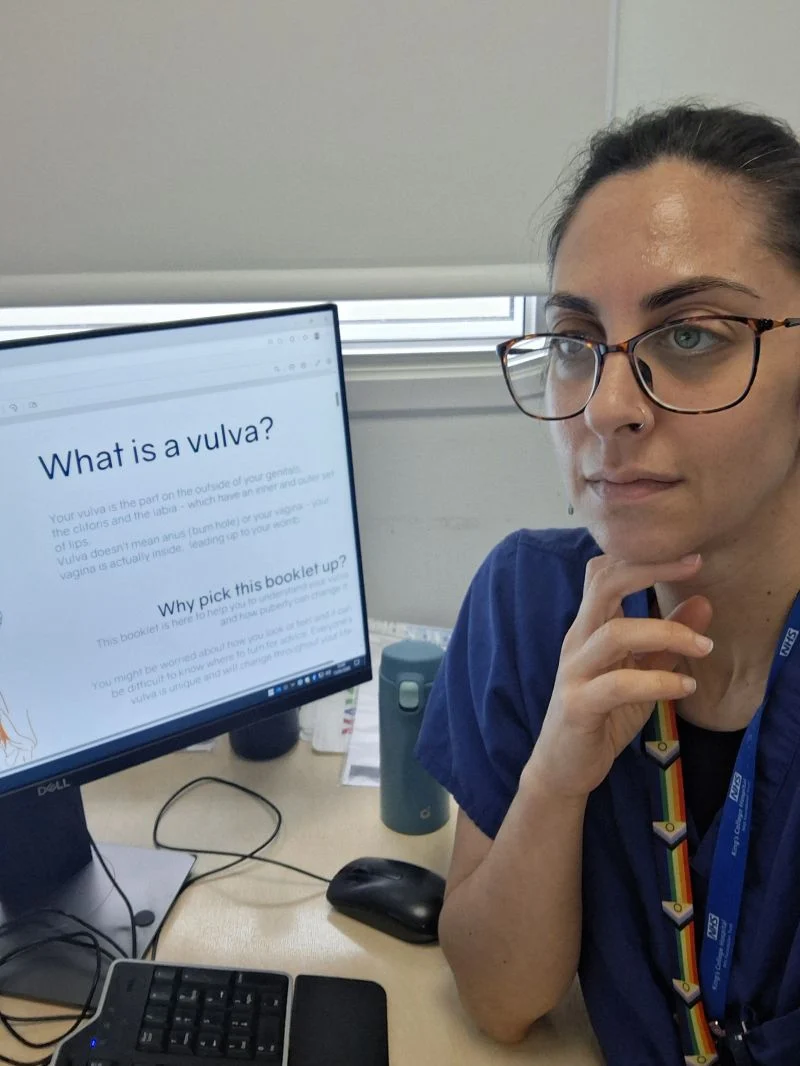
In the photo the excellent resource So What is a Vulva Anyway? published by British Society for Paediatrics and Adolescent Gynaecology (BritSPAG).”
Stay updated on all scientific advances in the field of fertility with Fertility News.
-
Jul 25, 2026, 10:56PMOS Can Affect Much More Than Periods or Fertility – PCOS Awareness Association
-
Jul 25, 2026, 10:42Asma Khalil: Recreational Drug Use During Pregnancy, What Every Expectant Mother Should Know!
-
Jul 25, 2026, 10:40Khalil Faaed: Are Complex Y Chromosome Rearrangements the Missing Link in Unexplained Male Infertility?
-
Jul 25, 2026, 10:38Sean Lauber: Does Transferring a Cleavage or Blastocyst Stage Embryo Affect the Chance of Having a Boy?
-
Jul 25, 2026, 10:33Rokaya Hachicho: The Hidden Cost of Excessive Laser Use During Trophectoderm Biopsy!
-
Jul 25, 2026, 10:31Join the ISUOG Webinar on Late-Evolving Fetal Anomalies – ISUOG
-
Jul 25, 2026, 10:29Waiting Before Clamping the Umbilical Cord Improves Neonatal Outcomes! – RCOG
-
Jul 25, 2026, 10:27Christopher Robinson: The Impact of Body Mass Index on Misoprostol Dosing for Labor Induction!
-
Jul 25, 2026, 10:26Heavy Menstrual Bleeding and Dysmenorrhea in Adolescents – IJGO