

Vipin Chandra: India Has the Potential to Build the World’s Most Powerful ART Registry
Vipin Chandra, Director at Matcare Maternity, shared a post on LinkedIn:
“India Has the Potential to Build the World’s Most Powerful ART Registry — But We Must Move Beyond Compliance
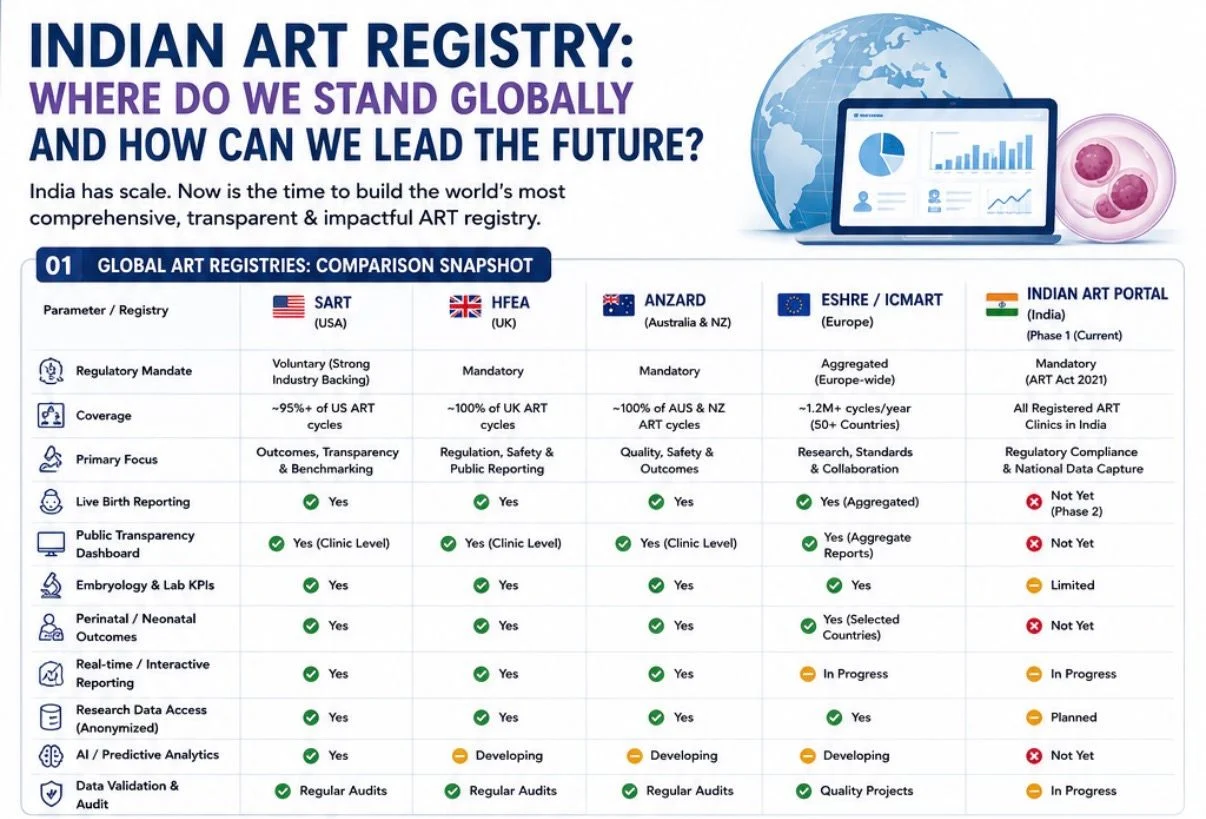
As one of the fastest-growing IVF ecosystems globally, India today performs an estimated >250,000 ART cycles annually across nearly 2,000+ clinics. Yet, when we compare ourselves with mature global ART registries like:
- SART (USA)
- HFEA (UK)
- ANZARD (Australia and New Zealand)
- ESHRE/ICMART (Europe)
it becomes clear that India’s ART registry journey is still in its early foundational phase.
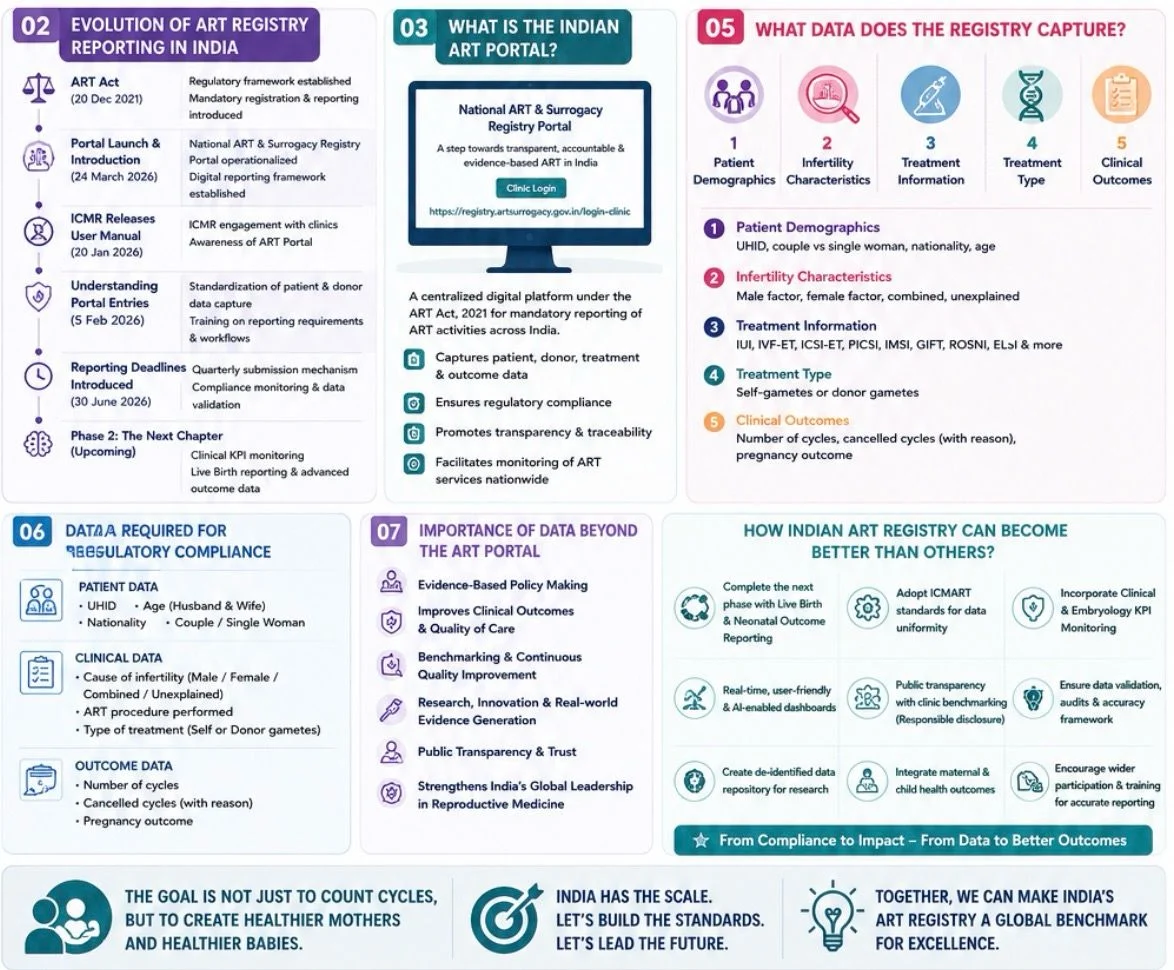
The introduction of the National ART and Surrogacy Registry Portal under the ART Act 2021 is undoubtedly a landmark step and has laid the groundwork for a unified reproductive medicine ecosystem in India.
However, globally leading registries have evolved far beyond basic cycle reporting.
Today, mature ART registries track:
- Cumulative live birth rates
- Singleton live birth rates
- Perinatal and neonatal outcomes
- OHSS and adverse events
- Embryology KPIs
- Donor traceability
- Longitudinal patient outcomes
- Real-world national trend data
- Public clinic benchmarking
- AI-driven predictive analytics
- Patient-facing success prediction tools
In comparison, India’s current ART portal still has major gaps in:
- Live birth outcome tracking
- Public transparency dashboards
- Embryology and clinical KPI benchmarking
- Real-time reporting
- Research-grade anonymized datasets
- Independent audit and data validation systems
- Perinatal/neonatal outcome integration
Countries like the UK (HFEA) and USA (SART) have demonstrated how transparent, validated, patient-facing ART registries.
India has one major advantage over most countries:
Scale.
No other country may eventually generate the depth and diversity of ART data India potentially can.
If structured correctly, India could become:
The world’s largest real-world reproductive medicine database.
But to achieve this, the next phase of the Indian ART Registry must focus on:
- ICMART-aligned standardized datasets
- Mandatory live birth and neonatal reporting
- Embryology and laboratory KPI integration
- AI-enabled outcome analytics
- National benchmarking systems
- Public transparency portals
- Research data access
- Integration with maternal and neonatal outcomes
- Quality audits and validation framework
- Patient-centric reporting metrics
Importantly, Indian ART programs should gradually move from measuring:
‘pregnancy per transfer’ toward:
- cumulative live birth
- singleton healthy birth
- maternal safety
- neonatal outcomes
because modern ART success is no longer only about creating pregnancy — it is about creating healthier mothers and healthier babies safely.
The future of reproductive medicine globally will increasingly be driven by:
- Data quality
- Real-world evidence
- AI-integrated analytics
- Transparent clinical benchmarking
India now has the opportunity not just to participate in that future but potentially lead it.”
Stay updated on all scientific advances in the field of fertility with Fertility News.
-
Sep 13, 2026, 15:11Sachintha Alwis: From Impaired Sperm Motility to Microrobotics
-
Sep 13, 2026, 15:08Laurence Orbuch: Before Endometriosis Surgery, Ask…
-
Sep 13, 2026, 15:05Ademola Ayodele: IUI, IVF or Egg Freezing – Which One Is Right for You?
-
Sep 13, 2026, 14:59Fiona Pathiraja-Møller: Tennis Players No Longer Have to Choose Between Career and Family
-
Sep 13, 2026, 14:571-Day Virtual Experience for People Impacted by PMOS – PCOS Awareness Association
-
Sep 13, 2026, 14:53Ozor Victor: Behind Every Embryo Is a Story of Science, Precision, and Hope
-
Sep 13, 2026, 14:50Diana Kayal: What They Don’t Tell You About IVF
-
Sep 13, 2026, 14:44Vikram Sinai Talaulikar: A Heartfelt Thank You to All Who Donated and Supported “Menopause and Cancer”
-
Sep 13, 2026, 14:41Nicole McPherson: Changing IVF Practices Is Hard – Integration Needs to Be Easy