

Esther Eleboh/LinkedIn
Jul 27, 2026, 04:06
Esther Eleboh: Can Seeing Polar Bodies Predict a Good Blastocyst?
Esther Eleboh, Reproductive Health Nurse ( Head of Nursing Department) at Joje Abebe fertility Hospital, shared a post on LinkedIn:
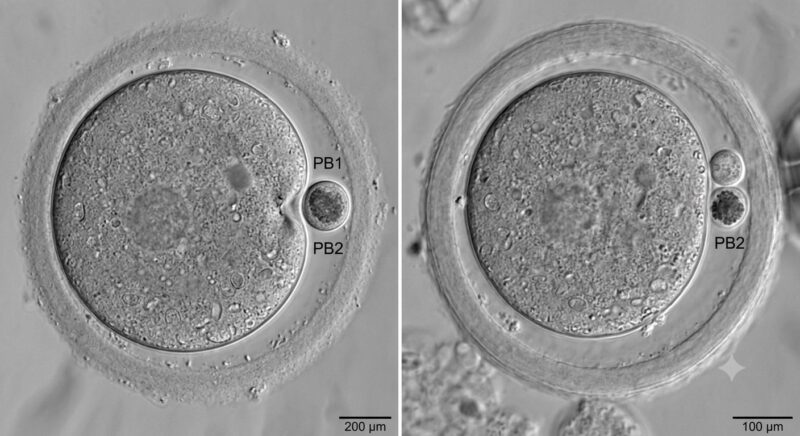
“Can Seeing Polar Bodies Predict a Good Blastocyst?
- One question frequently asked in the IVF laboratory is:
‘If I see polar bodies 16–18 hours after insemination, does it mean the embryo will become a good blastocyst?’ The answer is not necessarily true - The presence of two polar bodies (2PB) is an important indicator that the oocyte has completed meiosis and is consistent with normal fertilization. However, 2PB alone cannot predict blastocyst formation or embryo quality.
- For an embryo to develop into a high-quality blastocyst, several other factors play a role:
- Normal fertilization (2PN)
- Oocyte quality
- Sperm quality
- Embryo cleavage pattern
- Chromosomal competence
- Optimal laboratory culture conditions
- Every successful blastocyst begins with normal fertilization, but not every normally fertilized oocyte will reach the blastocyst stage.
- The embryologists, carefully monitor embryo development from fertilization through blastocyst formation, recognizing that embryo viability is determined by a combination of biological and laboratory factors—not by a single observation.
- A single observation provides a clue; the embryo’s developmental journey tells the full story.
- I am Nurse Esther, a fertility nurse passionate about helping couples overcome infertility and achieve pregnancy. I am also actively involved in fertility research and reproductive health education.”
Stay updated on all scientific advances in the field of fertility with Fertility News.
biological and laboratory factors
chromosomal competence
Embryo cleavage pattern
Embryo Quality
Esther Eleboh
fertility research
fertilization
fertilized oocyte
Good Blastocyst
important indicator
infertility
insemination
IVF laboratory
meiosis
Normal fertilization (2PN)
Oocyte Quality
Optimal laboratory culture conditions
Polar Bodies
pregnancy
sperm quality
-
Jul 27, 2026, 05:40President’s Session on PPH at the FIGO World Congress 2025 – IJGO
-
Jul 27, 2026, 05:38Marco Zaccaria: Transvaginal Ultrasound Detects Retrograde Menstruation in Most Women!
-
Jul 27, 2026, 05:35Join RCOG Associates for Exclusive Learning and Support! – RCOG
-
Jul 27, 2026, 05:3248 Years, 13 Million Babies, and 1 Nobel Prize, Happy World IVF Day! – ASRM
-
Jul 27, 2026, 05:29Breaches of Medical Confidentiality in Argentina’s Reproductive Healthcare System – IJGO
-
Jul 27, 2026, 05:19Christopher Robinson: A Comparative Analysis of Two-Dimensional and Three-Dimensional Sonographic Techniques
-
Jul 27, 2026, 04:47Marco Zaccaria: Multidisciplinary Exploration of Reproductive Medicine!
-
Jul 27, 2026, 04:15Did You Know That Timing Plays a Crucial Role in Embryo Implantation? – Fertility Plus
-
Jul 27, 2026, 04:10Marie-Blanche Tchetgen: It’s Not Always a UTI, The Bladder Side of Endometriosis!