

Khalil Faaed: From Ovary to Placenta – How PMOS May Shape Pregnancy Outcomes
Khalil Faaed, Embryologist at Modern IVF Center, shared on LinkedIn:
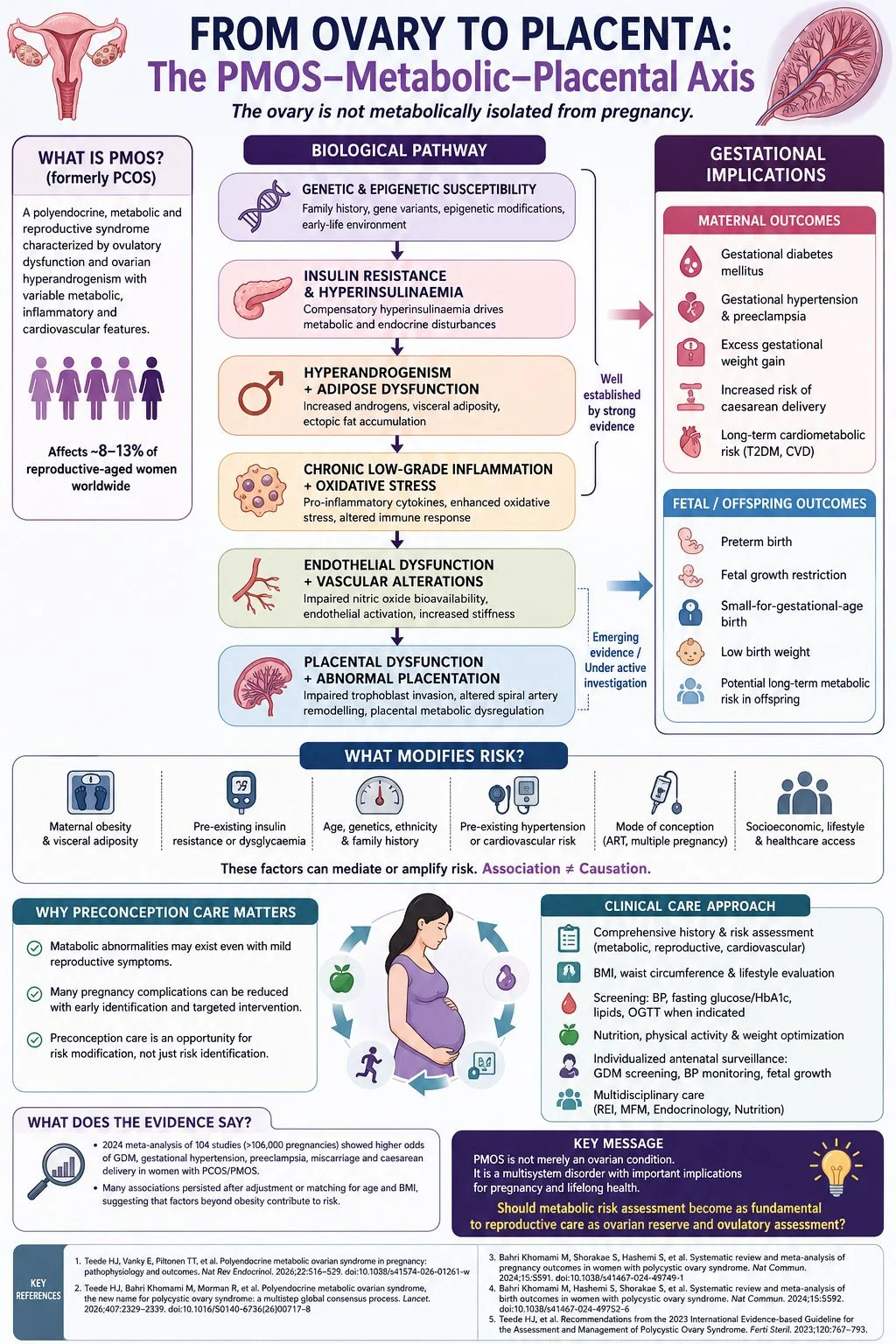
”From Ovary to Placenta: How PMOS May Shape Pregnancy Outcomes.
PCOS does not end with ovulation. Its metabolic consequences may extend into pregnancy. In 2026, the international reproductive medicine community introduced Polyendocrine Metabolic Ovarian Syndrome (PMOS) as new terminology for the condition historically known as PCOS, reflecting a broader understanding of its reproductive, endocrine, and metabolic biology.
PMOS involves interconnected pathways linking:
- insulin resistance
- hyperinsulinaemia
- hyperandrogenism
- adipose dysfunction
- inflammation
- oxidative stress
- vascular and placental changes
These mechanisms may contribute to increased risks of gestational diabetes, gestational hypertension, preeclampsia, preterm birth, fetal growth abnormalities, low birth weight, and Caesarean delivery.
However, association does not equal causation.
Pregnancy outcomes are also influenced by
- obesity
- pre-existing metabolic disease,
- hypertension
- diabetes
- maternal age
- assisted reproductive technology
- multiple pregnancy.
Therefore, the relationship between PMOS and adverse pregnancy outcomes should be understood as multifactorial rather than explained by a single pathway.
This raises an important clinical question: Should metabolic risk assessment begin before conception rather than after pregnancy is established? For women with PMOS, reproductive care may benefit from cardiometabolic assessment, blood-pressure evaluation, appropriate glucose screening, lifestyle and nutritional optimization, weight management when appropriate, and individualized antenatal surveillance.
The central message is simple: the ovary is not metabolically isolated from pregnancy. PMOS highlights the interconnected biology of ovarian function, systemic metabolism, vascular health, and placental development. The future of reproductive medicine may therefore require a shift from treating infertility alone toward managing reproductive metabolic health across the life course.
Could metabolic risk assessment become as fundamental to reproductive care as ovarian reserve and ovulatory assessment?”
Stay informed with the latest updates in fertility and reproductive medicine on Fertility News.
-
Sep 30, 2026, 17:51Devyanshi Dixit: 11 Years of Knowledge, Connection, Advancing Women’s Health, Now Preparing for the 12th Edition
-
Sep 30, 2026, 17:48Ashley Evans: Infertility Isn’t Something You Can Simply Relax Your Way Out Of
-
Sep 30, 2026, 17:41Mark Trolice: New SIG: Independent Fertility Practices
-
Sep 30, 2026, 17:34Abdelrahman H. Daifalla: The Clinical Reality of IVF Is More Complex…
-
Sep 30, 2026, 17:24Nicole Homan: Ovulation Is Not the Endpoint in PMOS Fertility Care
-
Sep 30, 2026, 17:13Devyanshi Dixit: What Happens When Chronic Pelvic Pain Becomes a Brain Problem?
-
Sep 30, 2026, 16:52Tunzala Ibadova: A Successful IVF Case – Individualized Approach to HLA Compatibility and Embryo Transfer
-
Sep 30, 2026, 16:49Robert Borowczyk: An IVF Conversion Rate Can Jump from 40% to 50% without 1 Extra Patient Starting Treatment
-
Sep 30, 2026, 16:46Asma Khalil: Important Reassurance for Women Who Become Pregnant after Taking GLP-1 Medicines