

Devyanshi Dixit: The Future of IVF – What Will Change in The Next 5 Years?
Devyanshi Dixit, Conference Manager at the 12th Global Summit on Gynecology, Fertility and Women’s Health, and Program Manager at CLS Event and Publication, shared on LinkedIn:
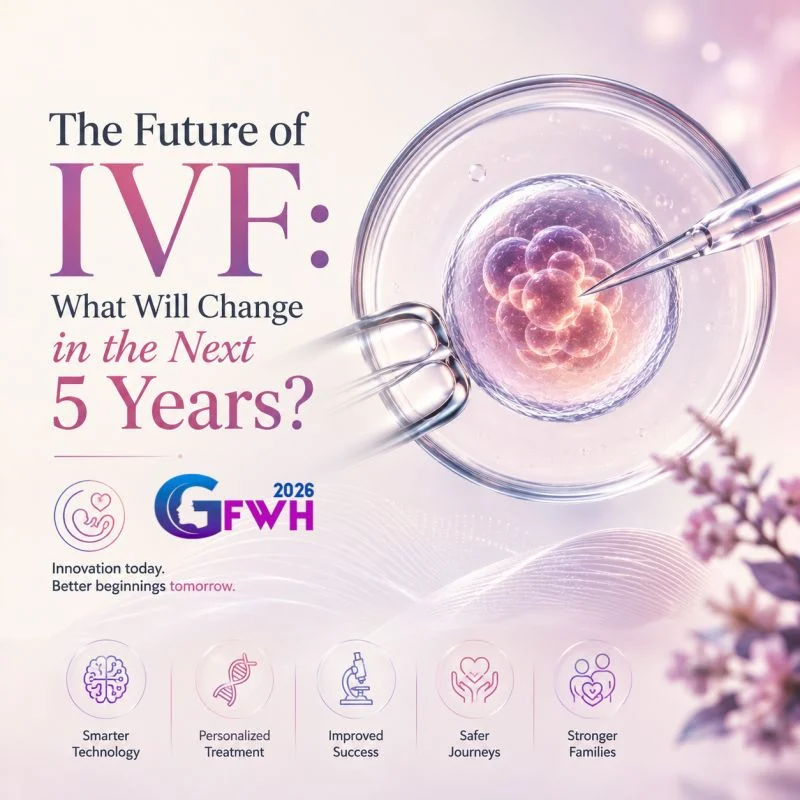
”The Future of IVF: What Will Change in the Next 5 Years?
IVF has already transformed reproductive medicine – but the next phase may be less about doing more cycles and more about making each cycle smarter, more personalized, and more patient-centered.
So what could the next five years bring?
5 Developments to Watch
- AI-Assisted Embryo Assessment
Machine-learning tools may increasingly support embryologists in evaluating embryo development and identifying patterns that are difficult to assess visually. - More Personalized IVF Protocols
Treatment may become increasingly tailored to ovarian reserve, previous response, age, medical history, and individual reproductive goals. - Advanced Embryology and Time – Lapse Imaging
Improved culture systems and continuous embryo monitoring may provide deeper insights into embryo development. - Genetic and Molecular Insights
Genomic and molecular research could help clinicians better understand implantation, embryo development, and reproductive disorders – while clinical validation remains essential. - Smarter Fertility Preservation
Advances in vitrification, cryobiology, and laboratory technology will continue to expand options for preserving reproductive material.
But Technology Isn’t the Whole Story
The future of IVF isn’t simply about algorithms, automation, or laboratory breakthroughs.
It is also about:
- Better patient selection.
- Better counseling.
- Better evidence.
- Better access.
- Better individualized care.
Not every emerging technology will become standard practice. The technologies that make a lasting difference will need to demonstrate clinical benefit, safety, reproducibility, and value for patients.
These developments in IVF, ART, embryology, fertility preservation, reproductive genetics, AI, and precision fertility will be among the areas explored at the 12th Global Summit on Gynecology, Fertility and Women’s Health (GFWH 2026).
- November 23-24, 2026
- Bangkok, Thailand
The next five years of IVF may not simply change how embryos are treated – it may change how fertility care itself is designed.”
Other articles on GFWH on Fertility News.
-
Oct 23, 2026, 17:34Breast Cancer Awareness Month: Supporting Women Through Every Journey – Egg Donor and Surrogate Solutions
-
Oct 23, 2026, 17:28Demián Glujovsky: What Happens to Fertility Patients Between Visits?
-
Oct 23, 2026, 17:21Stephen Parker Ellington: Empathetic Fertility Care Can Scale, Even When Your Team Can’t
-
Oct 23, 2026, 17:16ACOG Releases New Guidance on the Use of GLP-1s in Pregnancy and Lactation
-
Oct 23, 2026, 17:06Emad Sedeek: ESHRE Recommendations on Good Practice in the IVF Laboratory 2026 – Part 2
-
Oct 23, 2026, 16:59Nitiz Murdia: Guiding You Through IVF – Your Journey’s Pilot
-
Oct 23, 2026, 16:56Ben Peipert: Come See My Poster Presentation at ASRM 2026
-
Oct 23, 2026, 16:50New RBMO Review Examines Benefits and Risks of Freeze-All IVF Strategies Across Ovarian Response Groups
-
Oct 23, 2026, 16:381 Week and Counting to the Next Campus Course on Male Infertility – ESHRE