
The Forgotten Part of the Sperm: Why Sperm Tail Membrane Disruption Matters in ICSI
“Why Does Sperm Tail Membrane Disruption Matter in ICSI?
Sperm tail membrane disruption is a small but biologically important step in intracytoplasmic sperm injection (ICSI). The sperm tail is often viewed mainly as the structure responsible for motility. In ICSI, however, controlled mechanical manipulation of the tail is used to immobilize the spermatozoon and can alter plasma-membrane integrity.
The current ESHRE recommendations on Good Practice in the IVF Laboratory state that tail membrane breakage should be performed posterior to the midpiece and immediately before injection of each individual oocyte. They also state that the duration of sperm identification and immobilization followed by injection should be minimized (ESHRE Good Practice in the IVF Laboratory Working Group, 2026).
The practical principle is therefore clear: sperm immobilization should be controlled and reproducible, with effective handling but without unnecessary trauma.
What Does Immobilization Actually Do?
A spermatozoon that stops moving after manipulation is immobilized, but visible immobility does not directly measure the exact extent of membrane damage. Immobilization and membrane disruption are related but distinct concepts.
Experimental work by Dozortsev et al. (1995) demonstrated that mechanical immobilization by squeezing the sperm tail between the injection pipette and the dish surface damages the sperm plasma membrane. The authors concluded that this membrane damage facilitated access of reducing agents to the sperm nucleus and was relevant to sperm nuclear decondensation.
For the embryologist, the objective is not aggressive damage. The objective is effective immobilization while protecting the sperm head and avoiding unnecessary manipulation of cellular structures.
Does More Aggressive Immobilization Improve ICSI Outcomes?
The answer is not straightforward.
Liu et al. (2025) evaluated 2,967 ICSI cycles and compared micro-rubbing sperm immobilization with single-touch immobilization. Micro-rubbing was associated with significantly higher fertilization and day-3 embryo-utilization rates. However, no statistically significant differences were reported in blastocyst formation, implantation, clinical pregnancy, live birth or miscarriage rates.
This distinction matters. Better fertilization does not automatically mean better live-birth outcomes.
Current evidence therefore supports further investigation of immobilization techniques but does not establish that increasingly aggressive manipulation is universally superior. Effective and controlled handling remains more important than unnecessary force.
Does the Sperm Tail Inside the Oocyte Cause a Problem?
Concern is sometimes raised that the sperm tail should not enter the oocyte. Human ICSI evidence does not support treating tail entry itself as an automatic biological problem.
Hiraoka et al. (2018) retrospectively studied 632 mature human oocytes undergoing Piezo-ICSI and compared head-first with tail-first sperm injection. No significant differences were found in oocyte survival, fertilization, day-3 embryo quality, pregnancy, implantation or live birth.
After fertilization, sperm-derived structures introduced into the oocyte are subject to biological processing and degradation pathways. Paternal mitochondrial components are actively recognized and eliminated after fertilization, supporting maternal mitochondrial inheritance. The presence of sperm-tail structures within the ooplasm should therefore not automatically be interpreted as evidence of harm.
The practical message is simple: the sperm tail is not routinely removed because current evidence does not demonstrate a clinical advantage from routine head-only injection or from changing injection direction.
What About PESA, TESA and TESE Samples?
Surgically retrieved sperm can present a very different laboratory challenge from ejaculated sperm. Samples obtained through PESA, TESA or TESE may contain tissue fragments, somatic cells and only a small number of usable spermatozoa. Motility can be weak, intermittent or absent.
ESHRE emphasizes that sperm preparation should be adapted to the characteristics and origin of the sample and that surgically retrieved sperm require appropriate laboratory expertise.
When sperm are extremely rare, every selected spermatozoon becomes valuable. This raises an important workflow question: should several sperm be collected and held before injection, or should each selected sperm be processed and injected individually?
My laboratory perspective is that, when only a few usable spermatozoa are available, unnecessary searching, repeated transfer and prolonged pooling can increase handling time and opportunities for sperm loss. A practical workflow is:
Identify – Select – Immobilize – Load – Inject
This is presented as a laboratory workflow consideration rather than a proven clinical superiority claim. Comparative prospective studies are still needed.
Should Rare Sperm Be Kept Waiting After Selection?
Time is a practical laboratory variable, particularly in difficult surgical sperm samples.
ESHRE recommends minimizing the duration of sperm identification and immobilization followed by injection. When a suitable spermatozoon has been identified, avoiding unnecessary delay is therefore consistent with current good-practice principles.
An individual-sperm workflow can also improve traceability and reduce repeated handling. However, high-quality clinical trials have not yet established an optimal interval between sperm selection, immobilization and injection. This remains an important research question.
What About Completely Immotile Sperm?
An immotile spermatozoon is not automatically non-viable. In cases where only immotile sperm are available, appropriate viability assessment can help identify viable sperm for injection. The ESHRE recommendations recognize the use of non-invasive vitality testing when only immotile sperm cells are available.
Once viability has been established, the laboratory should use a validated protocol appropriate to the sperm source and clinical situation. The absence of motility alone should not be confused with proof of non-viability.
Mechanical handling should remain deliberate and controlled. The goal is appropriate preparation for injection, not unnecessary manipulation.
Should Several Sperm Be Immobilized Before Injection?
Pre-immobilizing several spermatozoa may appear to save time, but it also creates additional handling steps. A sperm that has already been immobilized still needs to be located, loaded and injected. During this interval, selected sperm may be displaced, adhere to surfaces or be lost during manipulation.
From a practical laboratory perspective, the sequence of one sperm – immobilize – load – inject – proceed to the next sperm provides a controlled workflow and aligns with the ESHRE principle that immobilization should be performed immediately before injection of each individual oocyte.
This workflow should not be presented as proven to improve pregnancy or live-birth outcomes. Its main rationale is controlled handling, reduced unnecessary delay and improved traceability.
What Does Current Evidence Tell IVF Laboratories?
Several evidence-based principles emerge:
- Sperm immobilization is biologically meaningful and involves more than simply stopping movement.
- Mechanical immobilization can disrupt the sperm plasma membrane (Dozortsev et al., 1995).
- Current ESHRE recommendations specify tail membrane breakage posterior to the midpiece and immediately before injection of each individual oocyte.
- Micro-rubbing can improve fertilization and early embryo utilization, but current evidence does not demonstrate improved clinical pregnancy or live birth (Liu et al., 2025).
- The sperm tail does not need to be routinely removed, and human evidence does not show improved outcomes from changing sperm injection direction (Hiraoka et al., 2018).
- Difficult PESA, TESA and TESE samples require careful workflow management because usable sperm may be extremely limited.
- Fertilization, implantation and live birth are different clinical endpoints and should notbe treated as interchangeable measures of success.
What Remains Unknown?
Important questions remain:
- Does the precise degree and location of sperm-tail membrane disruption influence sperm nuclear remodeling in humans?
- Does the interval between sperm immobilization and injection affect outcomes when sperm are extremely rare?
- Is individual-sperm processing superior to pooling in surgically retrieved samples?
- Which immobilization method provides the best balance between effective membrane disruption and minimal cellular trauma?
- Do different sperm sources require different immobilization strategies?
- Most importantly, do improvements in fertilization translate into meaningful improvements in blastocyst development, implantation and live birth?
These questions require prospective research using clinically meaningful endpoints.
The Practical Message for Embryologists
The sperm tail is not simply a structure that needs to be removed.
It is a functional part of the spermatozoon that requires deliberate and controlled handling during ICSI. Current evidence and ESHRE good-practice recommendations support effective immobilization, tail membrane breakage posterior to the midpiece, and injection immediately after preparation of the individual sperm.
For difficult surgical sperm samples, careful handling becomes even more important because every viable spermatozoon may be valuable. Laboratory workflow should minimize unnecessary manipulation and delay while maintaining traceability and appropriate viability assessment.
Current evidence supports the importance of sperm immobilization. It does not support the assumption that more aggressive manipulation is always better.
The sperm tail is not the enemy. The important question is how thoughtfully we handle it.”
Written by Saadat Hassan
Senior Clinical Embryologist / IVF and Embryology
BSc (Hons) Medical Laboratory Technology
King Edward Medical University, Lahore, Pakistan
References
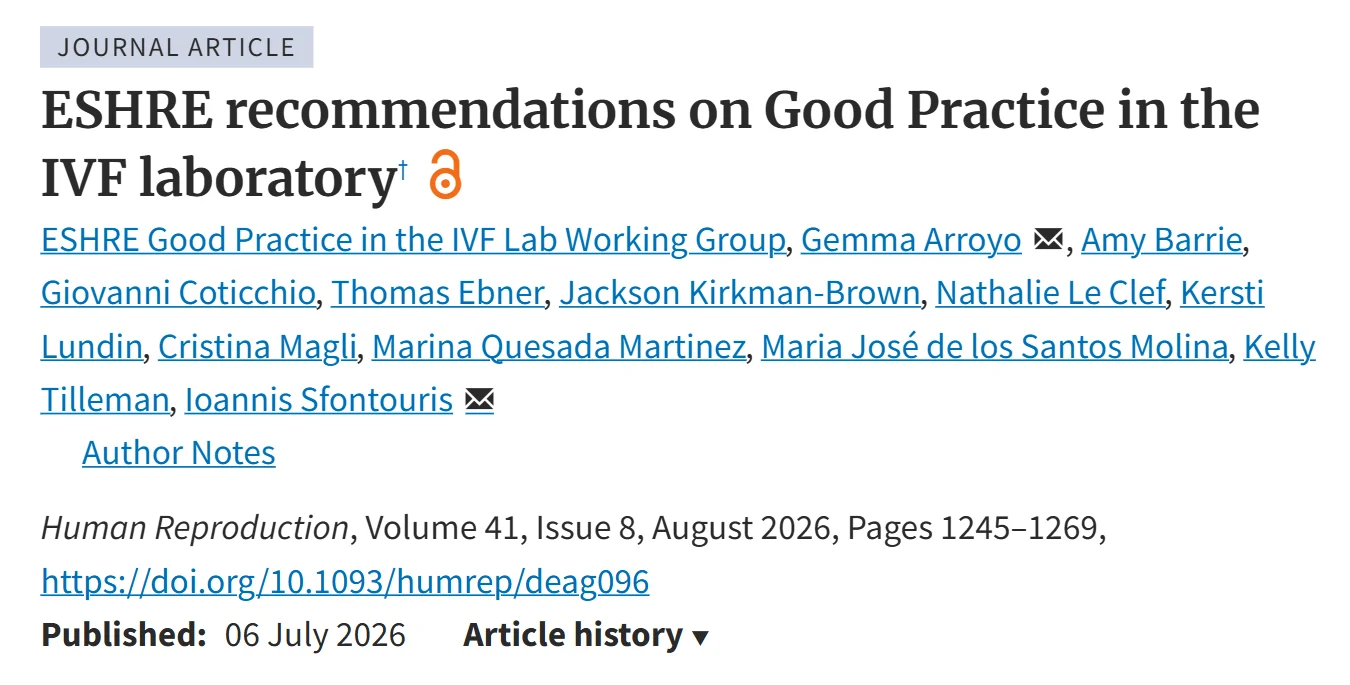
Title: ESHRE recommendations on Good Practice in the IVF laboratory
Authors: ESHRE Good Practice in the IVF Lab Working Group, Gemma Arroyo, Amy Barrie, Giovanni Coticchio, Thomas Ebner, Jackson Kirkman-Brown, Nathalie Le Clef, Kersti Lundin, Cristina Magli, Marina Quesada Martinez, Maria José de los Santos Molina, Kelly Tilleman, Ioannis Sfontouris
You can read the Full Article in Human Reproduction.
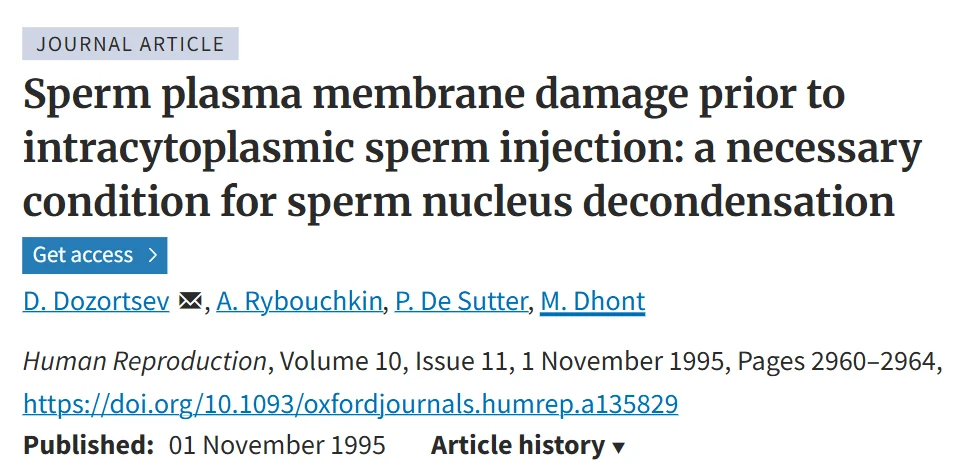
Title: Sperm plasma membrane damage prior to intracytoplasmic sperm injection: a necessary condition for sperm nucleus decondensation
Authors: D. Dozortsev, A. Rybouchkin, P. De Sutter, M. Dhont
You can read the Full Article in Human Reproduction.
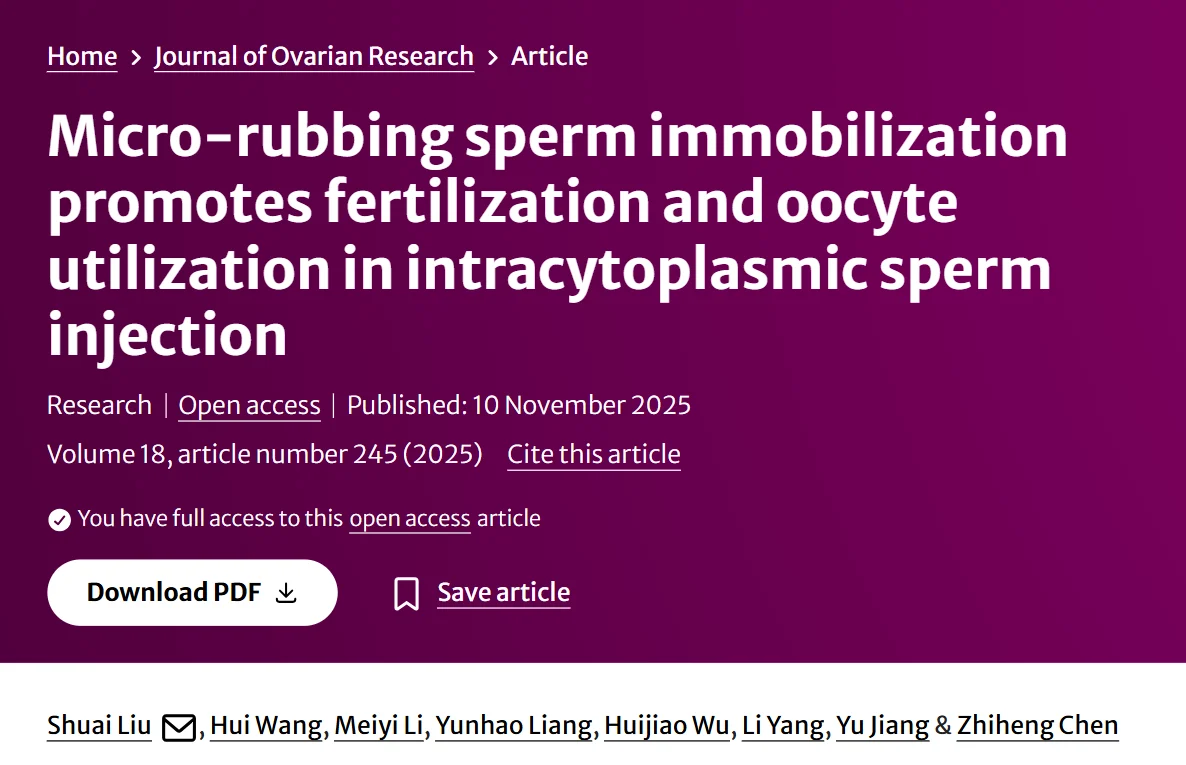
Title: Micro-rubbing sperm immobilization promotes fertilization and oocyte utilization in intracytoplasmic sperm injection
Authors: Shuai Liu, Hui Wang, Meiyi Li, Yunhao Liang, Huijiao Wu, Li Yang, Yu Jiang and Zhiheng Chen
You can read the Full Article in the Journal of Ovarian Research.
Title: Effects of sperm direction in Piezo-ICSI on oocyte survival, fertilization, embryo development and implantation ability in humans: A preliminary study
Authors: Kenichiro Hiraoka, Seiji Kitamura, Yoshihito Otsuka, Kiyotaka Kawai, Tatsuya Harada, Tomonori Ishikawa
You can read the Full Article in the Journal of Obstetrics and Gynaecology Research.
You can also read other articles featuring Saadat Hassan on Fertility News.
-
Oct 22, 2026, 15:22Beth Zoneraich: Pinnacle Fertility Team Is Heading to the ASRM Scientific Congress and Expo
-
Oct 22, 2026, 15:18Kim Schamroth: Honored to Be Representing EraBorn and EDN at ASRM 2026
-
Oct 22, 2026, 15:13Becca DiCondina Has Been Appointed Clinical Science Specialist at CooperSurgical
-
Oct 22, 2026, 15:11Devyanshi Dixit: Can a Pap Smear Help You Get Pregnant?
-
Oct 22, 2026, 15:08Registration for RISE 2027 Is Open – ASRM
-
Oct 22, 2026, 15:04New RBMO Study Suggests Ethnic and Genetic Differences May Influence Ovarian Stimulation Response
-
Oct 21, 2026, 17:57Ula Sankowska: What I’ll Bring to ASRM INNOVATE in Baltimore
-
Oct 21, 2026, 17:40Robert Borowczyk: The Invisible Waiting Room
-
Oct 21, 2026, 17:35Fereshteh Safian: Behind the Scenes of Reproductive Medicine