
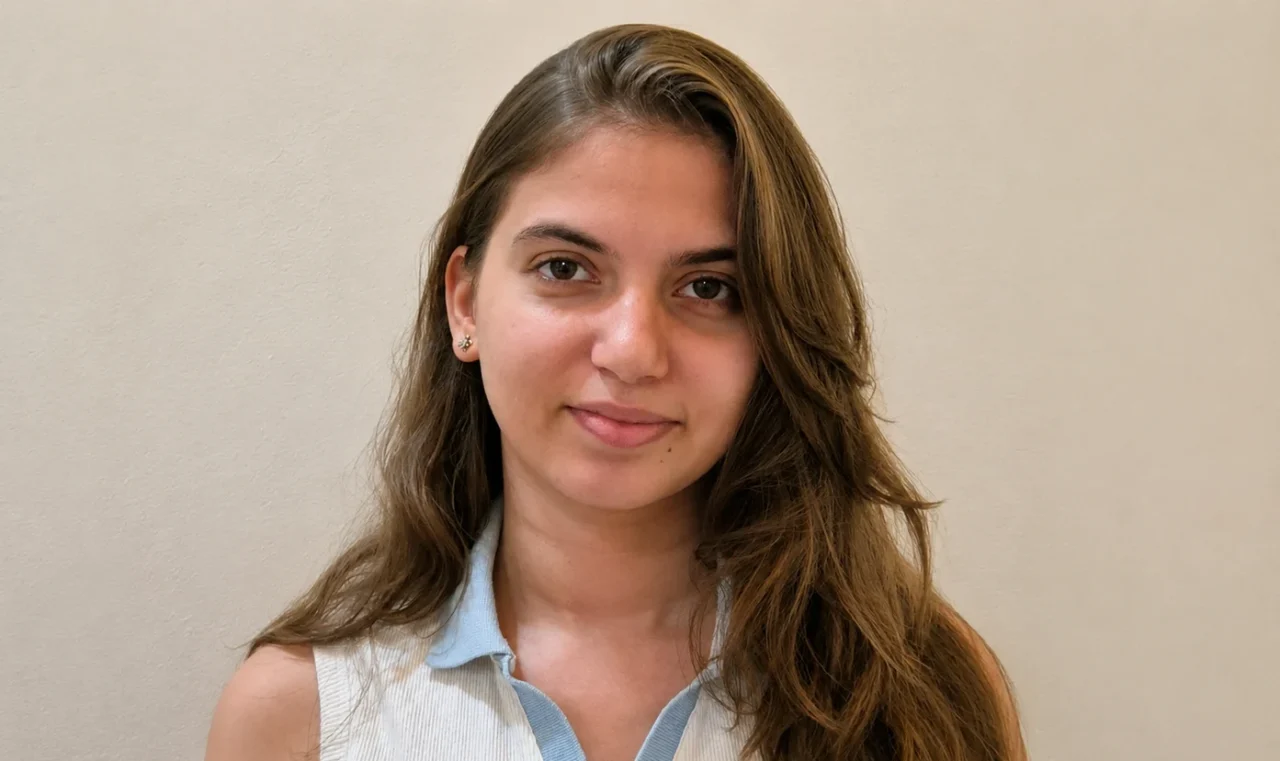
Devyanshi Dixit: Menstrual Health – The Vital Sign We Still Don’t Measure Properly
Devyanshi Dixit, Program Manager at CLS Event and Publication and Conference Manager at the 12th Global Summit on Gynecology, shared on LinkedIn:
”Menstrual Health: The Vital Sign We Still Don’t Measure Properly
We routinely measure:
- Blood pressure.
- Heart rate.
- Temperature.
- Oxygen saturation.
But there is another health signal we often overlook:
The menstrual cycle.
For years, menstruation has been treated primarily as a reproductive event.
But the cycle can also reflect changes across the endocrine, metabolic and reproductive systems.
A change in:
- Cycle length
- Regularity
- Bleeding volume or duration
- Pain and associated symptoms
may sometimes be an important clinical signal.
Irregular or disrupted cycles can occur with conditions such as PCOS, thyroid disorders, hypothalamic dysfunction and primary ovarian insufficiency, among others.
And heavy menstrual bleeding can have consequences far beyond the period itself-including iron deficiency and anemia.
Yet there is a major gap:
We often record the date of the period-but not the full story.
- How heavy is the bleeding?
- How severe is the pain?
- Has the pattern changed?
- Does it interfere with sleep, work, education or exercise?
- Are symptoms becoming progressively worse?
These details can transform a menstrual history from a routine question into a meaningful health assessment.
In fact, recent research has argued that the menstrual cycle should be recognized as a vital sign across the lifespan-not only during adolescence.
The future could go even further.
- Digital cycle tracking
- Long-term menstrual data
- Biomarker research
- AI-assisted pattern recognition
- Standardized menstrual documentation
could help clinicians move from simply recording periods to recognizing clinically meaningful patterns earlier.
But technology is only part of the answer.
The first step may be much simpler:
Start asking better questions.
Because a menstrual cycle is not merely something to track on a calendar.
Sometimes, it is the body telling us that something has changed.
At the 12th Global Summit on Gynecology, Fertility and Women’s Health (GFWH 2026), emerging developments in menstrual health, gynecology, precision medicine and women’s healthcare will be part of the global scientific conversation.
- November 23 – 24, 2026
- Bangkok, Thailand
So perhaps the question isn’t ‘Is her period normal?’
It is: ‘What is her menstrual health telling us?’ ”

Other articles featuring Devyanshi Dixit on Fertility News.
-
Oct 29, 2026, 16:22Aysha O’Connor: One of the Hardest Parts of My Own Fertility Journey Was Loneliness…
-
Oct 29, 2026, 16:15Chaithra S K: Preimplantation Genetic Testing Still Requires an Embryo Biopsy
-
Oct 29, 2026, 16:11Filipina Woman’s Journey of Strength, Hope, and Finding Balance While Living with PCOS – PCOS Millennials
-
Oct 29, 2026, 15:58Eric Lameignere: Can DNA Fragmentation in Cumulus Cells Predict ICSI Outcomes?
-
Oct 29, 2026, 15:50Saadat Hassan: Sperm Function Testing – Can Advanced Diagnostics Guide IVF and ICSI Selection?
-
Oct 29, 2026, 15:34Sara Spiro: Celebrating the Stories Members Have Trusted With at Maven Clinic – Here Is Mine
-
Oct 29, 2026, 15:31Dina Ibrahem: 0 Motility, 1 Critical Decision
-
Oct 29, 2026, 15:28AI and Automation in Fertility and Genomics: Pipeline or Pipe Dream? – ARCS
-
Oct 29, 2026, 15:26Michael Schindler: Large Networks or Small Centers – Who Delivers Better Care?