
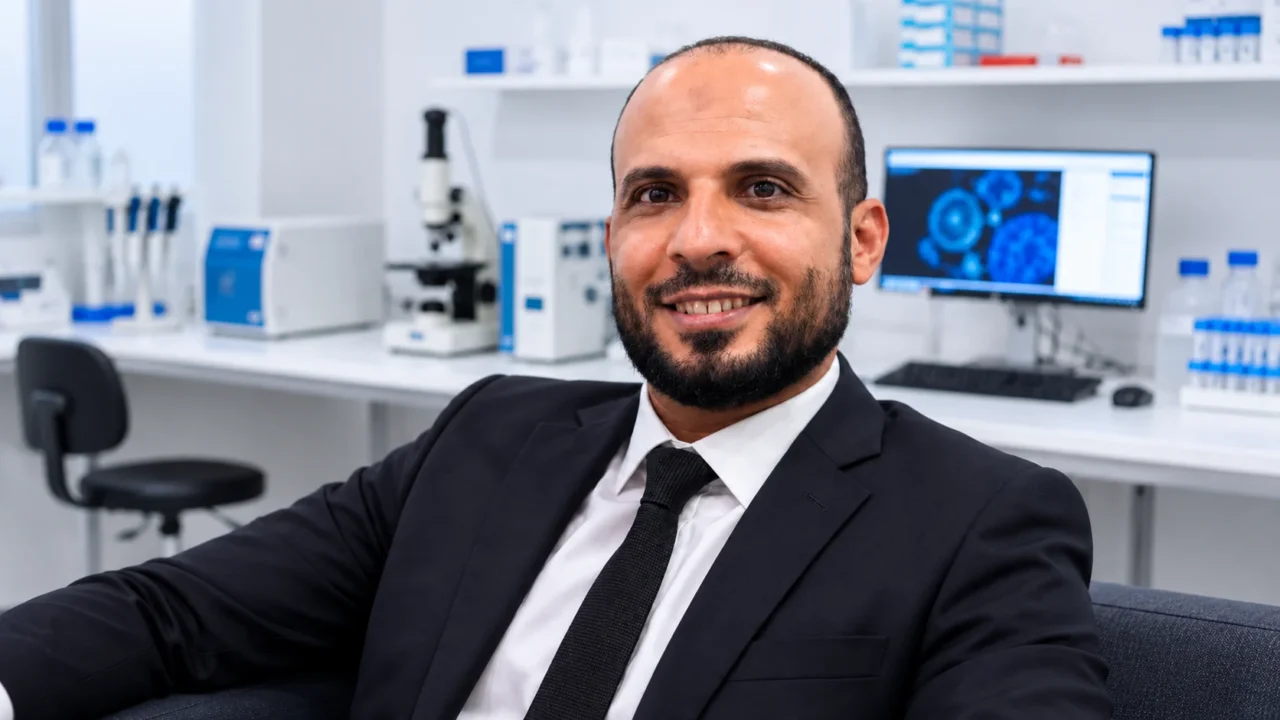
Khalil Faaed: We Can Activate the Oocyte, But Are We Recreating the Right Calcium Signal?
Khalil Faaed, Embryologist at Modern IVF Center, shared on LinkedIn:
“We Can Activate the Oocyte, but Are We Recreating the Right Calcium Signal?
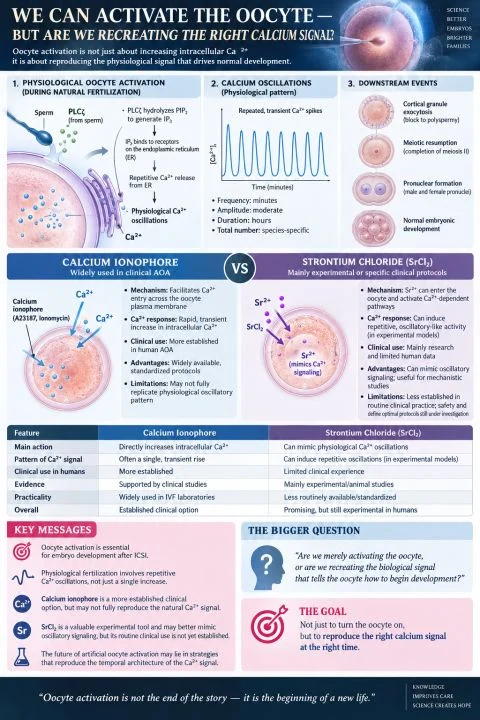
In ICSI, fertilization does not end with sperm injection. It begins with oocyte activation a highly coordinated process in which intracellular Ca²⁺ signaling plays a central role.
Under physiological conditions, sperm-derived phospholipase C zeta (PLCζ) initiates a series of intracellular Ca²⁺ oscillations within the oocyte.
These oscillations are not simply a rise in calcium concentration; their frequency, amplitude, duration, and pattern contribute to downstream events including cortical granule exocytosis, meiotic resumption, pronuclear formation, and subsequent embryonic development.
This raises an important question in artificial oocyte activation: Are we merely increasing intracellular Ca²⁺, or are we reproducing the biological signal required for normal activation?
Calcium ionophore.
Calcium ionophores are among the more established pharmacological approaches used for artificial oocyte activation in human assisted reproduction. They facilitate Ca²⁺ entry across the oocyte membrane, producing a rapid increase in intracellular calcium.
However, this response may differ from the physiological pattern generated by sperm-induced PLCζ activity. A pharmacological Ca²⁺ rise therefore demonstrates that the oocyte can be activated, but it does not necessarily reproduce the complete dynamics of physiological fertilization.
Strontium chloride (SrCl₂).
SrCl₂ has been extensively used as an experimental activator of mammalian oocytes and can induce intracellular Ca²⁺ responses, including repetitive oscillatory activity in experimental models. This makes SrCl₂ particularly interesting from a mechanistic perspective.
However, its role in routine human clinical AOA is much less established than calcium-ionophore-based approaches, and findings from animal or experimental systems cannot automatically be translated into clinical practice.
The deeper question.
The important distinction is therefore:
Oocyte activation ≠ physiological fertilization signaling.
A successful activation protocol should ideally consider not only whether the oocyte undergoes activation, but also whether the induced Ca²⁺ dynamics are sufficiently compatible with the downstream molecular and cellular events required for embryo development.
This is why the future of artificial oocyte activation may not simply be about finding a stronger activator.
It may be about developing strategies that better reproduce the temporal architecture of the Ca²⁺ signal generated during natural fertilization.
The goal is not simply to turn the oocyte on.
The goal is to reproduce the biological conversation that tells the oocyte how to begin development.”
Other articles featuring Khalil Faaed on Fertility News.
-
Sep 25, 2026, 17:57Devyanshi Dixit: Next-Gen Women’s Health at GFWH 2026
-
Sep 25, 2026, 17:53Szabó Gábor: Ultrasound vs MRI for Preoperative Detection of Endometriosis
-
Sep 25, 2026, 17:45Robert Gilchrist: Is There Anything More Important in IVF Than Eggs?
-
Sep 25, 2026, 17:41Justin Houman: How I Run a Men’s Health Practice Inside an Academic Medical Center
-
Sep 25, 2026, 17:39Kristen Williams: The Hills I Will Die on as a Women’s Healthcare Founder
-
Sep 25, 2026, 17:36Thankful to Everyone Who Attended the Current Practice in Therapeutic Sperm Preparation Day – ARCS
-
Sep 25, 2026, 17:27Akash Verma: Sperm Cryopreservation with FertiPro SpermFreeze
-
Sep 25, 2026, 17:21Rafael Trinchant: Thrilled to Share Our Article on Semen, Stigma, and Spectacle
-
Sep 25, 2026, 17:14Eric Lameignere: Are We Measuring the Right Sperm DNA Fragmentation?