

From Ovarian Stimulation to Embryo Transfer: Rethinking OHSS Prevention in Modern IVF
“Ovarian hyperstimulation syndrome (OHSS) remains an important iatrogenic complication of controlled ovarian stimulation, particularly among women with a high ovarian response. Modern IVF has substantially changed how this risk is approached. Prevention can now begin with individualized stimulation and GnRH-antagonist protocols, continue through selection of the final oocyte maturation trigger, and, when clinically appropriate, extend to embryo cryopreservation rather than fresh transfer. Pharmacological measures such as cabergoline may provide additional protection, but their role needs to be interpreted within this broader pathway.
A systematic review and meta-analysis published in 2026 provides new evidence that cabergoline may reduce moderate-to-severe OHSS. However, the certainty of the randomized evidence was rated low, and the included trials did not evaluate the full contemporary combination of GnRH-antagonist stimulation with GnRH-agonist triggering. The key question is therefore not simply whether cabergoline reduces OHSS, but how much additional benefit it provides when contemporary primary prevention strategies are already being used (Almanie et al., 2026).
What Does the New Evidence Tell Us About Cabergoline?
The 2026 systematic review by Almanie et al. included eight comparative studies involving 969 women: six randomized controlled trials involving 748 women and two prospective non-randomized comparative studies involving 221 women. The randomized trials constituted the primary analysis. Cabergoline was associated with lower odds of moderate-to-severe OHSS compared with placebo or no treatment (OR 0.41, 95% CI 0.26–0.64). However, the certainty of this evidence was rated low because of methodological limitations and imprecision (Almanie et al., 2026).
Several limitations are important when interpreting the estimate. Four of the six randomized trials were open-label, allocation concealment was reported in only one trial, most trials were not prospectively registered, and one included trial is subject to an Expression of Concern. The available information was also insufficient to reliably determine effects on live birth, clinical pregnancy, or uncommon adverse events (Almanie et al., 2026).
Earlier evidence is directionally consistent. The 2021 Cochrane review found that dopamine agonists probably reduce moderate-to-severe OHSS compared with placebo or no intervention, while evidence regarding live birth and other pregnancy outcomes remained uncertain (Tang et al., 2021).
The important qualification is that none of the randomized trials in the 2026 review used a GnRH-antagonist protocol with a GnRH-agonist trigger. The authors therefore identified the applicability of the findings to this contemporary high-responder setting as indirect (Almanie et al., 2026).
Cabergoline should consequently be understood as a potential adjunct rather than as a replacement for primary OHSS prevention.
How Has Modern IVF Changed OHSS Prevention?
OHSS prevention increasingly begins before stimulation. Current recommendations emphasize identifying women at increased risk and individualizing treatment according to ovarian reserve and expected response. The 2026 ESHRE guideline recommends a GnRH-antagonist protocol for predicted high responders and supports reduced gonadotropin dosing in appropriate patients (ESHRE Guideline Group on Ovarian Stimulation, 2026).
The choice of trigger is particularly important. For women at risk of OHSS, ESHRE recommends a GnRH-agonist trigger combined with a freeze-all strategy to minimize the risk of severe OHSS. It also recommends a freeze-all strategy to reduce late-onset OHSS in relevant high-risk settings. Dopamine agonists are recommended to reduce the risk of early OHSS, particularly when hCG is used for final oocyte maturation (ESHRE Guideline Group on Ovarian Stimulation, 2026).
The ASRM guideline similarly identifies GnRH-antagonist protocols, individualized gonadotropin dosing and GnRH-agonist triggering as important preventive strategies, while recommending a dopamine agonist such as cabergoline for patients at risk of moderate-to-severe OHSS around the time of the hCG trigger (ASRM Practice Committee, 2023).
This distinction is clinically important. If the primary pathway already substantially reduces OHSS risk, the question becomes the incremental value of adding another intervention rather than whether that intervention works in isolation.
Embryo transfer strategy also matters because pregnancy-associated hCG can contribute to late-onset OHSS. For appropriately selected high-risk patients, avoiding a fresh transfer through embryo cryopreservation can therefore form part of the preventive pathway. This does not mean that freeze-all is universally preferable for every IVF cycle; its use should remain individualized and clinically justified (ESHRE Guideline Group on Ovarian Stimulation, 2026).
What Does OHSS Prevention Mean for the Embryology Laboratory?
When OHSS risk leads to a decision to avoid fresh transfer, the embryology laboratory becomes an integral part of the risk-management pathway.
The laboratory may need to culture embryos to the appropriate developmental stage, assess them, cryopreserve them, maintain secure long-term storage, and subsequently perform warming and preparation for a later embryo transfer. Each stage introduces quality and traceability requirements that extend beyond the immediate stimulation cycle.
The 2026 ESHRE recommendations on Good Practice in the IVF laboratory provide a comprehensive framework covering laboratory organization, quality management, patient identification and traceability, embryo culture and transfer, cryopreservation and emergency procedures (ESHRE Good Practice in the IVF Lab Working Group, 2026).
For cryopreservation, the recommendations emphasize documentation of the cryopreservation method, date and time, operator, embryo quality and developmental stage, number of embryos per device, storage location, and unique identification codes. They also recommend appropriate identity checks at critical points, including loading, storage, and removal of cryopreserved material (ESHRE Good Practice in the IVF Lab Working Group, 2026).
The same recommendations identify vitrification as the more effective and recommended cryopreservation approach for oocytes, pronuclear and cleavage-stage embryos, and blastocysts. They also emphasize maintaining safe storage conditions and ensuring that cryopreserved material does not experience temperatures above −140°C during storage, handling or transport (ESHRE Good Practice in the IVF Lab Working Group, 2026).
This makes the embryology laboratory more than a downstream service in OHSS prevention. When a clinical strategy moves the cycle from fresh transfer to cryopreserved embryo transfer, laboratory competence in embryo handling, cryopreservation, traceability and cryostorage becomes part of the overall safety pathway.
Where Does Cabergoline Fit in the Modern IVF Pathway?
The available evidence supports placing cabergoline within a layered prevention strategy rather than treating it as the central solution to OHSS.
Risk assessment, individualized ovarian stimulation, appropriate pituitary suppression, careful selection of the final oocyte maturation trigger, and an appropriately considered embryo-transfer strategy address risk at different stages of the IVF pathway. Cabergoline may add protection in selected patients, particularly where residual risk remains or where hCG exposure is part of the treatment strategy (ASRM Practice Committee, 2023; ESHRE Guideline Group on Ovarian Stimulation, 2026).
The unresolved issue is the size of that additional benefit in contemporary IVF. The 2026 meta-analysis provides evidence of an association between cabergoline and reduced moderate-to-severe OHSS, but its randomized evidence was rated low certainty and was generated without the modern GnRH-antagonist/GnRH-agonist-trigger pathway now recommended for many high responders (Almanie et al., 2026).
Future trials should therefore address the question that is most relevant to current practice: does cabergoline provide clinically meaningful additional protection when contemporary primary prevention strategies are already implemented? Ideally, such studies would be prospectively registered, adequately powered, use standardized OHSS definitions, and report not only OHSS but also live birth, cumulative reproductive outcomes, adverse events and other patient-important outcomes.
Modern OHSS prevention is consequently best understood as a coordinated IVF pathway rather than a single intervention. From risk assessment and stimulation to trigger selection, pharmacological prophylaxis, embryo cryopreservation and subsequent transfer, each stage contributes to the overall safety strategy. For the embryology laboratory, this pathway highlights an increasingly important principle: clinical risk reduction and laboratory quality are interconnected parts of modern IVF care.”
Written by Saadat Hassan
Senior Clinical Embryologist/IVF and Embryology
BSc (Hons) Medical Laboratory Technology
King Edward Medical University, Lahore, Pakistan
References
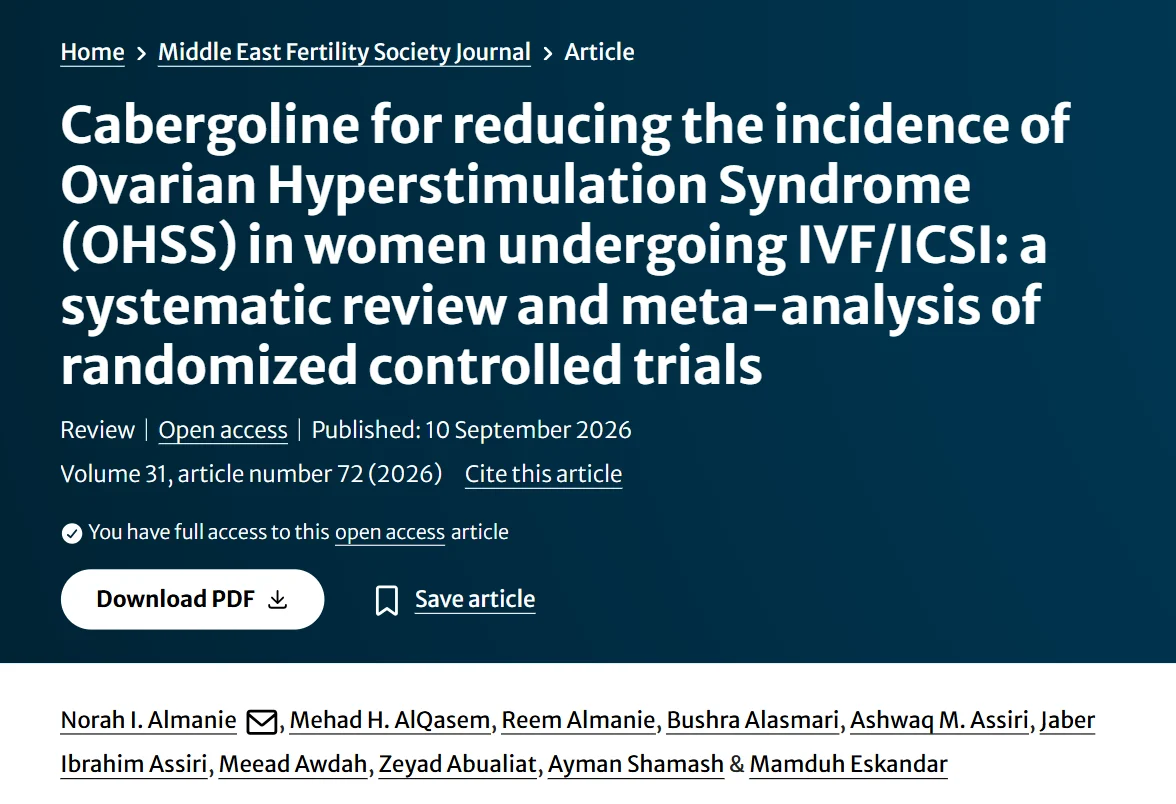
Title: Cabergoline for reducing the incidence of Ovarian Hyperstimulation Syndrome (OHSS) in women undergoing IVF/ICSI: a systematic review and meta-analysis of randomized controlled trials
Authors: Norah I. Almanie, Mehad H. AlQasem, Reem Almanie, Bushra Alasmari, Ashwaq M. Assiri, Jaber Ibrahim Assiri, Meead Awdah, Zeyad Abualiat, Ayman Shamash, Mamduh Eskandar
You can read the Full Article in the Middle East Fertility Society Journal.
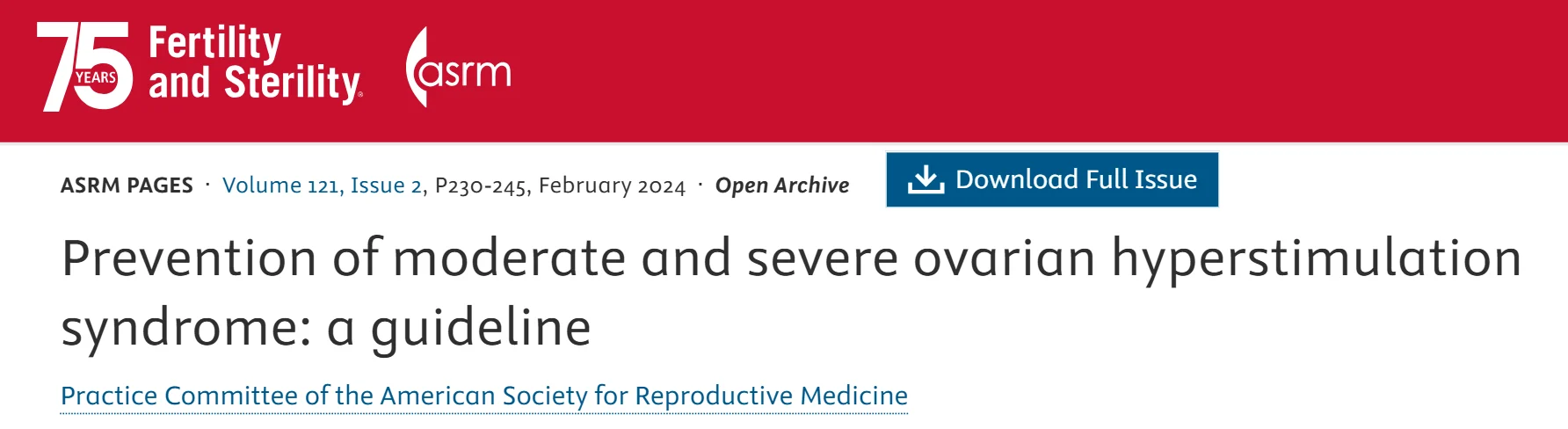
Title: Prevention of moderate and severe ovarian hyperstimulation syndrome: a guideline
Authors: Practice Committee of the American Society for Reproductive Medicine
You can read the Full Article in Fertility and Sterility.
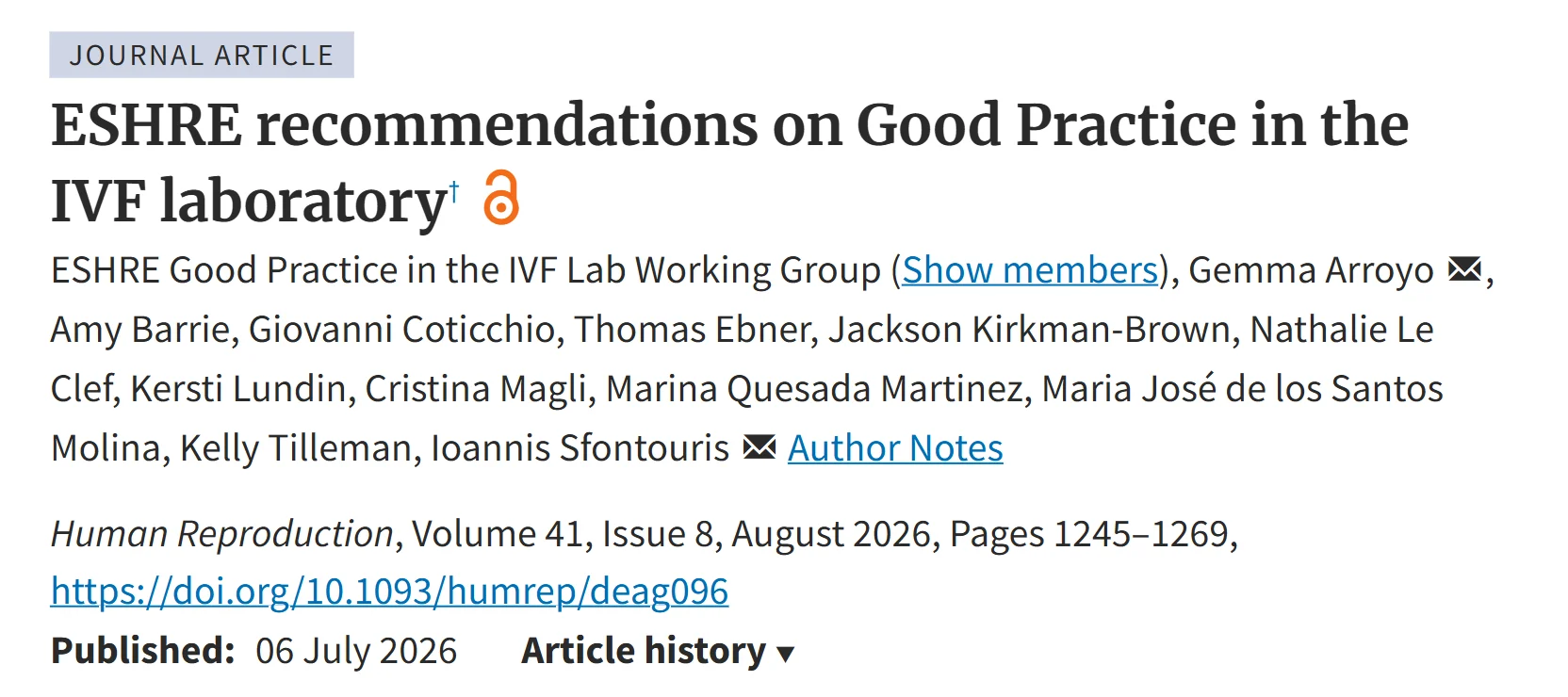
Title: ESHRE recommendations on Good Practice in the IVF laboratory
Authors: ESHRE Good Practice in the IVF Lab Working Group, Gemma Arroyo, Amy Barrie, Giovanni Coticchio, Thomas Ebner, Jackson Kirkman-Brown, Nathalie Le Clef, Kersti Lundin, Cristina Magli, Marina Quesada Martinez, Maria José de los Santos Molina, Kelly Tilleman, Ioannis Sfontouris
You can read the Full Article in Human Reproduction.
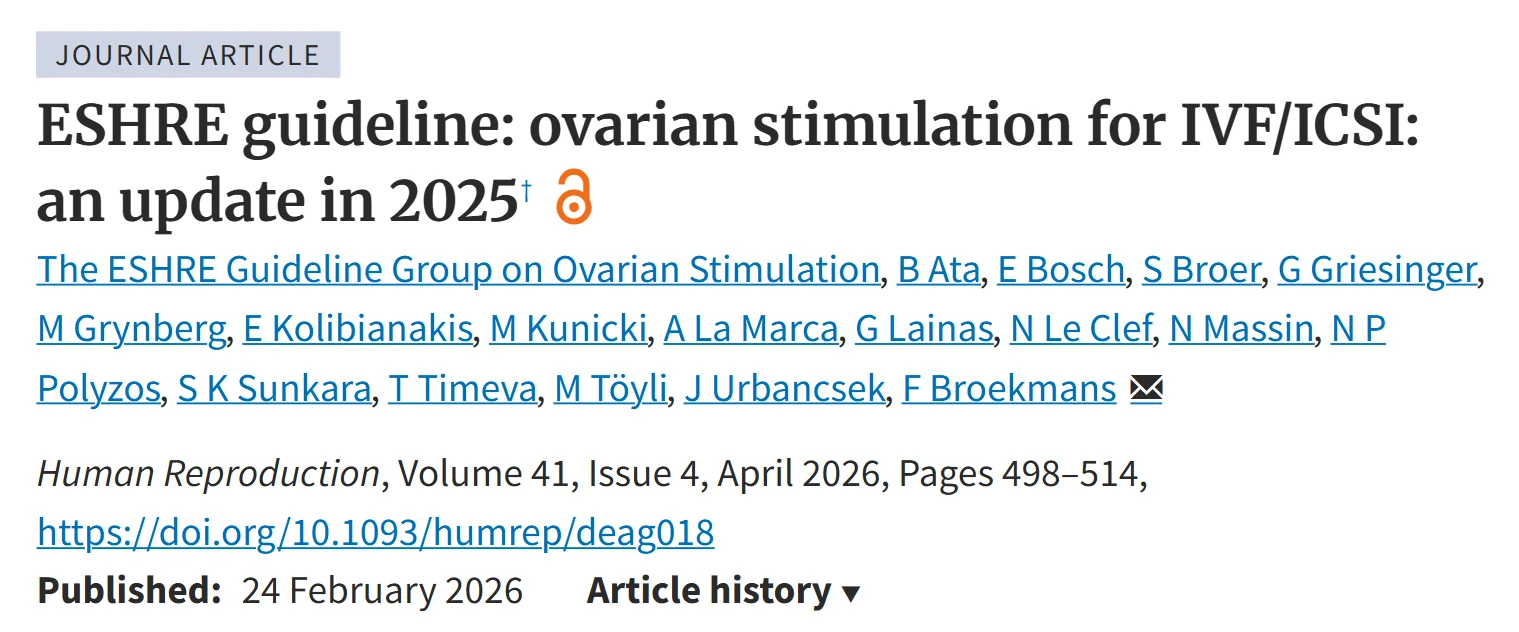
Title: ESHRE guideline: ovarian stimulation for IVF/ICSI: an update in 2025
Authors: The ESHRE Guideline Group on Ovarian Stimulation, B Ata, E Bosch, S Broer, G Griesinger, M Grynberg, E Kolibianakis, M Kunicki, A La Marca, G Lainas, N Le Clef, N Massin, N P Polyzos, S K Sunkara, T Timeva, M Töyli, J Urbancsek, F Broekmans
You can read the Full Article in Human Reproduction.
Title: Dopamine agonists for preventing ovarian hyperstimulation syndrome
Authors: Huilin Tang, Selma M. Mourad, Aihua Wang, Suo-Di Zhai, Roger J. Hart
You can read the Full Article in the Cochrane Database of Systematic Reviews.
Other articles featuring Saadat Hassan on Fertility News.
-
Sep 27, 2026, 15:51Saadat Hassan: Reproductive Ageing Is Not Just about Chromosomes…
-
Sep 27, 2026, 15:43Precious Chukwuemeka: A Glimpse Behind the Embryology Laboratory Doors
-
Sep 27, 2026, 15:35Lilian Yee: A Little “Bun” in the IVF Lab
-
Sep 27, 2026, 15:27Understanding the Clinical Implications of Ovulation Induction – Fertility Plus
-
Sep 27, 2026, 15:19Bhumika: Does the Culture Environment Change the Outcome?
-
Sep 27, 2026, 15:13Ingemārs Sokolovskis: Thoughts after Day 2 at the AIFertility World Conference
-
Sep 27, 2026, 15:04Huzaifa Gulzar: Right Equipment, Right Protection, Safer Laboratory
-
Sep 27, 2026, 14:55Yasmin Sajjad: A Wonderful Day at the Fertility Preservation and Modern IVF Scientific Seminar
-
Sep 27, 2026, 13:39David Qiuping Peng: There Is Maybe a Blastocyst Maturation-Competence Theory