

Samer R. Hammoudeh։ What Are We Missing When a Euploid Embryo Fails to Implant?
Samer R. Hammoudeh, IVF Lab Director at Fakih IVF Fertility Center, shared on LinkedIn:
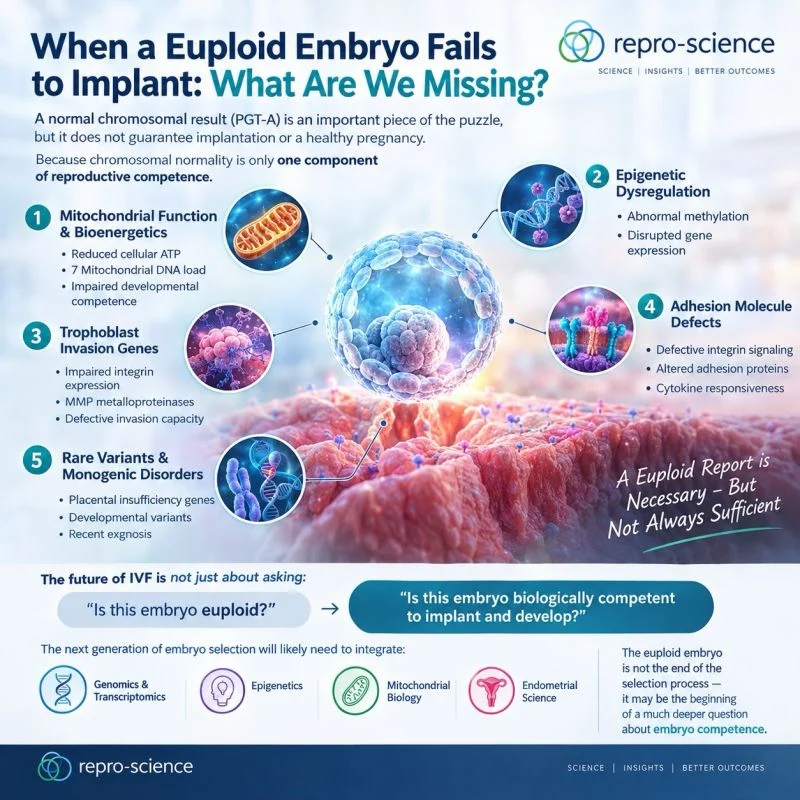
“When a euploid embryo fails to implant: what are we missing?
A euploid embryo is often considered the gold standard for embryo selection. But a normal PGT-A result does not guarantee implantation or a healthy pregnancy.
Why?
Because chromosomal normality is only one component of reproductive competence.
When a euploid embryo fails, we should think beyond aneuploidy and consider several biological layers:
- Mitochondrial function and bioenergetics
Embryos require enormous amounts of ATP during development. Mitochondrial function and mtDNA characteristics may influence developmental competence. - Epigenetic programming
Normal chromosomes do not necessarily mean normal gene expression. Abnormal DNA methylation and epigenetic dysregulation may affect implantation and development. - Trophoblast competence
Successful implantation requires the embryo to attach, invade, and communicate with the endometrium. Integrins, metalloproteinases and other invasion pathways are critical. - Cell adhesion and maternal – embryo communication
Implantation is not simply an ’embryo attaching to the uterus.’ It is a highly coordinated molecular interaction involving adhesion molecules, cytokines, and endometrial signaling. - Rare genetic and developmental variants
Some variants affecting placental development, implantation, or early embryogenesis may not be detected through routine PGT-A.
The key message:
PGT-A tells us about chromosome copy number. It does not tell us everything about embryo competence.
The future of IVF may therefore move from simply asking:
‘Is this embryo euploid?’
to asking:
‘Is this embryo biologically competent to implant and develop?’
This is where the convergence of genomics, transcriptomics, epigenetics, mitochondrial biology, AI-based embryo assessment and endometrial science becomes particularly exciting.
The euploid embryo is not the end of the selection process – it may be the beginning of a much deeper question about embryo competence.
- Genetic integrity
- Metabolic competence
- Epigenetic programming
- Endometrial receptivity
The next generation of embryo selection will likely need to integrate all four.”
Other articles featuring Samer R. Hammoudeh on Fertility News.
-
Oct 10, 2026, 16:11Abieyuwa Ehigiamusoe: Starting Your Embryology Journey?
-
Oct 10, 2026, 16:10Hajar Vahabzadeh: Embryo Quality – The Science Behind the Laboratory Environment
-
Oct 10, 2026, 16:08Karthik Raj: The POSEIDON Concept – Moving Beyond “Poor Responder”
-
Oct 10, 2026, 16:05Marking 15 Years of Fakih IVF Fertility Center
-
Oct 10, 2026, 16:04Eleni Polychronidou: How Men Feel About Infertility
-
Oct 10, 2026, 16:01Philippos Edimiris: Comparing Programmed Ovulatory FET with Modified Natural Cycle FET
-
Oct 10, 2026, 15:57Baby Caleb and His Mom Made the Day – Caperton Fertility Institute
-
Oct 10, 2026, 15:53Marga Esbert Algam: A Constructive and Engaging Visit to the Reproductive Medicine Laboratory and Cryobank
-
Oct 10, 2026, 15:50Why Mental Health Matters on the Fertility Journey – Egg Donor and Surrogate Solutions