
Somil Singhal: Developments in Preimplantation Genetic Testing and Embryo Selection
Somil Singhal, Medical Doctor at AIIMS (All India Institute of Medical Sciences, New Delhi), shared on LinkedIn:
”Developments in Preimplantation Genetic Testing and Embryo Selection
PGT-A
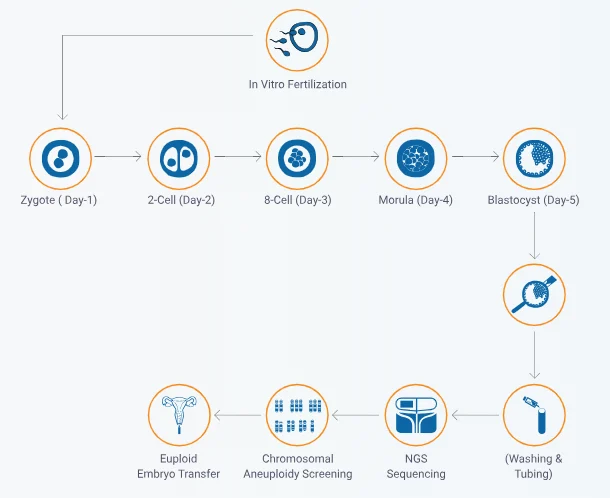
The major use of PGT has been to detect aneuploidy and other chromosomal defects, which is known as PGT-A (PGT for Aneuploidy).
The rationale for PGT-A is that aneuploidy in human embryos is very common and increases with advancing maternal age, from about 30% in young women to more than 80% after age 42.
Most aneuploid embryos fail to implant, and for this reason, selecting euploid embryos increases ongoing pregnancy rates per transfer
PGT-A (PGS): Improving Pregnancy Success Rates
Embryos carrying abnormal chromosome numbers occur frequently in infertile couples. Preimplantation Genetic Testing ( PGT-A (PGS)) is a genetic test performed on embryos to determine if the embryo is carrying a normal number of chromosomes.
Chromosomal abnormal embryos are screened so as to select and transfer genetically healthy embryos. This increases the chances of attaining a healthy pregnancy and reduces the risk of miscarriages.
When is PGT-A (PGS) Recommended
Women with advanced age and repeated implantation failure are at a higher risk of producing chromosomally abnormal embryos.
PGT-A (PGS) is recommended for patients diagnosed with male factor infertility, specifically when sperm samples are reported to carry abnormal chromosome numbers and for Idiopathic infertility, several miscarriages, or failed IVF attempts.
PGT-M: Testing for Monogenic or Single-Gene Disorders
PGT-M, or preimplantation genetic testing for monogenic disorders is used when one or both partners carry a known mutation associated with a specific heritable condition.
Unlike PGT-A, which surveys all chromosomes for numerical abnormalities, PGT-M is highly targeted. It is designed to detect a single, pre-identified genetic variant in embryos before transfer.
Conditions for which PGT-M may be used include cystic fibrosis, sickle cell disease, Tay-Sachs disease, Huntington’s disease, spinal muscular atrophy, and hereditary cancer syndromes linked to BRCA1 and BRCA2 mutations, among many others.
The specific mutation must be known and characterized in advance, and the laboratory must develop a customized testing protocol before the IVF cycle begins. This preparatory phase typically adds several weeks to the overall timeline.
PGT-M can significantly reduce the probability of an embryo carrying two copies of a recessive mutation, or a dominant mutation, depending on the inheritance pattern of the condition.
It does not screen for all possible genetic variants simultaneously, and it does not replace carrier screening for conditions that have not yet been identified in a patient’s personal or family history.
Which Type of PGT Testing Is Right for a Specific Situation
Commonly asked by patients
Its better to give convincing and honest answer:
PGT-A is most commonly recommended for patients of advanced maternal age, those with a history of recurrent pregnancy loss or repeated IVF failure, and those who wish to maximize the information available before a single embryo transfer.
PGT-M is recommended when a specific heritable single-gene condition has been identified in one or both partners, or when carrier screening has revealed that both partners carry variants for the same recessive condition.
PGT-SR is recommended when karyotyping has confirmed that one or both partners carry a chromosomal structural rearrangement.
In some cases, more than one type of testing may be appropriate simultaneously
Limitations side
PGT-A does not detect all genetic conditions, only chromosomal aneuploidy.
A euploid result does not guarantee implantation or a healthy live birth. PGT-M is highly specific to a known variant and does not provide broader genetic screening.
Mosaicism, where an embryo contains a mixture of chromosomally normal and abnormal cells, can produce results that are difficult to interpret and that require careful discussion.
False positive and false negative results, while uncommon in accredited laboratories, remain a possibility.
Benefits and Limitations of PGT Testing
Each type of PGT testing offers distinct potential benefits within an IVF cycle, and a clear understanding of those benefits sits alongside an equally clear understanding of their limits.
On the benefit side, PGT-A has been associated with higher implantation rates per transfer for euploid embryos compared to untested embryos in the same age group, and with reduced rates of early miscarriage attributable to chromosomal causes.
PGT-M can meaningfully reduce the risk of conceiving a child affected by a specific known genetic condition.
PGT-SR can reduce the rate of miscarriage in patients with structural rearrangements by identifying more viable embryos for transfer.
One question patients often raise is whether the biopsy itself could reduce the chances of a successful pregnancy.
The convincing answer to this is that trophectoderm biopsy does not significantly compromise embryo viability or pregnancy outcomes.
It is a procedure with a small margin of technical risk, and patients should feel comfortable
PGT-SR identifies which embryos carry a balanced or normal chromosomal arrangement and are therefore more suitable for transfer.
PGT-SR is less commonly discussed than PGT-A or PGT-M, but for patients with a confirmed structural rearrangement it can be a particularly meaningful form of testing.
PGT-SR:
Testing for Structural Chromosomal Rearrangements PGT-SR, or preimplantation genetic testing for structural rearrangements, is used when one or both partners carry a chromosomal rearrangement such as a translocation or inversion.
In these cases, the overall amount of chromosomal material may be normal, but segments of chromosomes have been repositioned in a way that can result in embryos with unbalanced chromosomal arrangements.
Patients who carry balanced translocations often have no health problems themselves, but their embryos face a higher risk of inheriting unbalanced chromosomal material, which can lead to miscarriage or developmental differences.
The specific mutation must be known and characterized in advance, and the laboratory must develop a customized testing protocol before the IVF cycle begins.
This preparatory phase typically adds several weeks to the overall timeline.
PGT-M can significantly reduce the probability of an embryo carrying two copies of a recessive mutation, or a dominant mutation, depending on the inheritance pattern of the condition in question.
It does not screen for all possible genetic variants simultaneously, and it does not replace carrier screening for conditions that have not yet been identified in a patients personal or family history.
PGT-M:
Testing for Monogenic or Single-Gene DisordersPGT-M, or preimplantation genetic testing for monogenic disorders, is used when one or both partners carry a known mutation associated with a specific heritable condition.
Unlike PGT-A, which surveys all chromosomes for numerical abnormalities, PGT-M is highly targeted.
It is designed to detect a single, pre-identified genetic variant in embryos before transfer.
Conditions for which PGT-M may be used include cystic fibrosis, sickle cell disease, Tay-Sachs disease, Huntingtons disease, spinal muscular atrophy, and hereditary cancer syndromes linked to BRCA1 and BRCA2 mutations, among many others.”
Proceed to the video attached to the post.
Other articles featuring on Somil Singhal Fertility News.
-
Oct 10, 2026, 16:11Abieyuwa Ehigiamusoe: Starting Your Embryology Journey?
-
Oct 10, 2026, 16:10Hajar Vahabzadeh: Embryo Quality – The Science Behind the Laboratory Environment
-
Oct 10, 2026, 16:08Karthik Raj: The POSEIDON Concept – Moving Beyond “Poor Responder”
-
Oct 10, 2026, 16:05Marking 15 Years of Fakih IVF Fertility Center
-
Oct 10, 2026, 16:04Eleni Polychronidou: How Men Feel About Infertility
-
Oct 10, 2026, 16:01Philippos Edimiris: Comparing Programmed Ovulatory FET with Modified Natural Cycle FET
-
Oct 10, 2026, 15:57Baby Caleb and His Mom Made the Day – Caperton Fertility Institute
-
Oct 10, 2026, 15:53Marga Esbert Algam: A Constructive and Engaging Visit to the Reproductive Medicine Laboratory and Cryobank
-
Oct 10, 2026, 15:50Why Mental Health Matters on the Fertility Journey – Egg Donor and Surrogate Solutions