

Beyond Fertilization: Understanding the Genetic Pathways Behind Recurrent Pregnancy Loss
“Recurrent pregnancy loss (RPL) raises a clinical question that extends beyond fertilization itself: when pregnancies repeatedly fail, is changing the method of fertilization enough, or does the pregnancy require a more detailed investigation of its biological cause?
Intracytoplasmic sperm injection (ICSI) remains an important assisted reproductive technology, particularly when significant male-factor infertility or previous poor or failed fertilization is present. However, ICSI facilitates fertilization; it does not correct embryonic aneuploidy or a parental structural chromosomal rearrangement. Understanding this distinction places RPL within a broader pathway involving reproductive medicine, embryology, and reproductive genetics.
What does recurrent pregnancy loss tell us about the embryo?
The 2026 American Society for Reproductive Medicine (ASRM) Committee Opinion defines RPL as the spontaneous loss of two or more pregnancies, excluding confirmed molar and ectopic pregnancies. Its updated evaluation framework places chromosome evaluation of miscarriage tissue, when feasible, at an early stage of investigation. This reflects an important biological principle: analysing the pregnancy that was lost can provide direct information about whether chromosomal abnormalities contributed to that particular miscarriage (ASRM Practice Committee, 2026).
Whole-chromosome aneuploidy is a major genetic contributor to early pregnancy loss and is strongly associated with maternal age. ASRM reports that approximately half of tested miscarriages in women younger than 35 years and approximately three-quarters in women older than 40 years are aneuploid. These findings help explain why an individual miscarriage may arise from a sporadic chromosomal error rather than from a persistent chromosomal abnormality in either parent (ASRM Practice Committee, 2026).
This distinction matters in RPL evaluation. A miscarriage demonstrating aneuploidy does not automatically indicate a parental chromosomal disorder. Conversely, identification of an unbalanced structural chromosomal rearrangement in pregnancy tissue can change the subsequent diagnostic pathway and make parental chromosome evaluation particularly relevant.
The method used to analyse miscarriage tissue also matters. Conventional karyotyping depends on successful cell culture and can be affected by culture failure and maternal-cell contamination. Array-based molecular approaches, including SNP-array and related technologies, provide important advantages for detecting chromosomal copy-number abnormalities without requiring viable cell culture. However, no single chromosome-testing platform detects every possible genetic abnormality, so test selection and interpretation remain important (ASRM Practice Committee, 2026).
When does genetic evaluation change the RPL pathway?
The result of miscarriage chromosome testing can influence what happens next.
When an unbalanced structural chromosomal rearrangement is identified, parental chromosomal evaluation becomes particularly relevant. A balanced reciprocal or Robertsonian translocation in a phenotypically normal parent can generate genetically unbalanced gametes during meiosis. The carrier may remain clinically unaffected because there is no substantial net loss or gain of genetic material, while some embryos may inherit an unbalanced chromosomal complement.
This is where parental karyotyping has a defined role. Contemporary guidance does not support describing parental karyotyping as an obligatory investigation for every patient with RPL. The 2026 ASRM guidance gives particular importance to parental chromosome evaluation when miscarriage testing identifies an unbalanced structural rearrangement or when miscarriage chromosome testing is unavailable. ESHRE similarly recommends consideration of parental karyotyping according to individual risk assessment and the genetic history of the couple rather than automatically applying it to every case (ASRM Practice Committee, 2026; ESHRE Guideline Group, 2023).
For couples in whom a structural rearrangement is confirmed, reproductive counselling becomes more specific. The reproductive consequences depend on the chromosomes involved, the type and location of the rearrangement, and the reproductive history of the couple. A single percentage therefore cannot accurately represent the reproductive risk for every translocation carrier.
At this stage, the embryology laboratory becomes part of a multidisciplinary pathway involving reproductive medicine, clinical genetics and, when appropriate, prenatal diagnosis.
What is the role of PGT-SR and PGT-A in recurrent pregnancy loss?
PGT-SR and PGT-A address different biological questions and should not be treated as interchangeable technologies.
PGT-SR is intended for embryos from individuals with a known structural chromosomal rearrangement. Depending on the testing platform and laboratory strategy, it can be used to identify embryos without the targeted unbalanced form of the rearrangement and therefore potentially suitable for transfer with respect to that specific chromosomal risk. The precise ability to distinguish balanced carriers from completely non-carrier embryos depends on the methodology used (ESHRE PGT Consortium, 2020).
PGT-A, in contrast, assesses chromosome copy number across the embryo, primarily for whole-chromosome aneuploidy. It is not a comprehensive genetic diagnosis and does not identify every possible cause of miscarriage.
This distinction becomes particularly important in RPL. Although embryonic aneuploidy is common in miscarriage, current evidence does not establish PGT-A as a universal treatment for recurrent pregnancy loss. The 2026 ASRM Committee Opinion states that PGT-A has not been shown overall to significantly reduce miscarriage or improve live birth compared with expectant management in RPL.
In women older than 40 years with a documented aneuploid miscarriage, PGT-A can reasonably be discussed through shared decision-making to reduce miscarriage because of aneuploidy, while patients should also be counselled that PGT-A has not been shown to reduce the time to successful pregnancy or increase live birth compared with expectant management (ASRM Practice Committee, 2026).
The 2024 ASRM Committee Opinion on PGT-A similarly concludes that routine use of PGT-A for all IVF patients has not been established. Its clinical value depends on patient selection, embryo availability, testing methodology, and the biological question being addressed (ASRM Practice Committee, 2024).
Evidence for PGT-SR also requires careful interpretation. ESHRE considers PGT-SR an option for couples with structural chromosomal rearrangements, but evidence comparing PGT-SR with expectant management for cumulative reproductive outcomes remains limited. Counselling therefore needs to include the possibility of obtaining fewer transferable embryos after testing as well as alternative reproductive strategies (ESHRE Guideline Group, 2023).
What does ICSI contribute to this genetic pathway?
ICSI remains an important component of modern ART. Its established clinical role is particularly relevant when significant sperm-related fertilization barriers exist or when conventional IVF has previously resulted in poor or failed fertilization. The question in RPL is therefore not whether ICSI is useful, but whether changing the fertilization method addresses the biological mechanism responsible for repeated pregnancy loss.
The 2026 ASRM Committee Opinion on ICSI for non-male-factor indications concludes that routine ICSI in patients without male-factor infertility or previous poor/no fertilization does not improve live-birth outcomes. It also reports no demonstrated benefit of ICSI over conventional IVF for embryo numbers, euploidy or live birth in patients undergoing PGT-A without male-factor infertility. Selected indications remain relevant, including previous poor or failed fertilization and the use of previously cryopreserved oocytes.
This conclusion is supported by contemporary randomized evidence. The 2025 INVICSI randomized clinical trial found no improvement in cumulative live birth with ICSI compared with conventional IVF among patients without severe male-factor infertility (Berntsen et al., 2025). A 2026 systematic review and meta-analysis of randomized controlled trials likewise found no significant advantage of ICSI over conventional IVF for live birth or cumulative live birth in couples without severe male-factor infertility (Kayimu and Berntsen, 2026).
These findings should not be interpreted as evidence against ICSI as a whole. Rather, they reinforce the importance of matching the fertilization method to the clinical indication. ICSI addresses the process of fertilization; it does not function as a chromosome-correction procedure.
For couples experiencing RPL, the more informative pathway begins with understanding the pregnancy loss itself. When miscarriage tissue is available, chromosome analysis can help determine whether a particular loss was associated with a chromosomal abnormality and whether the finding warrants further parental investigation. When a structural rearrangement is identified, genetic counselling and targeted reproductive options become relevant. When no explanatory chromosomal abnormality is identified, the broader RPL evaluation remains important because pregnancy loss is multifactorial and not every miscarriage has a genetic explanation.
The embryology laboratory therefore occupies an important position within this pathway. Embryologists contribute to embryo assessment, biopsy strategy, cryopreservation and PGT workflows while working alongside reproductive endocrinologists and clinical geneticists. The laboratory does not replace genetic counselling; rather, it translates genetic and embryological information into technically appropriate laboratory practice.
Recurrent pregnancy loss is not a single-disease process, and no single laboratory intervention addresses every mechanism. The value of a genetic roadmap lies in distinguishing the biological question from the technological response: understanding what happened to the pregnancy first, and then determining which diagnostic or reproductive strategy is appropriate for the finding.”
Written by Saadat Hassan
Senior Clinical Embryologist/IVF and Embryology
BSc (Hons) Medical Laboratory Technology
King Edward Medical University, Lahore, Pakistan
References
Title: Recurrent pregnancy loss: a committee opinion
Authors: Practice Committee of the American Society for Reproductive Medicine
You can read the Full Article in Fertility and Sterility.
Title: Intracytoplasmic sperm injection for nonmale factor indications: a Committee opinion
Authors: Practice Committee of the American Society for Reproductive Medicine, Practice Committee of the Society for Assisted Reproductive Technology
You can read the Full Article in Fertility and Sterility.
Title: Does intracytoplasmic sperm injection outperform conventional in vitro fertilization in couples without severe male factor infertility? A systematic review and meta-analysis of randomized controlled trials
Authors: Kailibinuer Kayimu, Sine Berntsen, Yu Fu, Yi Yuan, Kilian Vomstein, Tian Tian, Fang Liu, Jiayi Gao, Lan N Vuong, Tuong M Ho, Bao G Huynh, Toan D Pham, Vinh Q Dang, Dea Frøding Skipper, Anne Zedeler, Anja Pinborg, David Westergaard, Ben W Mol, Henriette Svarre Nielsen, Nina la Cour Freiesleben, Jie Qiao, Yuanyuan Wang
You can read the Full Article in Human Reproduction.
Title: IVF versus ICSI in patients without severe male factor infertility: a randomized clinical trial
Authors: Sine Berntsen, Anne Zedeler, Bugge Nøhr, Morten Rønn Petersen, Marie Louise Grøndahl, Lars Franch Andersen, Kristine Løssl, Ellen Løkkegaard, Anne Lis Englund, Anette Vestergaard Gabrielsen, Lisbeth Prætorius, Ida Behrendt-Møller, Lea Langhoff Thuesen, Kilian Vomstein, Mette Petri Lauritsen, Aleksandra Ivanoska Trajcevski, Dea Frøding Skipper, David Westergaard, Anja Pinborg, Henriette Svarre Nielsen, Nina la Cour Freiesleben
You can read the Full Article in Nature Medicine.
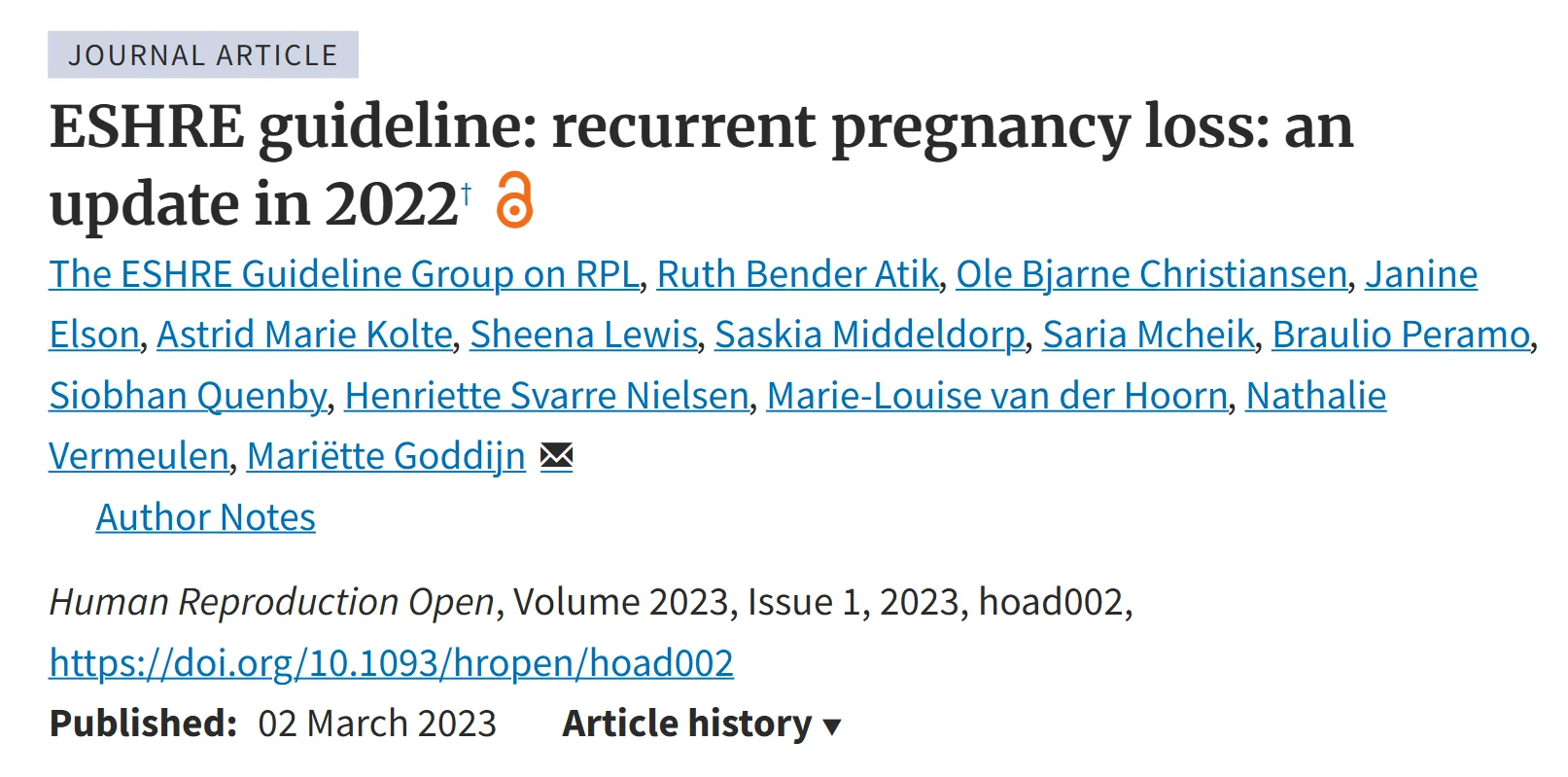
Title: ESHRE guideline: recurrent pregnancy loss: an update in 2022
Authors: The ESHRE Guideline Group on RPL, Ruth Bender Atik, Ole Bjarne Christiansen, Janine Elson, Astrid Marie Kolte, Sheena Lewis, Saskia Middeldorp, Saria Mcheik, Braulio Peramo, Siobhan Quenby, Henriette Svarre Nielsen, Marie-Louise van der Hoorn, Nathalie Vermeulen, Mariëtte Goddijn
You can read the Full Article in Human Reproduction Open.
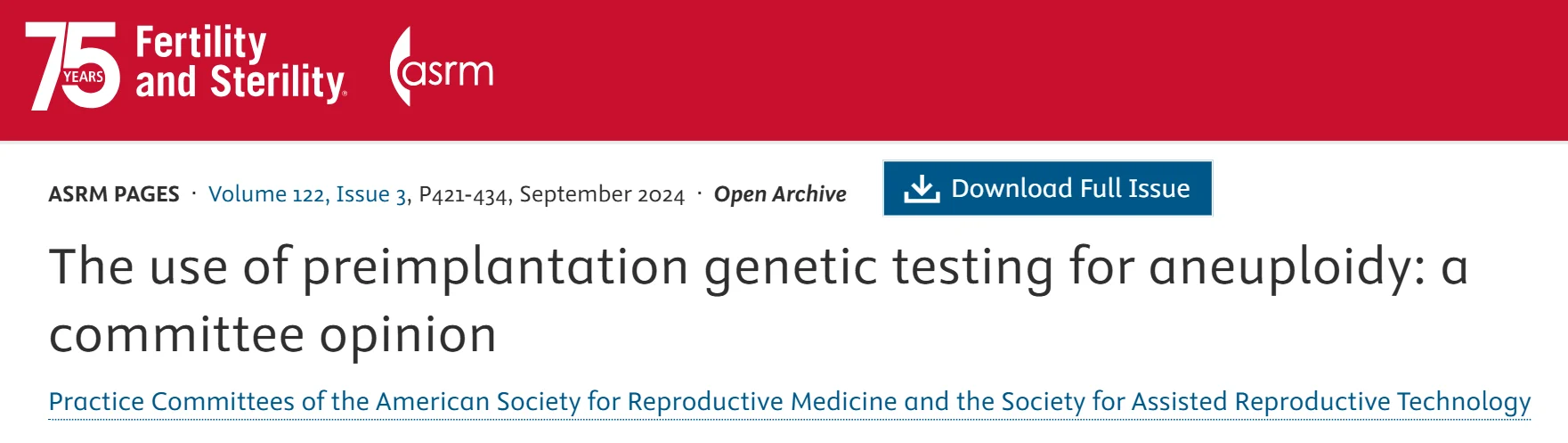
Title: The use of preimplantation genetic testing for aneuploidy: a committee opinion
Authors: Practice Committees of the American Society for Reproductive Medicine and the Society for Assisted Reproductive Technology
You can read the Full Article in Fertility and Sterility.
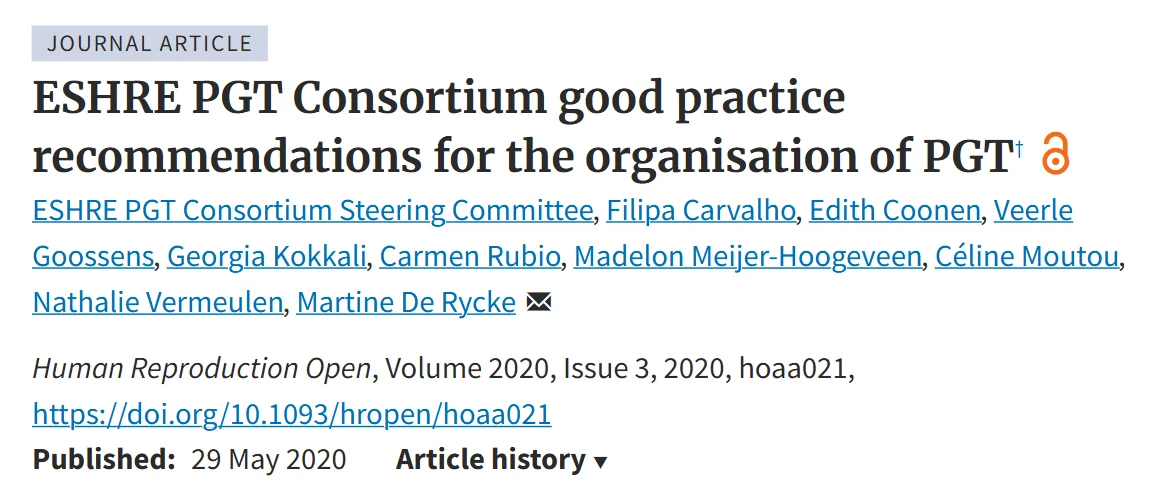
Title: ESHRE PGT Consortium good practice recommendations for the organisation of PGT
Authors: ESHRE PGT Consortium Steering Committee, Filipa Carvalho, Edith Coonen, Veerle Goossens, Georgia Kokkali, Carmen Rubio, Madelon Meijer-Hoogeveen, Céline Moutou, Nathalie Vermeulen, Martine De Rycke
You can read the Full Article in Human Reproduction Open.
Other articles featuring Saadat Hassan on Fertility News.
-
Oct 10, 2026, 16:11Abieyuwa Ehigiamusoe: Starting Your Embryology Journey?
-
Oct 10, 2026, 16:10Hajar Vahabzadeh: Embryo Quality – The Science Behind the Laboratory Environment
-
Oct 10, 2026, 16:08Karthik Raj: The POSEIDON Concept – Moving Beyond “Poor Responder”
-
Oct 10, 2026, 16:05Marking 15 Years of Fakih IVF Fertility Center
-
Oct 10, 2026, 16:04Eleni Polychronidou: How Men Feel About Infertility
-
Oct 10, 2026, 16:01Philippos Edimiris: Comparing Programmed Ovulatory FET with Modified Natural Cycle FET
-
Oct 10, 2026, 15:57Baby Caleb and His Mom Made the Day – Caperton Fertility Institute
-
Oct 10, 2026, 15:53Marga Esbert Algam: A Constructive and Engaging Visit to the Reproductive Medicine Laboratory and Cryobank
-
Oct 10, 2026, 15:50Why Mental Health Matters on the Fertility Journey – Egg Donor and Surrogate Solutions