

Rajeev Agarwal: Why Rubella IgG Is on My Preconception Sheet
Rajeev Agarwal, Director of Renew Healthcare, shared on LinkedIn:
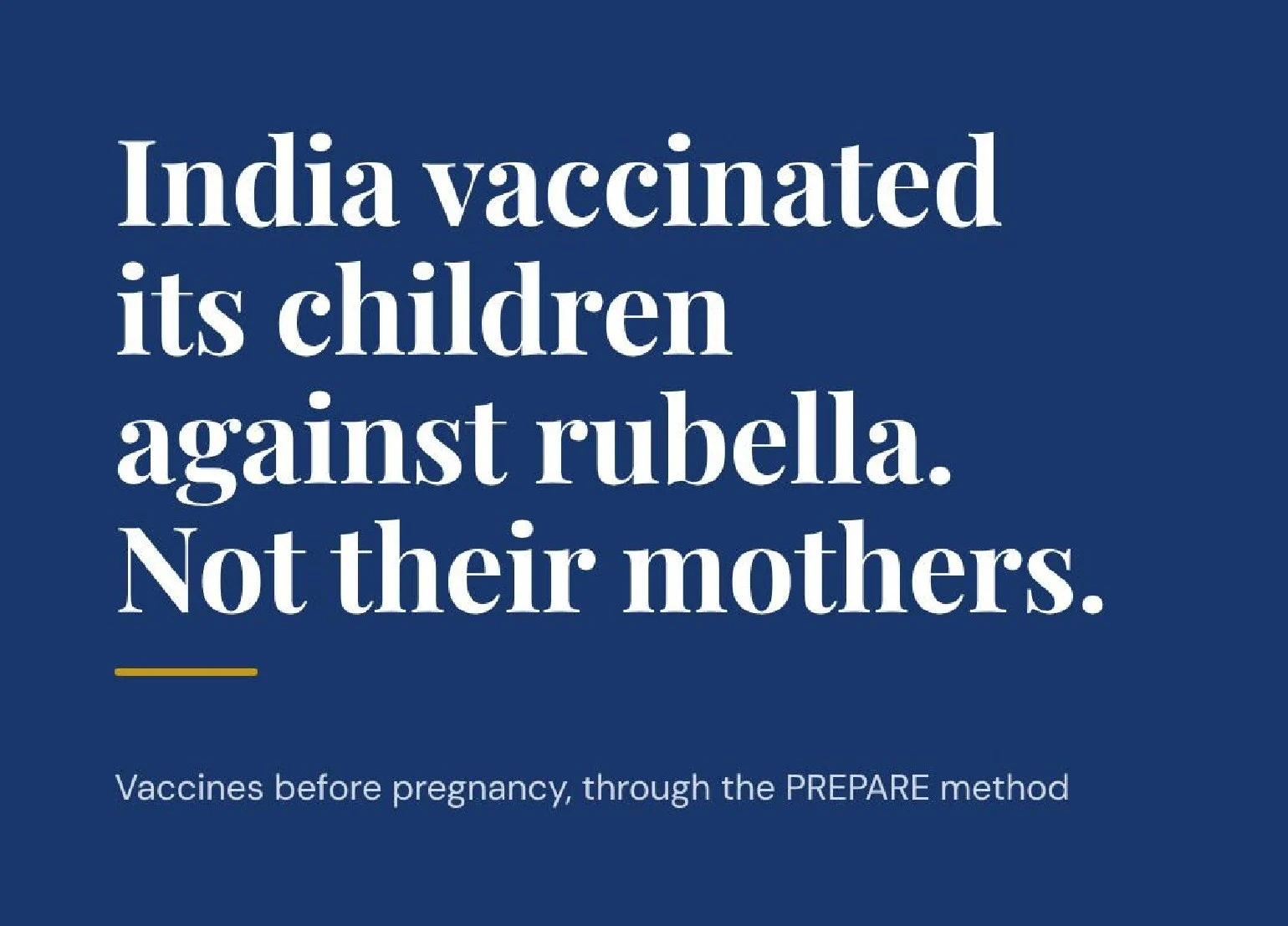
”India vaccinated its children against rubella. Not their mothers.
That is why rubella IgG is on my preconception sheet, and why it starts the conversation about vaccines before pregnancy that most couples have not had before they start trying.
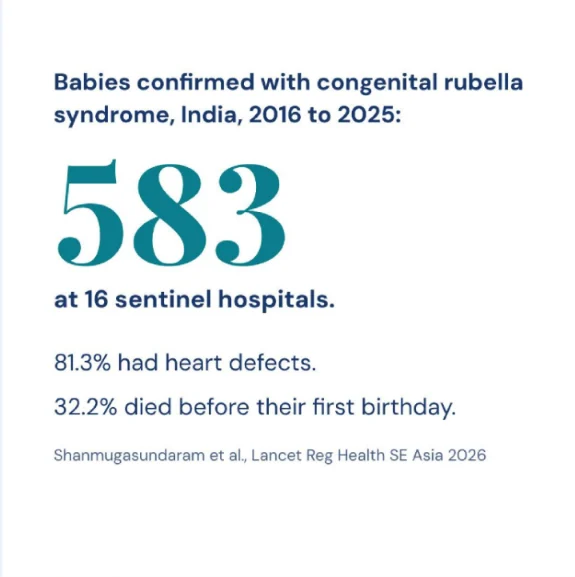
Rubella early in pregnancy can damage the baby’s heart, hearing, and eyes. India’s sentinel surveillance of congenital rubella syndrome, published this year, confirmed 583 affected infants at 16 hospitals between 2016 and 2025: 81.3% had heart defects, and 32.2% had died by their first birthday.
The confirmed share fell from 24.9% in 2017 to 2.5% in 2025, a fall that tracks the measles-rubella campaign.
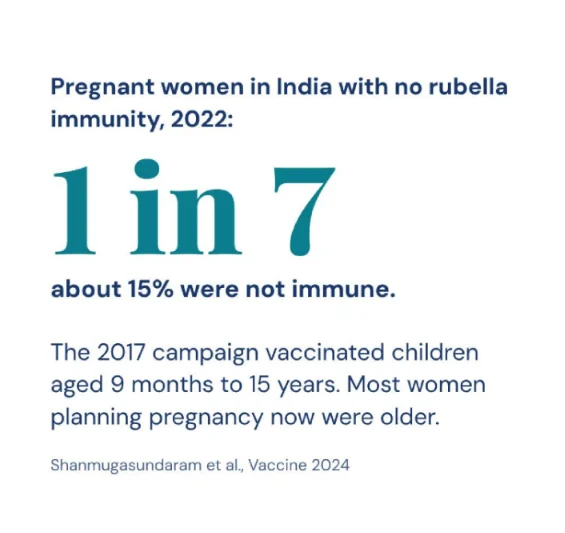
But that campaign vaccinated children aged 9 months to 15 years, starting in 2017. Most women planning a pregnancy today were already older. A national serosurvey of pregnant women in 2022 found about 15%, roughly 1 in 7, had no rubella immunity, and its authors note that women of this age have no routine chance to be vaccinated.
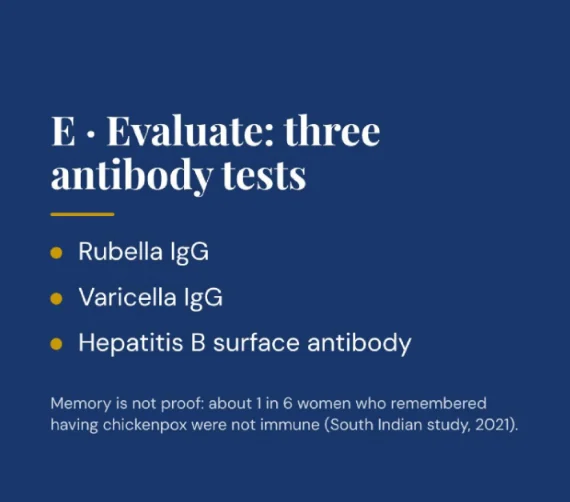
In the PREPARE method, this sits across two steps: Evaluate checks immunity, and Prevent and Protect closes the gap. My preconception sheet lists three antibody tests: rubella IgG, varicella IgG, and hepatitis B surface antibody, and the vaccine that follows whenever one is negative.
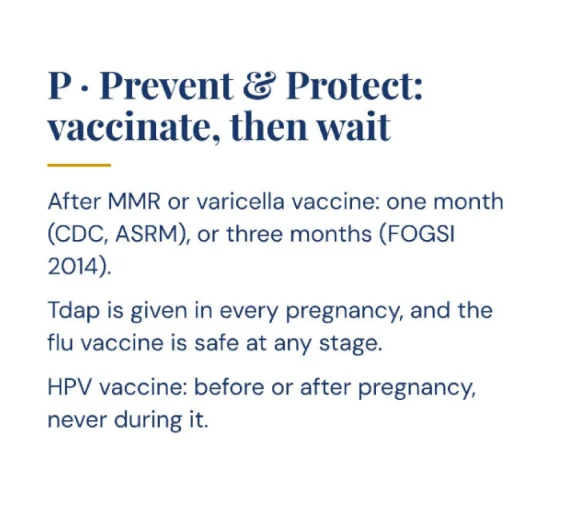
What guidelines say. ASRM (2024): rubella, measles, and varicella immunity ‘should be documented before pregnancy’. After MMR or varicella vaccine, CDC and ASRM advise avoiding pregnancy for one month; FOGSI’s 2014 statement says three months.
If a woman conceives soon after MMR, I reassure her: in 680 births after inadvertent rubella vaccination, CDC recorded no case of congenital rubella syndrome, and it is not a reason to end a pregnancy. Influenza and Tdap need not delay trying: Tdap is given in every pregnancy, and the flu vaccine is safe at any stage.
Two Indian details most Western checklists miss:
- ‘I had chickenpox as a child’ is not proof. In a South Indian study, 23% of pregnant women had no varicella antibodies, and about 1 in 6 who remembered having chickenpox were not immune.
- India’s HPV drive now covers girls aged 14. A woman of 28 was never part of it, and because the vaccine is not given in pregnancy, the planning visit is the natural time to discuss it.
What to take away:
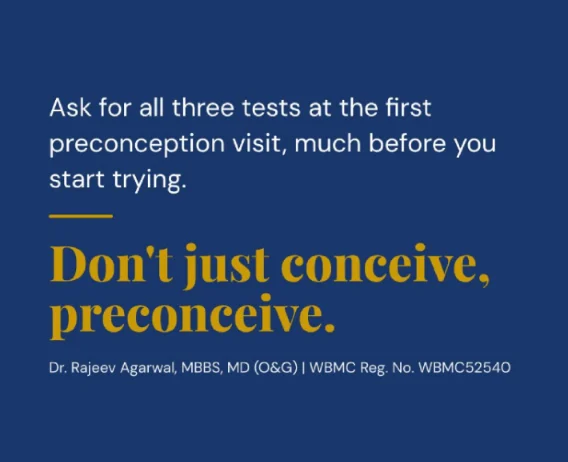
- Ask for rubella IgG, varicella IgG, and hepatitis B antibody at the first preconception visit.
- If a vaccine is needed, plan it well before trying: at least one month, or three if your doctor follows FOGSI.
- Keep the vaccine dates with your pregnancy file.
Don’t just conceive, preconceive.”
Other articles featuring Rajeev Agarwal on Fertility News.
-
Oct 18, 2026, 18:01Ting Yuan: Attending a Locally Organised Reproductive Medicine Conference in Malaysia with My Team
-
Oct 18, 2026, 17:55Khalil Faaed: Ovarian Rejuvenation with PRP
-
Oct 18, 2026, 17:49UCLA Law Center on Reproductive Health, Law, and Policy Hosts Panel on Menopause and Women’s Health Equity
-
Oct 18, 2026, 17:41Arora Suhani Gagan: Everyone Was Discussing Her Pregnancy, but Nobody Asked What She Wanted
-
Oct 18, 2026, 17:07Robert Borowczyk: Fertility Questions Need Different Answers
-
Oct 18, 2026, 17:05Farah Yasin: Another Successful ART Fertility Clinics Conference in Abu Dhabi
-
Oct 18, 2026, 17:01Hilary Friedlander: Excited to Offer NeedleFree IVF at Atlantic Fertility
-
Oct 18, 2026, 16:59Rabih Chaoui: New Edition of “First Trimester Ultrasound Diagnosis of Fetal Abnormalities”
-
Oct 18, 2026, 16:56Arsiak Vartenian: My Daughter Was Born Through Surrogacy, and That Is a Story Worth Telling