

Partha Sarathi Das: Fertility Begins Before Birth – The Role of Developmental Biology, Genetics, and Epigenetics
Partha Sarathi Das, Medical Director and Consultant in Reproductive Endocrinology and Infertility at Orchid Fertility, shared on LinkedIn:
“Fertility Begins Before Birth. The role of developmental biology, genetics, and epigenetics.
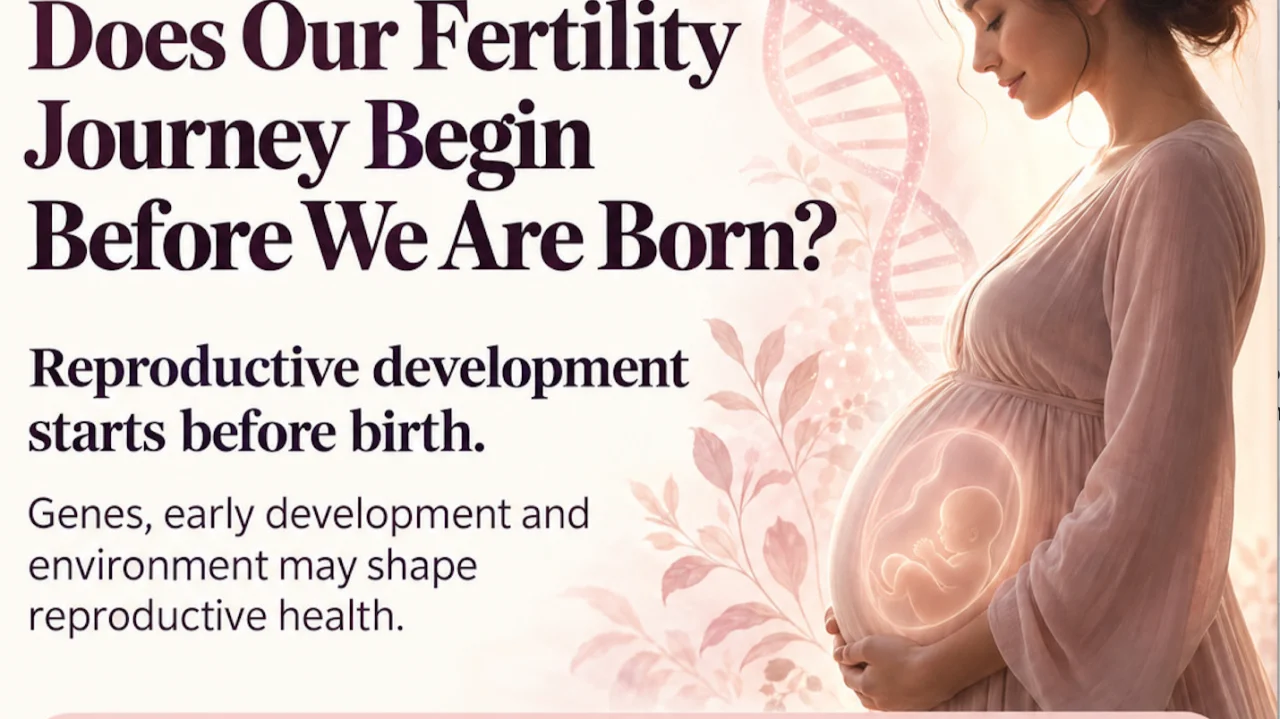
Does Our Fertility Journey Begin Before We Are Born?
We often think about fertility only when someone decides to have a child.
But what if part of our reproductive-health story begins much earlier?
Our biological development starts in our mother’s womb.
Maternal nutrition, metabolic health, placental function, genetics, and environmental exposures may influence the development of our organs and physiological systems.
Epigenetics offers a fascinating perspective on how developmental and environmental conditions can influence gene expression without altering our DNA sequence.
As we grow, nutrition, endocrine regulation, metabolism, and environmental exposures continue to interact with our biology.
Does this mean infertility is predetermined before birth? Certainly not.
But it raises an important question.
Should reproductive medicine look beyond the immediate fertility problem and understand the lifelong biological journey of the individual?
Perhaps we need to study not only how eggs and sperm function today, but also the developmental influences that helped shape their biological environment.
Fertility is not an isolated event. It is part of a much longer story of human health.
We Talk About Egg and Sperm Quality. Are We Overlooking the Energy That Powers Them?
A seed needs more than the possibility of growth.
Suitable soil, water, and light help roots grow down and shoots rise up.
Human reproduction is much more complex-but the analogy reminds us that the conditions supporting life matter too.
Inside our cells, mitochondria help produce ATP: usable chemical energy.
In an oocyte – an immature egg – this energy supports maturation, chromosome separation, and early development after fertilization.
A 2025 review explains these mitochondrial connections. Likewise, In sperm, mitochondria in the midpiece help supply energy for movement.
A 2024 systematic review links mitochondrial impairment with poorer sperm function.
Excess oxidative stress-a harmful imbalance involving reactive molecules-can damage cellular components and sperm and egg DNA.
But some reactive molecules also have normal signalling roles.
Biology needs regulation, not simply ‘more energy’ or ‘less oxidation.’
The uterus matters too, but reproduction is not a uterus-only story.
Egg and sperm function also depend on the environments in which they develop, alongside the body’s hormonal and metabolic systems.
This is a shared conversation for men and women-and it should begin with lifelong predcitive health, not only when pregnancy is planned.
Start gradually: ensure sleep hygiene, move regularly, eat adequately, avoid smoking, and make room for stress recovery and supportive relationships.
Be mindful about your body’s subtle signals.
Though these habits support metabolic health; they do not guarantee better eggs, sperm, or pregnancy. Nor is ‘mitochondrial health’ a supplement promise.
In the, 2025 SUMMER trial involving 1,171 men, the tested antioxidant combination did not improve ongoing-pregnancy rates compared with placebo.
The growing-life analogy has limits: infertility is not proof of an unhealthy body or poor self-care.
Genetics, age, and specific medical conditions also matter. Lifestyle complements appropriate care rather than replacing it.
We cannot rewrite our biological past but we can slowly improve how we care for ourselves today.
For sure, Life blooms in a fertile soil. But, unfortunately our cellular level soil is threatened by inflammation.
It is through the holistic and mindful approach that we reduce inflammation to achieve good health and procreation.
If reproductive health depends partly on the health of our cells, should awareness begin years before we plan a pregnancy?”
Stay informed with the latest updates in fertility and reproductive medicine on Fertility News.
-
Oct 19, 2026, 17:08Shweta Mendiratta: A Baby Boy Was Born From an Embryo that Had Been Frozen for More Than 31 Years
-
Oct 19, 2026, 17:04Khalil Faaed: What Morphological Abnormalities Reveal About Oocyte Competence in IVF
-
Oct 19, 2026, 17:01Daniel Plaksin: HLA-G Glycosylation Emerges as a Potential Mechanism in RPL
-
Oct 19, 2026, 16:59Justin Houman: 4 Checks Before Anyone Starts Testosterone
-
Oct 19, 2026, 16:57Sonia Khourta: Proud to Be Part of the ART Fertility Family
-
Oct 19, 2026, 16:55ACOG Is Moving the Needle on Menopause
-
Oct 19, 2026, 16:53Gila Zarbiv: Why Isn’t Continuity of Midwife Care Happening Everywhere?
-
Oct 19, 2026, 16:50Laura Eyeh Anwah: Why Pregnant Women Should Attend 8 Antenatal Visits Instead of 4
-
Oct 19, 2026, 16:48Diana Kayal: A Full Day of Research and Scientific Data at the 9th ART Fertility Conference