
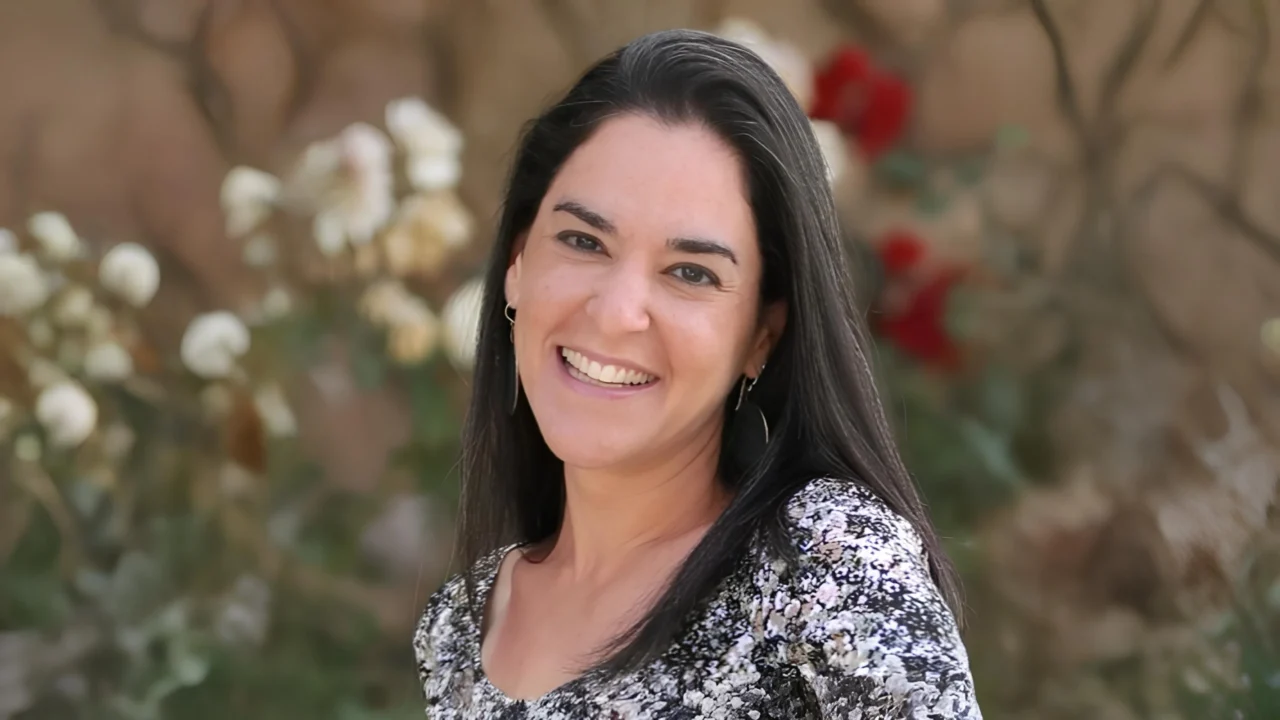
Gila Zarbiv: Why Isn’t Continuity of Midwife Care Happening Everywhere?
Gila Zarbiv, PHD Candidate at Ben-Gurion University of the Negev, shared a post on LinkedIn about a paper she co-authored with colleagues, published in the International Journal of Nursing Studies:
”Imagine I told you there was a healthcare innovation associated with 9% fewer caesarean births, 11% fewer instrumental births, and 17% fewer episiotomies.
It could also reduce stillbirths and preterm births, all while improving women’s experiences and saving money.
Wouldn’t you expect the world to invest in it?
Now imagine it isn’t experimental technology. Cochrane reviews and decades of research support it.
In fact, it’s so significant that the World Health Organization has published a global position paper supporting implementation, followed by implementation guidelines!
Yet, in 2026, it has yet to be implemented globally.
The innovation?
Continuity of midwife care (CoMC).
Nothing about this is revolutionary. In fact, its ancient. It means being pregnant and having a midwife who actually knows you, follows you, is there for your birth, and continues caring for you and your baby afterward.
Someone who knows your medical history, concerns, preferences, and family.
Instead of meeting a different healthcare professional every appointment, and starting your story all over again, you have an ongoing relationship with your midwife.
Sounds almost ridiculously simple, doesn’t it? So why isn’t it happening everywhere?
That question is at the heart of my PhD research, and I’m incredibly excited to share our newly published article in the International Journal of Nursing Studies!
We invest enormous resources in trials, reviews, guidelines, and recommendations. Yet evidence still fails to reach everyday practice. Understanding why is the field of implementation science.
For this study, I interviewed 22 midwives and implementation scientists whose experiences spanned all six World Health Organization regions.
These were people who had actually worked to implement CoMC in very different healthcare systems. We wanted to understand what was the scaffolding required to pragmatically make it happen.
Using the CICI framework, we mapped four interconnected forms of work: authorizing, institutionalizing, configuring, and legitimizing.
We also found something crucial: the people leading change and the experts who study how to make change happen are often working in parallel, rather than together.
Imagine what could happen if we connected them earlier.
This article may be about midwifery, but the question is much bigger.
How many proven innovations remain inaccessible?
How many people miss out on better care, not because we lack evidence, but because we haven’t figured out how to implement it?
We cannot keep investing in discovering what works without investing just as seriously in making it happen.
I’m so grateful to share this work with my mentor Prof. Moriah Ellen and co-author Dr. Rebecca Clark.
Thank you both for everything!
We dedicate this to the 22 midwives and implementation scientists who shared their time and hard-won experience: this work exists because of you.”
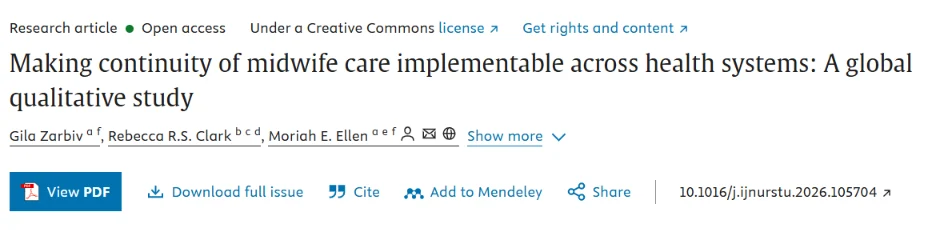
Title: Making continuity of midwife care implementable across health systems: A global qualitative study
Authors: Gila Zarbiv, Rebecca R.S. Clark, Moriah E. Ellen
You can read the Full Article in the International Journal of Nursing Studies.
Stay informed with the latest updates in fertility and reproductive medicine on Fertility News.
-
Oct 19, 2026, 17:08Shweta Mendiratta: A Baby Boy Was Born From an Embryo that Had Been Frozen for More Than 31 Years
-
Oct 19, 2026, 17:06Partha Sarathi Das: Fertility Begins Before Birth – The Role of Developmental Biology, Genetics, and Epigenetics
-
Oct 19, 2026, 17:04Khalil Faaed: What Morphological Abnormalities Reveal About Oocyte Competence in IVF
-
Oct 19, 2026, 17:01Daniel Plaksin: HLA-G Glycosylation Emerges as a Potential Mechanism in RPL
-
Oct 19, 2026, 16:59Justin Houman: 4 Checks Before Anyone Starts Testosterone
-
Oct 19, 2026, 16:57Sonia Khourta: Proud to Be Part of the ART Fertility Family
-
Oct 19, 2026, 16:55ACOG Is Moving the Needle on Menopause
-
Oct 19, 2026, 16:50Laura Eyeh Anwah: Why Pregnant Women Should Attend 8 Antenatal Visits Instead of 4
-
Oct 19, 2026, 16:48Diana Kayal: A Full Day of Research and Scientific Data at the 9th ART Fertility Conference