
Akansha Negi: An Embryo’s First Chapter Is Written Before It Even Begins to Divide…
Akansha Negi, Trainee Embryologist at Akanksha IVF Centre at Mata Chanan Devi Hospital, shared on LinkedIn:
“An embryo’s first chapter is written before it even begins to divide.
Before the first cleavage. Before the morula. Before the blastocyst.
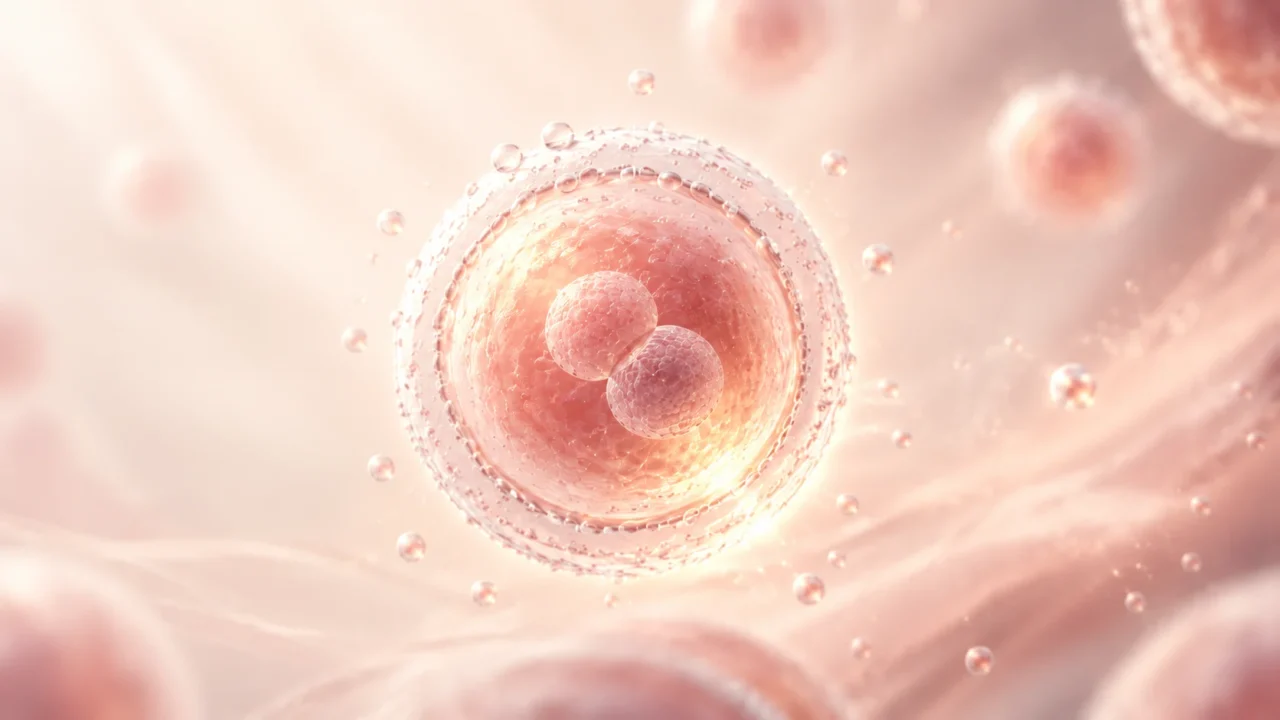
An extraordinary amount of biological preparation has already taken place inside a single cell: the oocyte.
And here is what makes it fascinating: the earliest embryo does not start from scratch.
1. The oocyte comes with its own biological toolkit.
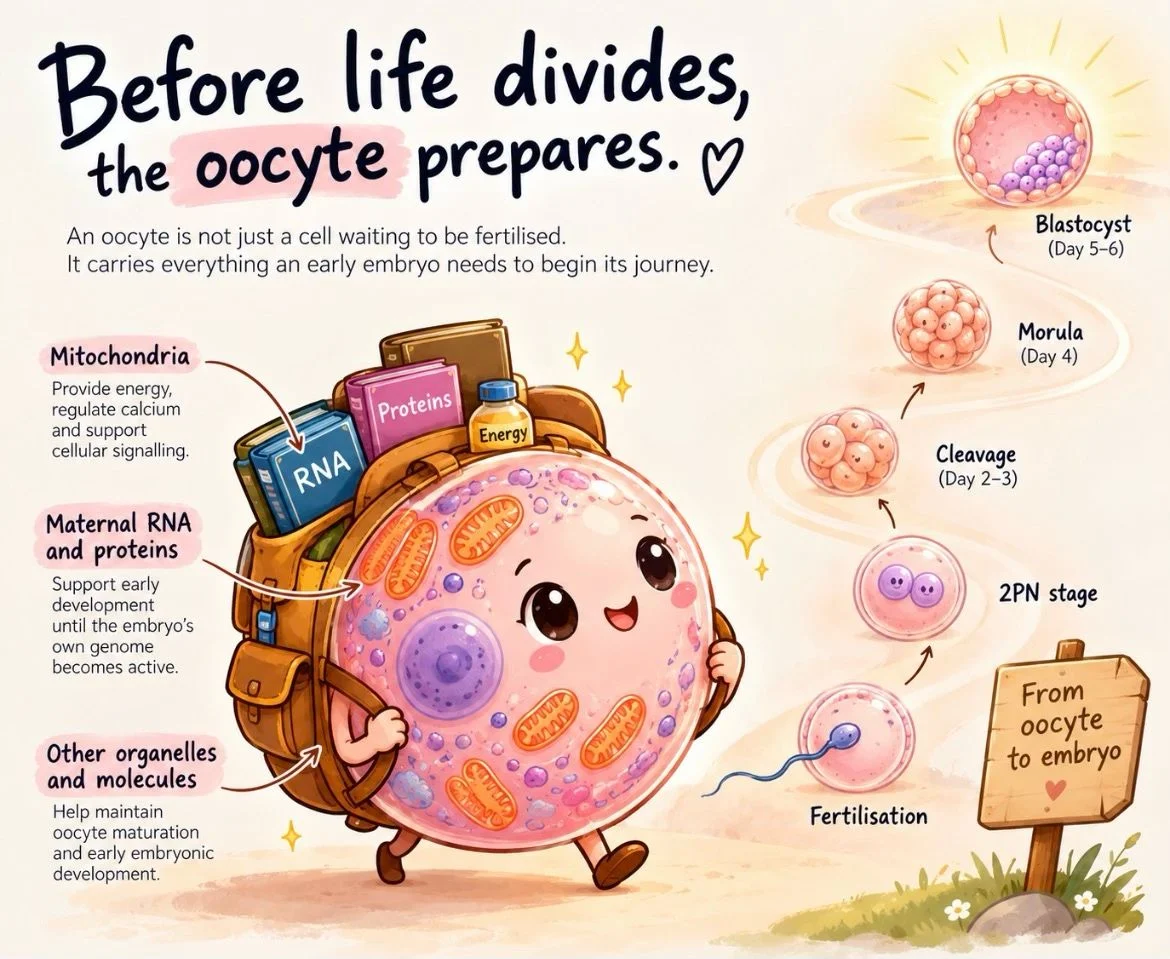
During its growth, the oocyte accumulates maternal RNAs, proteins, organelles and other molecules that support maturation, fertilisation and early embryonic development.
Think of it as preparing the molecular resources needed for a journey before that journey begins.
These stored molecules are essential because the newly fertilised embryo cannot immediately rely entirely on its own genome.
2. Mitochondria are more than cellular powerhouses.
We often associate mitochondria with ATP production.
But their role extends to calcium regulation, cellular signalling and metabolic balance – processes that matter during oocyte maturation, fertilisation and early development.
Here is the intriguing part: more mitochondria do not necessarily mean a better oocyte.
Their functional state, distribution and metabolic activity matter too. Mitochondrial number alone cannot reliably predict an oocyte’s developmental competence.
It is a reminder that biology rarely comes down to a single number.
3. The embryo must gradually activate its own genetic programme.
Initially, early development depends heavily on maternally supplied molecules.
Then comes a remarkable transition: embryonic genome activation.
In humans, major embryonic genome activation occurs around the four- to eight-cell stage, although some embryonic transcription begins earlier.
The embryo progressively begins expressing its own genes, shifting from reliance on stored maternal resources towards its own developmental programme.
One cell. Two pronuclei. Repeated divisions. Increasing biological complexity.
All of this depends on a tightly coordinated sequence of molecular events.
What does this mean for clinical embryology?
What we observe under the microscope is only part of the story.
Morphology helps us assess oocytes and embryos, but it cannot reveal every aspect of their molecular, metabolic or developmental competence.
Two oocytes may appear similar while differing in biological characteristics that morphology alone cannot fully capture.
Perhaps that is what makes embryology so fascinating: the beginning of life is not a single event, but a beautifully coordinated sequence of molecular processes, many of which begin long before the first cell division.
The more we understand the biology hidden within the oocyte, the more we realise how much remains to be discovered. And sometimes, the most extraordinary stories in human development begin at a scale far too small for the naked eye to see.”
Other articles featuring Akansha Negi on Fertility News.
-
Oct 19, 2026, 17:08Shweta Mendiratta: A Baby Boy Was Born From an Embryo that Had Been Frozen for More Than 31 Years
-
Oct 19, 2026, 17:06Partha Sarathi Das: Fertility Begins Before Birth – The Role of Developmental Biology, Genetics, and Epigenetics
-
Oct 19, 2026, 17:04Khalil Faaed: What Morphological Abnormalities Reveal About Oocyte Competence in IVF
-
Oct 19, 2026, 17:01Daniel Plaksin: HLA-G Glycosylation Emerges as a Potential Mechanism in RPL
-
Oct 19, 2026, 16:59Justin Houman: 4 Checks Before Anyone Starts Testosterone
-
Oct 19, 2026, 16:57Sonia Khourta: Proud to Be Part of the ART Fertility Family
-
Oct 19, 2026, 16:55ACOG Is Moving the Needle on Menopause
-
Oct 19, 2026, 16:53Gila Zarbiv: Why Isn’t Continuity of Midwife Care Happening Everywhere?
-
Oct 19, 2026, 16:50Laura Eyeh Anwah: Why Pregnant Women Should Attend 8 Antenatal Visits Instead of 4