
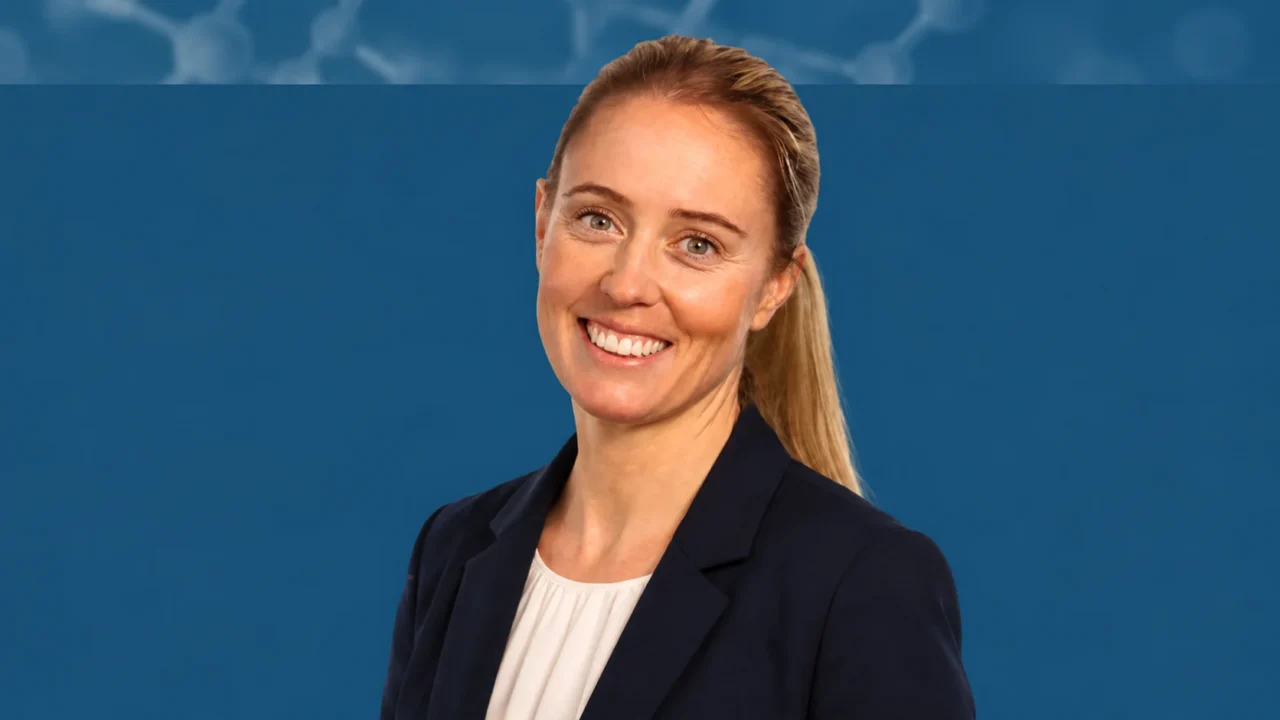
Ula Sankowska: What I’ll Bring to ASRM INNOVATE in Baltimore
Ula Sankowska, Chief Executive Officer at MIM Fertility, shared on LinkedIn:
“Saving four minutes on follicle measurement and review could give a clinic performing 50,000 ultrasound examinations a year 3,333 hours back.
That calculation is part of what I’ll bring to ASRM INNOVATE in Baltimore.
At MIM Fertility, we develop AI systems across the IVF workflow. Our work includes ultrasound monitoring, embryo and oocyte assessment and helping clinics prepare for consultations.
FOLLISCAN, which received FDA 510(k) clearance this year, is one example. It detects, counts and measures follicles on ultrasound, with clinicians reviewing the results.
We published our research in the Journal of Assisted Reproduction and Genetics:
- 5,508 scans from 1,689 patients across four countries for development and evaluation.
- A 93.3% F1 score for follicles ≥10 mm against consensus among sonographers.
- An average of 0.54 adjustments per scan across 904 scans during use in clinics.
- In a comparison on 25 scans, AI processing and review reduced annotation time by a factor of 2.2.
The 3,333 hours represent a scenario, assuming four minutes saved on measurement and review per examination. Whether that time becomes capacity depends on how a clinic puts the technology to work. This question runs through our work at MIM Fertility: how can AI help teams spend more of their time caring for patients?
I’d like to discuss what this means for the people performing scans, assessing embryos, and explaining results. Where does AI help? What still requires work? And how do we measure its contribution once it enters a clinic?
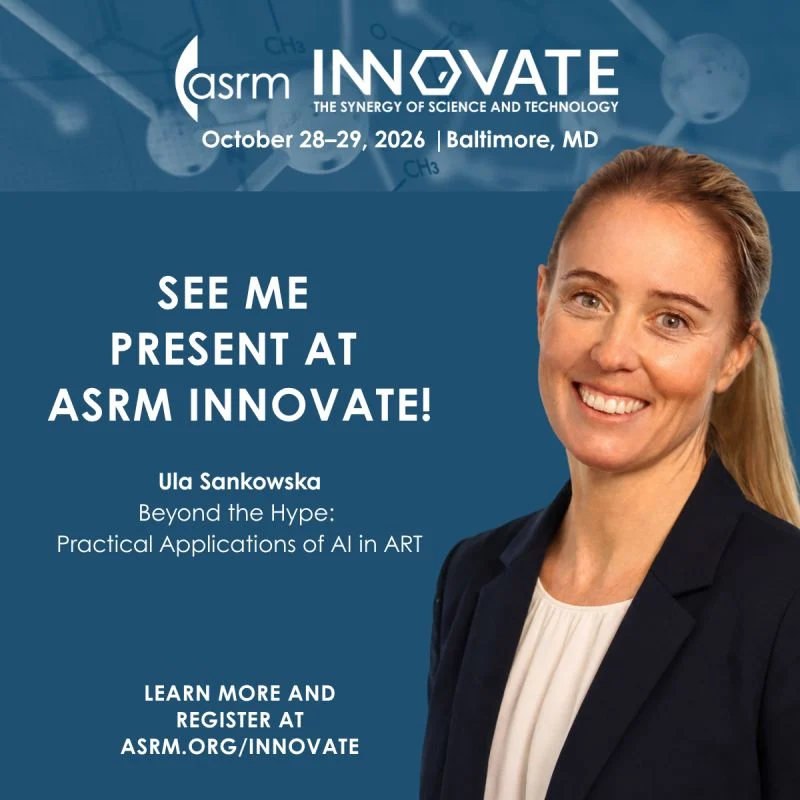
On October 29, I’ll be joining Irene Alvarado of Berry Fertility and Melissa Teran of Alife for ‘Beyond the Hype: Practical Applications of AI in ART.’
I’m particularly looking forward to discussing the evidence clinicians need to trust these tools and what it takes to make them useful in everyday practice.
It will be a pleasure to share the stage with colleagues approaching fertility care from different perspectives. Thank you to Eduardo Hariton and the ASRM team for bringing us together, and to the clinicians and researchers whose work makes this discussion possible.
If you’ll be in Baltimore, please join us. I look forward to hearing about your experience and the problems you would like us to work on.
- Thursday, October 29, 2026
- 1:00–1:45 PM
- ASRM INNOVATE
- Baltimore Marriott Inner Harbor at Camden Yards.”
Other articles on ASRM 2026 on Fertility News.
-
Oct 21, 2026, 17:40Robert Borowczyk: The Invisible Waiting Room
-
Oct 21, 2026, 17:35Fereshteh Safian: Behind the Scenes of Reproductive Medicine
-
Oct 21, 2026, 17:20The Relationship Between Trophectoderm Biopsy and Early Pregnancy Outcomes – RBMO
-
Oct 21, 2026, 17:09Jules McDonald: The Future of Fertility Is Happening in Abu Dhabi
-
Oct 21, 2026, 16:53Ashley Evans: I Never Imagined I’d Be a Fertility Story with a Group of People Whom I Have Never Met…
-
Oct 21, 2026, 16:41Karthik Raj: Asherman’s Syndrome – When the Endometrium Cannot Regenerate Normally
-
Oct 21, 2026, 16:36Katy Encalade: A Few Misconceptions I Think Every Woman Considering Egg Donation Deserves to Understand
-
Oct 21, 2026, 16:21The FeRGI Working Group 2026-2027 – ESHRE SIG Reproductive Genetics
-
Oct 21, 2026, 15:59Caspian Ostadian: From OPU to ICSI – How Much Rest Time Does an Oocyte Need?