
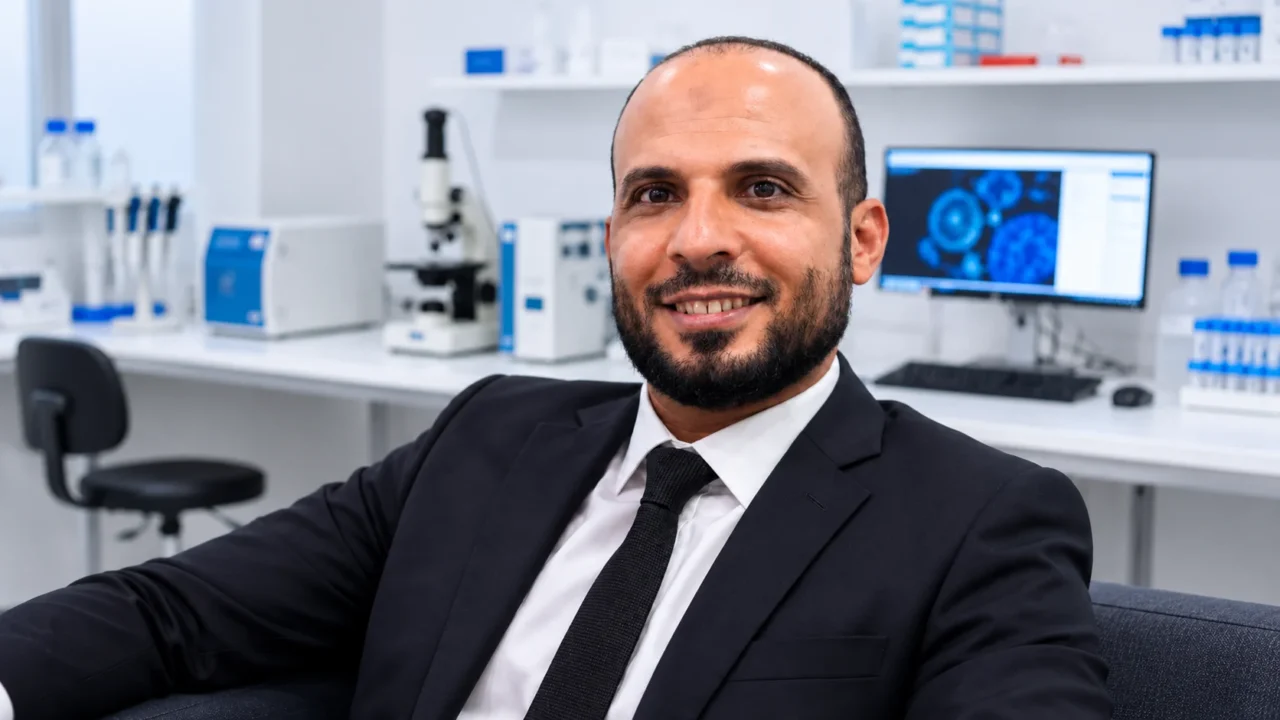
Khalil Faaed: Can Triple Antioxidant Therapy Transform IVF Outcomes?
Khalil Faaed, Embryologist at Modern IVF Center, shared on LinkedIn:
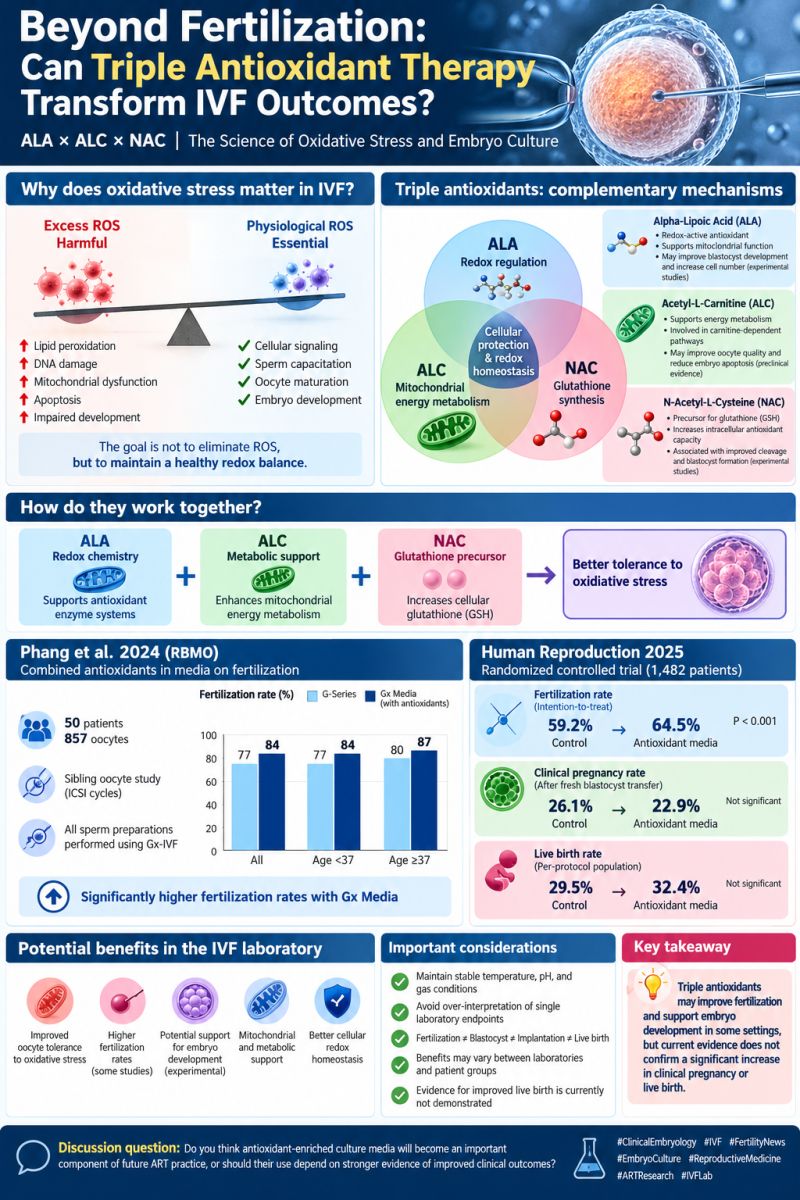
“Beyond Fertilization: Can Triple Antioxidant Therapy Transform IVF Outcomes?
ALA × ALC × NAC | The Science of Oxidative Stress and Embryo Culture
What if improving the culture environment means understanding not only embryo nutrition, but also the delicate balance between reactive oxygen species (ROS) and antioxidant defense?
Oxidative stress is an important consideration in assisted reproductive technology (ART). Although reactive oxygen species play essential roles in normal cellular signaling, excessive ROS can damage lipids, proteins, DNA, and mitochondrial components, potentially affecting gamete function and early embryonic development.
Could three complementary compounds help support this balance?
1. Alpha-Lipoic Acid (ALA)
Participates in mitochondrial enzyme systems and cellular redox regulation, potentially supporting antioxidant defense under oxidative stress.
2. Acetyl-L-Carnitine (ALC)
Contributes to cellular energy metabolism and carnitine-dependent metabolic pathways, making mitochondrial function an important area of investigation.
3. N-Acetyl-L-Cysteine (NAC)
Provides cysteine for glutathione synthesis. Glutathione is a major intracellular antioxidant system involved in protecting cells against oxidative damage.
The scientific rationale: Combining these compounds may support different aspects of cellular metabolism and redox homeostasis. However, biological plausibility must be distinguished from proven clinical benefit.
What does the clinical evidence tell us?
A randomized controlled trial published in Human Reproduction in 2025 investigated antioxidant-containing media in IVF. The findings report:
- Higher fertilization rates with antioxidant-containing media.
- No significant improvement in blastocyst development rate or blastocyst grade.
- No statistically significant improvement in clinical pregnancy after fresh blastocyst transfer or live birth.
These findings highlight an essential principle in embryology: an improvement in a laboratory endpoint does not automatically translate into improved reproductive outcomes.
What should embryologists consider?
- Maintaining stable temperature, pH, and gas conditions.
- Minimizing unnecessary exposure to environmental stressors.
- Evaluating culture media using validated laboratory protocols.
- Distinguishing fertilization, blastocyst development, implantation, and live birth as separate outcomes.
- Assessing new media formulations through rigorous, evidence-based evaluation.
The question is not simply whether antioxidants are beneficial. It is whether a specific formulation provides a meaningful benefit within a well-controlled IVF laboratory and for which patients.
Do you believe antioxidant-enriched culture media will become an important component of future ART laboratory practice, or should their use depend on stronger evidence of improved clinical outcomes?”
Other articles featuring Khalil Faaed on Fertility News.
-
Nov 2, 2026, 16:33Francesca Steyn: Back From Another Great ASRM Annual Congress
-
Nov 2, 2026, 16:24Cambridge Developmental Biologist Marta Shahbazi Dies in Spanish Train Crash
-
Nov 2, 2026, 16:17Lowell Ku: Prescribing Something Most Patients Are Very Happy to Hear
-
Nov 2, 2026, 16:07Filipa Rafael: Saying No to an IVF Add-On Should Not Feel as Hard as Giving Up on Having a Baby
-
Nov 2, 2026, 15:44Saff Mitten: We Need to Build Greater Awareness of Infertility and the Impact Fertility Journeys Have on People
-
Nov 2, 2026, 15:24Resa Nabor: Could Your Symptoms Be Linked to PCOS?
-
Nov 2, 2026, 15:09Asima Ahmad: Working Hard to Ensure that Access to Fertility Care Is a Reality for People Across the Globe
-
Nov 2, 2026, 14:56Ashley Evans: Let’s Make Fertility Unfiltered This World Fertility Day
-
Nov 1, 2026, 12:18Giulio Garaffa: Male Infertility – From Assessment to Individualised Care