

Vikram Sinai Talaulikar: New Evidence on Vaginal Estrogen Therapy in Younger Endometrial Cancer Survivors
Vikram Sinai Talaulikar, Associate Specialist in Reproductive Medicine at UCLH and Hon, Associate Specialist in Reproductive Medicine at UCLH and Hon, shared a post on LinkedIn about a paper by Christine D. Hsu et al. published in Menopause:
“An important study from Hsu et al. which evaluated the utilisation of vaginal oestrogen therapy and outcomes associated with its use among younger endometrial cancer survivors. The study is particularly important as the rates of endometrial cancer have been increasing in younger women in different parts of the world.
This is a cohort study using data from the TriNetX database’s US Collaborative Network, which includes electronic health records and insurance claims data from 68 health care organisations. Women 18-51 diagnosed with endometrial cancer between 2005 and 2023 were included. Researchers used 1:1 propensity score matching to create cohorts with and without vaginal oestrogen therapy in the year after their endometrial cancer diagnosis. They estimated hazard ratios (HRs) with 95% CIs for the primary outcome of endometrial cancer recurrence and assessed the risks of negative control outcomes.
1,412 endometrial cancer survivors with vaginal oestrogen therapy and 23,859 without vaginal oestrogen therapy were identified. After propensity score matching, the vaginal ET and non-ET groups included 1,412 individuals each. The mean follow-up times for the vaginal ET and non-ET groups after matching were 4.54 years and 4.07 years respectively. The mean oestrogen therapy treatment duration was 1.88 years.
Endometrial cancer recurrence risk was not increased among those with vaginal oestrogen use (HR, 0.87; 95% CI, 0.60-1.27).
The authors concluded that endometrial cancer survivors with short-term exposure to vaginal oestrogen therapy did not have an elevated risk of endometrial cancer recurrence compared with those without.
Strengths of the study are diverse large cohort, use of negative controls and more than 4 years follow-up. Limitations include – difficulty in stratifying by tumour stage, using proxy outcome for cancer recurrence, inability to assess oestrogen dose response and short-term treatment duration.
Nevertheless, these are reassuring data for women who are endometrial cancer survivors but find themselves making difficult decisions about use of vaginal oestrogen therapy for genitourinary symptoms of menopause after treatment completion.”
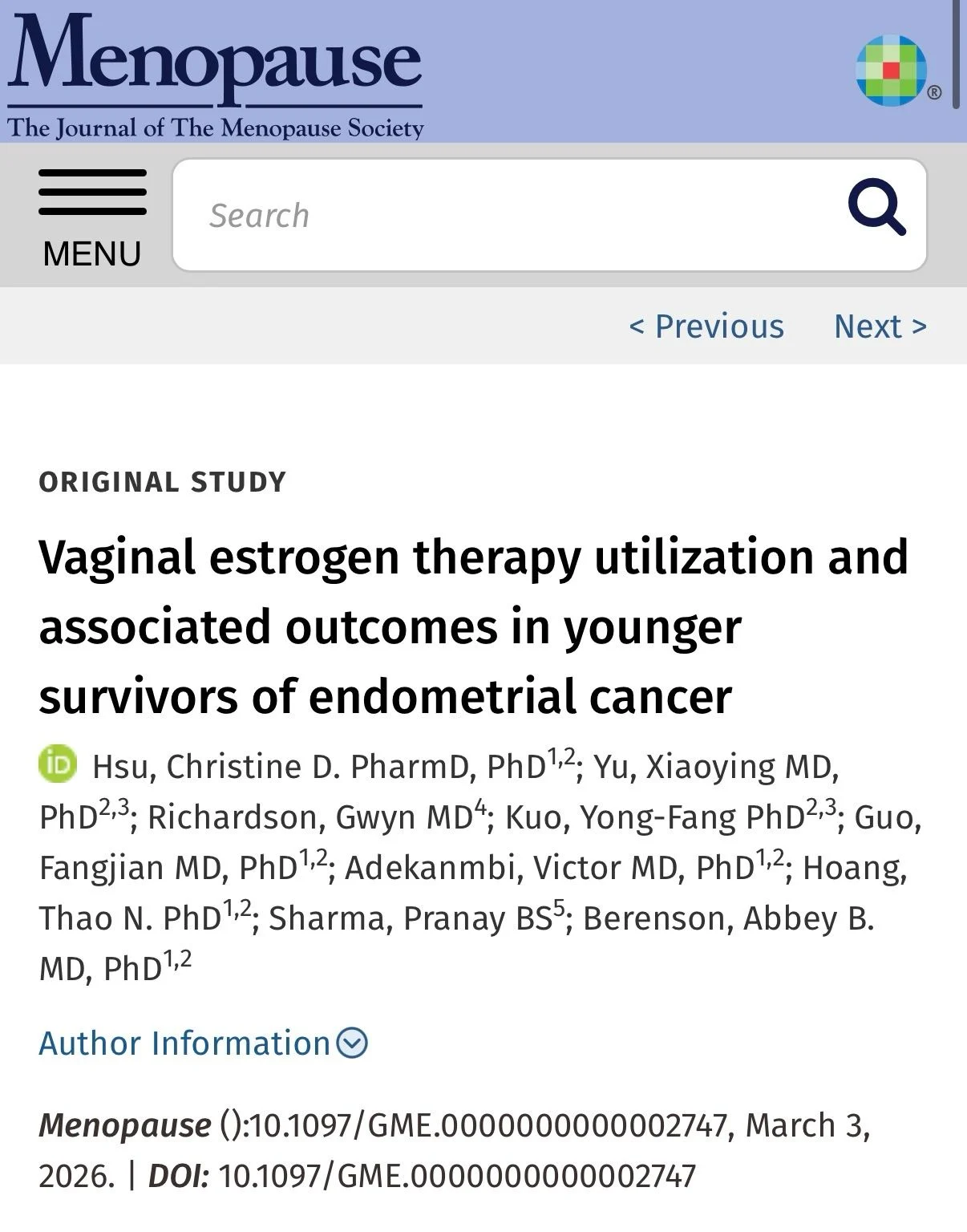
Title: Vaginal estrogen therapy utilization and associated outcomes in younger survivors of endometrial cancer
Authors: Christine D. Hsu, Xiaoying Yu, Gwyn Richardson, Yong-Fang Kuo, Fangjian Guo, Victor Adekanmbi, Thao N. Hoang, Pranay Sharma, Abbey B. Berenson
Read the full article.
Stay updated on all scientific advances in the field of fertility with Fertility News.
-
Sep 13, 2026, 15:11Sachintha Alwis: From Impaired Sperm Motility to Microrobotics
-
Sep 13, 2026, 15:08Laurence Orbuch: Before Endometriosis Surgery, Ask…
-
Sep 13, 2026, 15:05Ademola Ayodele: IUI, IVF or Egg Freezing – Which One Is Right for You?
-
Sep 13, 2026, 14:59Fiona Pathiraja-Møller: Tennis Players No Longer Have to Choose Between Career and Family
-
Sep 13, 2026, 14:571-Day Virtual Experience for People Impacted by PMOS – PCOS Awareness Association
-
Sep 13, 2026, 14:53Ozor Victor: Behind Every Embryo Is a Story of Science, Precision, and Hope
-
Sep 13, 2026, 14:50Diana Kayal: What They Don’t Tell You About IVF
-
Sep 13, 2026, 14:44Vikram Sinai Talaulikar: A Heartfelt Thank You to All Who Donated and Supported “Menopause and Cancer”
-
Sep 13, 2026, 14:41Nicole McPherson: Changing IVF Practices Is Hard – Integration Needs to Be Easy