

Asima Ahmad: A Few Recommendations Worth Understanding This Movember
Asima Ahmad, Co-Founder and Chief Medical Officer at Carrot and Reproductive Endocrinology and Infertility Specialist at Reproductive Medicine Institute, shared on LinkedIn:
“When a couple has trouble getting pregnant, the medical appointments – and the time away from work – often start with her.
But a male factor contributes to about half of infertility cases. Evaluating both partners from the beginning can help avoid months of sequential testing and delayed answers.
For employers and healthcare leaders, that raises a practical question: Does your fertility benefit make it easy for men to get evaluated, too?
Coverage matters. So do referral pathways, access to reproductive urologists, and communication that makes clear that fertility care includes men.
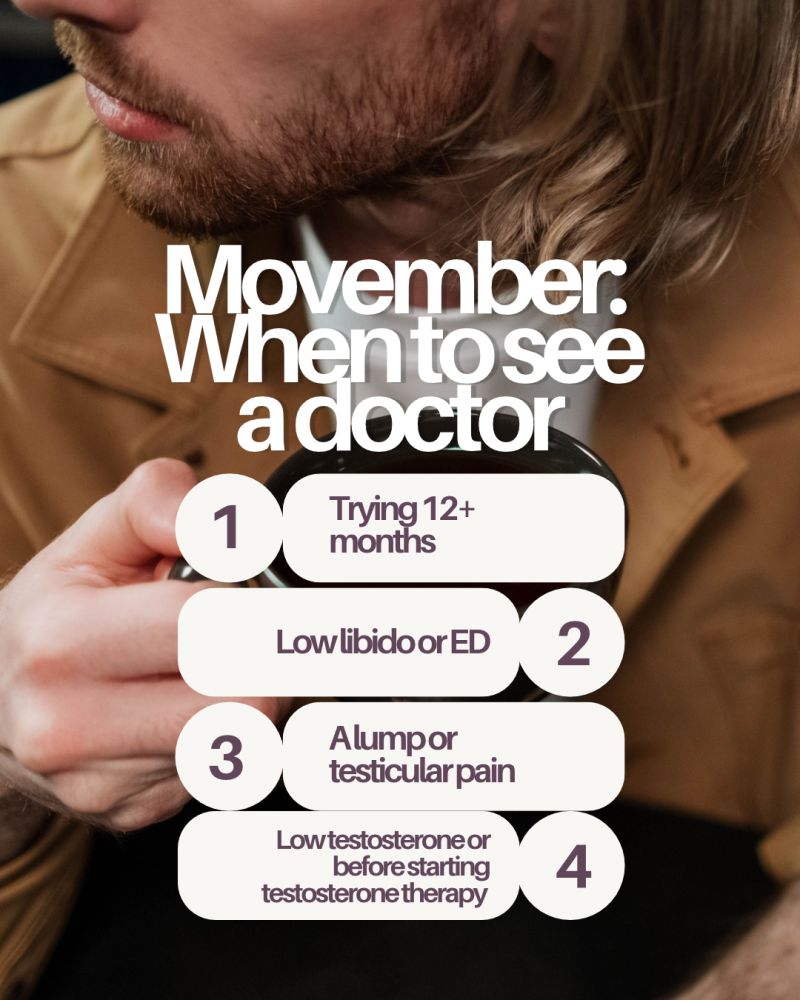
This Movember, there are a few recommendations worth understanding:
- Both partners should be evaluated after 12 months of trying, or six months if the female partner is 35 or older. Earlier evaluation is appropriate when there are known risk factors, or when she is over 40.
- Persistent low libido, fewer morning erections, or erectile dysfunction deserve assessment. They don’t automatically mean low testosterone.
- A low testosterone result needs context. Diagnosis requires symptoms or signs and low levels confirmed on two separate morning blood tests. Before prescribing, clinicians should investigate the cause and establish why treatment is appropriate.
- Family-building goals belong in that conversation before treatment starts. Taking testosterone can suppress sperm production, sometimes to zero, and cause infertility. Treatment decisions should account for whether someone wants children now or in the future.
A semen analysis is part of the initial male fertility evaluation. A testosterone test cannot substitute for it.
As a reproductive endocrinologist and co-founder of Carrot, I see how benefit design and clinical pathways shape who gets care and when. If men don’t know a benefit applies to them – or can’t find the right clinician – coverage alone won’t close that gap.
Men’s reproductive health belongs in benefits education, primary care, and conversations about family building throughout the year.”
Other articles featuring Asima Ahmad on Fertility News.
-
Nov 4, 2026, 17:36Clare Mansfield: Helping Parents Find the Words to Tell Their Child’s Story
-
Nov 4, 2026, 17:32Lucy Froese: What Male Infertility Can Feel Like
-
Nov 4, 2026, 17:25Diana Kayal: Treating Your Body Without Seeing the Rest of You Is Only Half the Job
-
Nov 4, 2026, 17:20Margaret Cali: Sometimes Grief Simply Sits Beside the Joy
-
Nov 4, 2026, 17:11Hossam Elzeiny: Distinguishing Recurrent IVF Failure from True Recurrent Implantation Failure
-
Nov 4, 2026, 17:00Resa Nabor: Fighting Cancer – A Woman’s Brave Journey
-
Nov 4, 2026, 16:22Hannah Travers: Saying Goodbye to the Reproductive Medicine Research Group at the University of Dundee
-
Nov 4, 2026, 16:17Natalie Sutherland: Sharing My Story in Support of the National Fertility Awareness Week
-
Nov 4, 2026, 16:07Pleased to Welcome Justin Tan to the Advisory Committee – Fertility Friends Foundation