
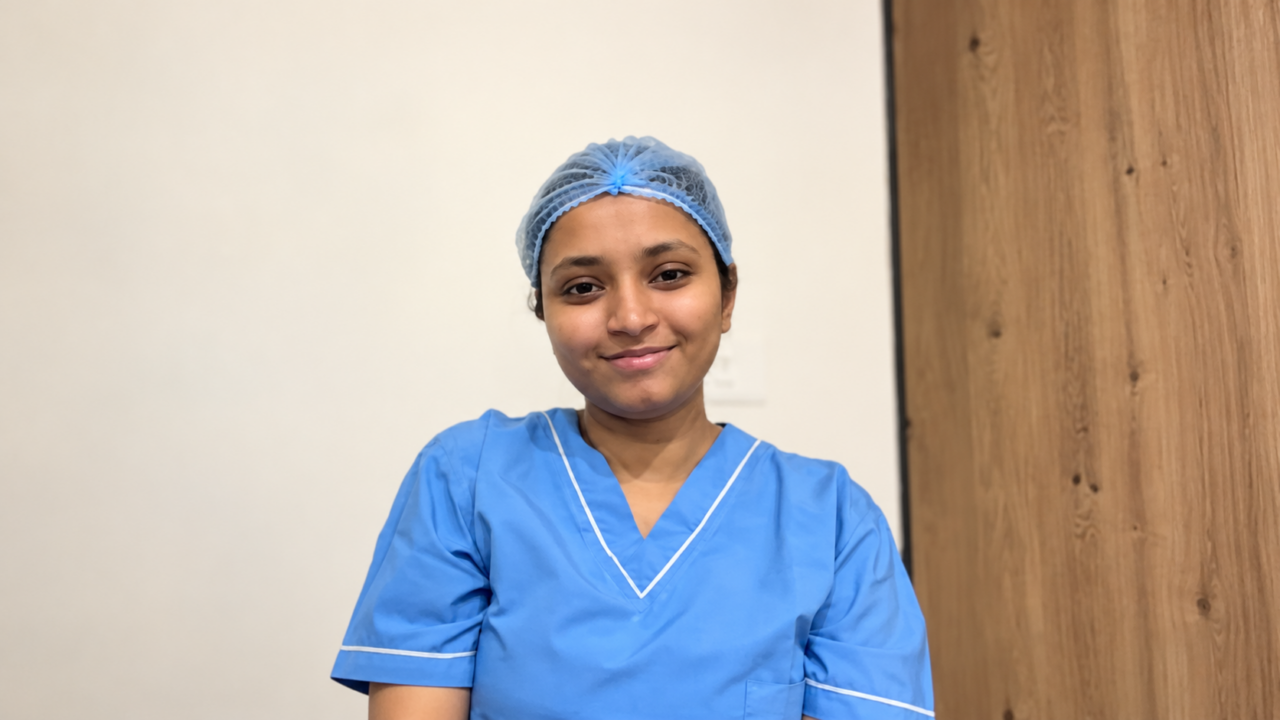
Bhargavi K.: Sometimes, the Most Interesting Part of Embryology Isn’t Finding an Answer
Bhargavi K, Embryologist at Khurd Hospital, shared on LinkedIn:
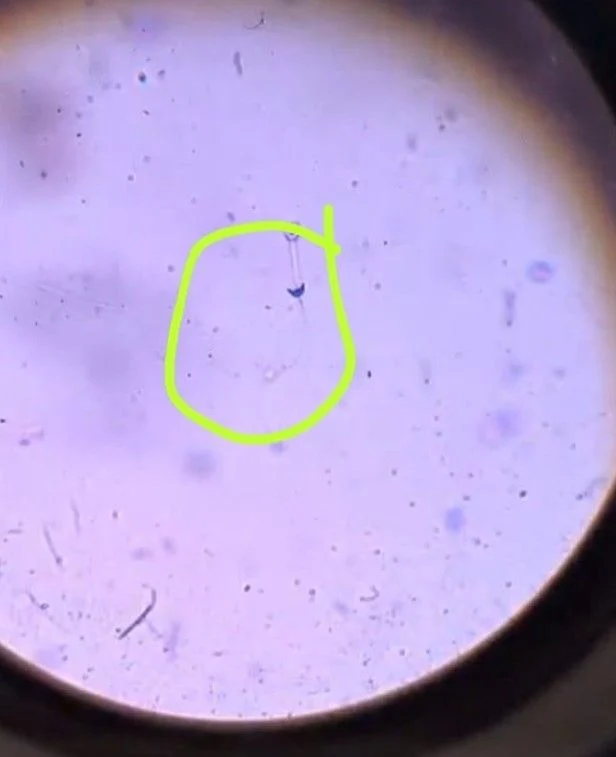
“A sperm head shaped like a cup… but what exactly are we looking at?
Sometimes, the most interesting part of embryology isn’t finding an answer. It’s finding something that makes you ask more questions!
During semen analysis of a patient with oligoasthenoteratozoospermia (OAT), I came across an unusual sperm-head morphology. No spermatozoa with normal morphology were identified in the sample examined.
What caught my attention?
- A distinctly cup-shaped sperm head
- A prominent indentation
- A rounded, bubble-like structure associated with the indentation.
My first thought was: What could explain this morphology? Could it be a sperm-head crater defect, a nuclear invagination, or another structural abnormality?
The literature describes crater defects involving nuclear and acrosomal invaginations.
Research on sperm-head vacuoles has also linked some structures observed under light microscopy to nuclear-envelope invaginations identified using advanced imaging techniques.
However, the exact nature of the structure in this observation remains unconfirmed.
This also got me thinking about sperm selection. When dealing with a sample where no spermatozoa meet normal morphological criteria, how would you approach sperm selection for ICSI?
Would you consider microfluidic sperm selection in a case like this? Could it help identify spermatozoa with better functional characteristics, even when morphology is severely abnormal, or would you favour another selection method?
Have you encountered a similar morphology in your practice? I’d love to hear your thoughts, experiences, and any relevant literature you’ve come across!
I have attached the image I captured through a microscope lens; it is a little blurred but shows the stained, cup-shaped sperm morphology.”
Stay informed with the latest updates in fertility and reproductive medicine on Fertility News.
-
Oct 20, 2026, 17:00Jennifer Straub: Excited to Officially Join Pozitivf Fertility as Chief Operating Officer
-
Oct 20, 2026, 16:57Jordan Abdi: Looking Forward to Co-Hosting the “Rules of Reproduction”
-
Oct 20, 2026, 16:51Andria Besser: Hard to Believe This Is My Last Week at NYU Fertility Center
-
Oct 20, 2026, 16:48Michael Alper: Continuing to Care for Our Patients as Everleap Fertility
-
Oct 20, 2026, 16:43Ankita Sethi: An Insightful Afternoon at First IVF, Abu Dhabi
-
Oct 20, 2026, 16:41Michael Schindler: Our Answer at MedITEX IVF – The Patient and Lab System Is the Integration Layer
-
Oct 20, 2026, 16:35Marcos Meseguer Escrivá: What Happens When We Shorten the Blastocyst Warming Protocol?
-
Oct 20, 2026, 16:30Proud to Be Part of ASRM 2026 Scientific Congress and Expo – MEFS
-
Oct 20, 2026, 16:27Justin Houman: 5 Things I Never Let My Patients Do