
Devyanshi Dixit: Why Does the Ovary Age So Differently?
Devyanshi Dixit, Program Manager at CLS Event and Publication and Conference Manager at the 12th Global Summit on Gynecology, shared on LinkedIn:
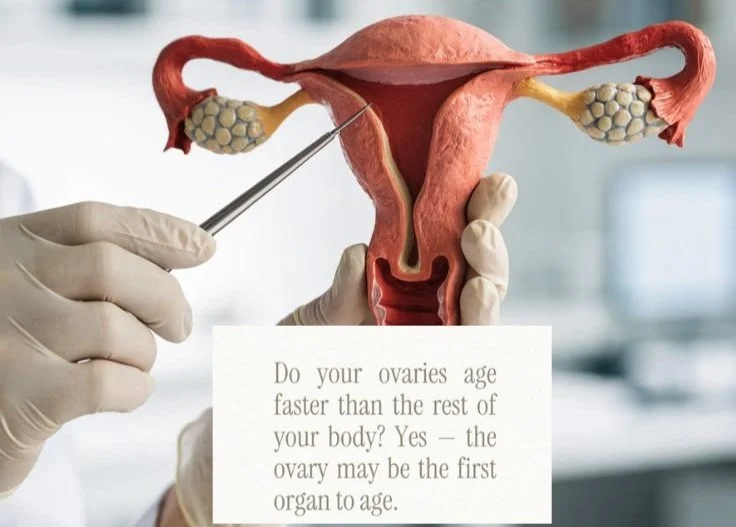
”Why Does The Ovary Age So Differently?
- Your skin ages.
- Your bones age.
- Your heart ages.
But the ovary follows a remarkably different biological timeline.
And that timeline can influence fertility long before the rest of the body shows obvious signs of aging.
The ovarian clock starts early
Unlike many tissues, the ovary begins life with a finite pool of oocytes.
There is no lifelong production line replacing them.
Over time, the number of available follicles declines – but something else changes too.
It’s not only about ‘how many eggs are left.’
With increasing age, oocytes can experience:
- Chromosomal instability
- Mitochondrial dysfunction
- Accumulated cellular damage
- Changes in the ovarian environment
- Altered follicular and cellular communication
This helps explain an important distinction:
Ovarian reserve and oocyte quality are not the same thing.
Tests such as AMH and antral follicle count (AFC) can provide information about ovarian reserve.
But they cannot directly tell us whether an individual egg is chromosomally normal.
So why does this matter?
A woman may have a measurable ovarian reserve while still experiencing an age-related decline in oocyte quality.
That is one reason reproductive aging is far more complex than simply counting follicles.
And researchers are now asking a bigger question:
Can we predict ovarian aging before fertility declines?
Scientists are investigating:
- Mitochondrial biomarkers
- Molecular signatures of ovarian aging
- AI-based fertility prediction
- Ovarian tissue preservation
- Cellular and regenerative approaches
- New markers beyond AMH and AFC
The goal isn’t simply to count the remaining eggs.
It is to understand the biology behind ovarian aging – and eventually identify better ways to predict, monitor, and potentially intervene in reproductive aging.
The future of fertility care may depend on understanding the ovarian clock-not just the biological clock.
Explore emerging research in reproductive medicine at GFWH 2026․
- November 23 – 24, 2026
- Bangkok, Thailand.”
Other articles featuring Devyanshi Dixit on Fertility News.
-
Oct 25, 2026, 17:47Fiona Pathiraja-Møller: Periods Are Valuable Health Data, and Science Is Finally Treating Them That Way
-
Oct 25, 2026, 17:43Rana Mondal: Are Needle-Free Protocols Genuinely the Future of IVF Stimulation?
-
Oct 25, 2026, 17:41Mark Amols: Does Your PCOS Treatment Feel Like a “Band-Aid”?
-
Oct 25, 2026, 17:39Alejandro González: Vaginal Microbiome and Assisted Reproduction
-
Oct 25, 2026, 17:37Asma Khalil: Doppler in Maternal-Fetal Medicine – Theory and Hands-on Course
-
Oct 25, 2026, 17:34Houssein El Hajj: Honoured to Receive the 2026 IJGC Best Video Award from IJGC
-
Oct 25, 2026, 17:32Shilpa Sharma: Proud to Have Attended the 9th ART Fertility Conference
-
Oct 25, 2026, 17:18Margaret Cali: You Don’t Have to Hold It All Together to Be Doing Your Best
-
Oct 25, 2026, 17:17Vipin Chandra: A Proud Moment When a Young Researcher Takes Our Collective Work to a Global Stage