

Devyanshi Dixit: Rethinking Pelvic Pain, Endometriosis and Uterine Health Ahead of GFWH 2026
Devyanshi Dixit, Program Manager at CLS Event and Publication and Conference Manager at the 12th Global Summit on Gynecology, Fertility and Women’s Health, shared posts on LinkedIn ahead of GFWH 2026:
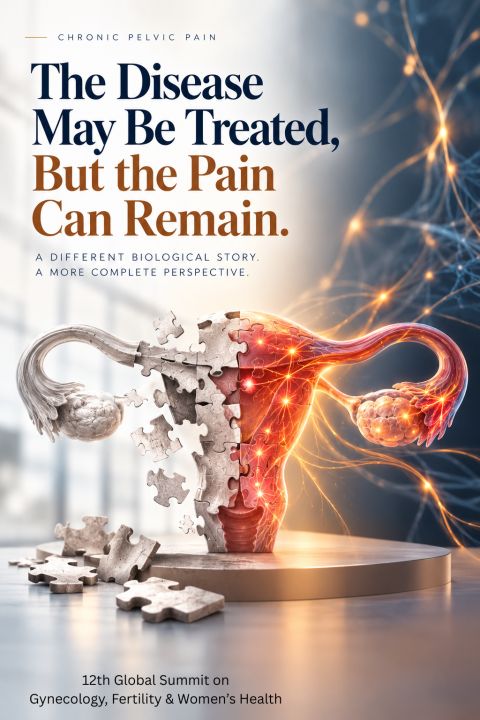
“The disease is gone. So why is the pain still there?
The original condition has been treated. The scans may look reassuring. Yet the pelvic pain continues.
In some cases, yes-and the explanation may lie in how the nervous system adapts to persistent pain.
When pain becomes more complex.
Chronic pelvic pain is not always a direct reflection of ongoing tissue damage. Several mechanisms may contribute:
Nervous system sensitization – pain pathways may become more responsive, amplifying signals that might otherwise feel less intense.
Changes in pain processing – the brain and spinal cord can continue responding to pain even after the original trigger has improved.
Overlapping conditions – pelvic floor muscle dysfunction, bladder pain syndrome, irritable bowel syndrome, or nerve-related pain may coexist with-or remain after-the initial disease is treated.
Persistent inflammation or recurrent disease – sometimes the original condition has not fully resolved, so reassessment remains important.
The key distinction? Persistent pain is real, even when its cause is no longer obvious.
It does not mean the pain is imaginary.
Nor does it automatically mean the disease has disappeared.
Understanding the underlying mechanism requires careful, individualized assessment.
The question that deserves more attention
Should chronic pelvic pain care focus only on treating the original disease-or also on understanding how the nervous system, pelvic muscles, and other pain conditions may continue to contribute?
What do you think is the biggest unmet need in chronic pelvic pain care: better diagnosis, multidisciplinary treatment, or more research into pain sensitization?
Join the conversation on emerging frontiers in gynecology, fertility, and women’s health at GFWH 2026.”
“Why can severe endometriosis cause surprisingly little pain?
Extensive disease. Minimal pain. How can both be true?
Imagine two women with endometriosis.
One experiences debilitating pelvic pain. The other has extensive lesions discovered during an investigation-with surprisingly few symptoms.
How can the same condition feel so different?
The missing piece may be more than lesion size.
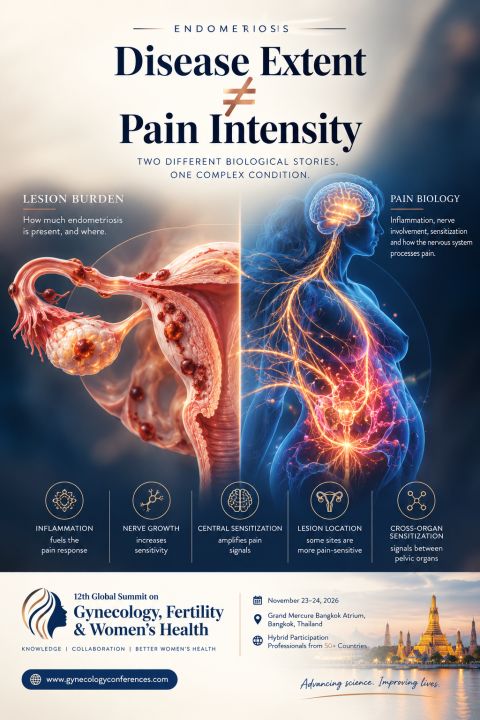
Pain in endometriosis is complex. It may depend on several interacting factors:
Nerve sensitivity – how pelvic nerves respond to pain signals.
Inflammation – the local inflammatory environment surrounding lesions.
Nervous system processing – how the brain and spinal cord interpret pain signals.
Lesion location and biology – where lesions develop, their characteristics, and the tissues they affect.
Here’s the crucial point: the extent of visible endometriosis does not reliably predict the intensity of pain.
And pain is not a reliable measure of disease severity, either.
A question worth exploring:
Could understanding the biology of pain be just as important as mapping the lesions themselves?
This has important implications for diagnosis, research, and individualized care.
A woman’s symptoms deserve attention-even when imaging findings appear limited or pain is absent.
Because less pain does not necessarily mean less disease.
What do you think deserves more attention in endometriosis research: lesion biology, nerve involvement, inflammation, or pain processing?
Explore emerging questions in gynecology, fertility and women’s health at GFWH 2026.”
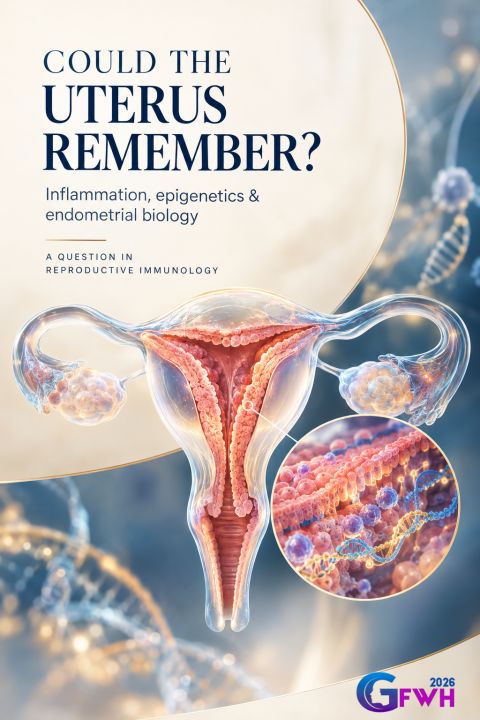
“Could your uterus remember inflammation?
The inflammation may fade. But what if its biological footprint remains?
We often think of inflammation as temporary. A trigger appears, the immune system responds, and healing begins.
But what if some endometrial cells retain molecular traces of that experience?
Three questions worth asking:
- Could previous inflammation leave lasting epigenetic marks that alter how endometrial cells behave?
- Could these changes influence the uterine environment involved in embryo implantation?
- When inflammation resolves, does the tissue truly reset-or could some cellular changes persist?
This is where the emerging concept of inflammatory memory becomes intriguing.
Researchers are exploring how previous inflammatory exposures may shape future cellular responses.
Whether a lasting inflammatory memory exists in the human endometrium, and what it means for fertility, remains an open scientific question.
Let’s think beyond the present:
If the uterus could retain a biological record of inflammation, what should researchers investigate first?
- Epigenetic changes
- Endometrial receptivity
- Long-term fertility outcomes
- Whether these changes are reversible
Share your perspective below.
Sometimes, the next breakthrough begins with a different question:
Has the inflammation healed-or has the tissue changed?
Exploring new frontiers in gynecology, fertility and women’s health at the 12th Global Summit on Gynecology, Fertility and Women’s Health (GFWH 2026).
- November 23–24, 2026
- Bangkok, Thailand
- Hybrid participation.”
Other articles featuring Devyanshi Dixit on Fertility News.
-
Oct 12, 2026, 16:55Karthik Raj: True Biological Embryo Mosaicism vs. Technical Detection
-
Oct 12, 2026, 16:50Nagi Rostom: Sharing Insights on Reproductive Health and Fertility at a Women’s Health Open Morning
-
Oct 12, 2026, 16:44Katy Encalade: Why Early Education Matters in Egg Donation and Surrogacy
-
Oct 12, 2026, 16:31It’s Time to Talk about Fertility-Aware Workplaces – ESHRE
-
Oct 12, 2026, 16:23Anu Chawla: WHO’s Global Roadmap for Hypertensive Disorders of Pregnancy Is a Significant Step Forward
-
Oct 12, 2026, 16:11Devyanshi Dixit: Behind Every Breakthrough Is a Reason to Keep Going
-
Oct 12, 2026, 16:01Suganya Venkat: The Kindest Thing to Say After a Failed IVF Cycle Is Not “Try Again”
-
Oct 12, 2026, 15:58Lucy Froese: When You Lose a Pregnancy, You Don’t Just Lose Your Baby…
-
Oct 12, 2026, 15:56Beata Blazkova: What Actually Makes an Embryo Keep Going?