
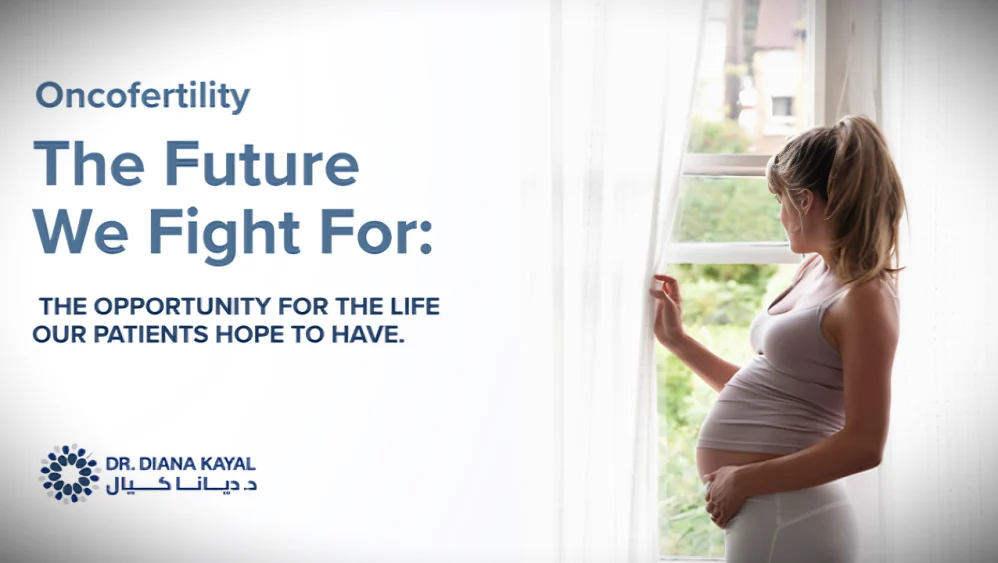
Diana Kayal։ Oncofertility Is Not One Decision – It Is a Series of Carefully Considered Ones
Diana Kayal, Reproductive Endocrinologist at FertiClinic PRC Fertility Centre, shared on LinkedIn:
“When patients hear the words ‘you need chemotherapy’ or ‘you need surgery,’ their world immediately becomes smaller.
The focus narrows to scans, treatment plans, hospital visits, and recovery. Naturally, that is where it should be.
But once the immediate crisis has passed, another question often emerges.
What will life look like after this?
The Future We Fight For
When patients hear the words ‘you need chemotherapy’ or ‘you need surgery,’ their world immediately becomes smaller.
The focus narrows to scans, treatment plans, hospital visits, and recovery. Naturally, that is where it should be.
But once the immediate crisis has passed, another question often emerges.
What will life look like after this?
Medicine has made extraordinary progress in helping people survive cancer and many other serious illnesses. Increasingly, our responsibility is not only to help patients survive, but also to protect the quality of the life they hope to return to.
For many patients, that includes the possibility of having a family.
Recently, we have seen exciting advances in reproductive science, from research exploring the creation of human egg cells from stem cells to innovations in fertility preservation. These developments remind us that the future of reproductive medicine is full of possibility.
At the same time, they also reinforce something I believe strongly: while we look ahead to tomorrow’s breakthroughs, we cannot overlook the proven options that are available to patients today.
Fertility preservation is often associated with cancer treatment, yet many therapies can affect reproductive potential, including pelvic surgery, radiotherapy, certain medications used to treat autoimmune diseases, and repeated surgery for conditions such as endometriosis.
These conversations cannot be left until treatment has begun.
Oncofertility is not one decision. It is a series of carefully considered ones.
Together, we should ask:
- Can we preserve fertility without delaying treatment?
- Which fertility preservation option offers the greatest chance of future success?
- Will surgery or radiotherapy affect reproductive organs, and can that risk be reduced?
- What are the patient’s reproductive goals, and how can they be incorporated into the treatment plan?
- How can we maximise both survival and the opportunity for a healthy pregnancy in the future?
This requires close collaboration between oncology, reproductive medicine, surgery, embryology and obstetrics, and most importantly the patient. Together, we should evaluate the safest and most appropriate options for each patient, which may include:
- Egg freezing (oocyte cryopreservation) for women who have time before treatment begins.
- Embryo cryopreservation, when creating and freezing embryos is appropriate.
- Sperm cryopreservation, a simple and effective option for many male patients before treatment.
- Ovarian tissue cryopreservation, particularly when chemotherapy cannot be delayed or in selected younger patients.
- Ovarian transposition (oophoropexy) to help reduce radiation exposure before pelvic radiotherapy.
- Medical strategies to reduce treatment-related ovarian damage, where supported by clinical evidence and appropriate for the patient’s condition.
- Individualised counselling on future family-building options, pregnancy timing after treatment, and long-term reproductive health.
Not every patient will choose fertility preservation.
Sometimes treatment cannot be delayed, and preserving fertility simply isn’t possible. But every patient deserves the conversation.
Sometimes the greatest reassurance we can offer is not a guarantee that future fertility can be protected. It is known that every appropriate option was considered before treatment began, so that patients can move forward with confidence that nothing was overlooked.
Because the future we fight for should include not only survival, but the opportunity to live the life our patients hope to have after treatment.”
Other articles featuring Diana Kayal on Fertility News.
-
Oct 23, 2026, 17:34Breast Cancer Awareness Month: Supporting Women Through Every Journey – Egg Donor and Surrogate Solutions
-
Oct 23, 2026, 17:28Demián Glujovsky: What Happens to Fertility Patients Between Visits?
-
Oct 23, 2026, 17:21Stephen Parker Ellington: Empathetic Fertility Care Can Scale, Even When Your Team Can’t
-
Oct 23, 2026, 17:16ACOG Releases New Guidance on the Use of GLP-1s in Pregnancy and Lactation
-
Oct 23, 2026, 17:06Emad Sedeek: ESHRE Recommendations on Good Practice in the IVF Laboratory 2026 – Part 2
-
Oct 23, 2026, 16:59Nitiz Murdia: Guiding You Through IVF – Your Journey’s Pilot
-
Oct 23, 2026, 16:56Ben Peipert: Come See My Poster Presentation at ASRM 2026
-
Oct 23, 2026, 16:50New RBMO Review Examines Benefits and Risks of Freeze-All IVF Strategies Across Ovarian Response Groups
-
Oct 23, 2026, 16:381 Week and Counting to the Next Campus Course on Male Infertility – ESHRE