
Felicity Jehu-Appiah: PCOS and Fertility – Why Personalized Care Matters More Than One-Size-Fits-All Solutions
Felicity Jehu-Appiah, Women’s Health Content Creation Assistant at TEKHI Global for Menopause Health, shared on LinkedIn:
“Most conversations about PCOS and fertility begin and end with one word: Ovulation.
But fertility is far more complex than someone NOT ovulating.
Every woman with PCOS has a unique combination of symptoms, hormones, metabolic health, and reproductive goals. Yet many are still given the same advice:
- ‘Just lose weight.’
- ‘Take this supplement.’
- ‘Try this diet.’
The reality?
One-size-fits-all advice doesn’t work for a condition that looks different in every woman.
As a women’s health educator, I believe we need to move beyond generic recommendations and start having conversations about personalized, evidence-based care.
In my latest LinkedIn article, I explore:
- Why PCOS is not the same for every woman
- Why fertility is about more than ovulation
- The risks of generic advice
- How individualized care can lead to better reproductive health outcomes
If you’re living with PCOS, trying to conceive, or simply passionate about improving women’s health education, I hope you’ll give it a read.
I’d also love to hear your perspective.
What do you think is the biggest misconception people have about PCOS and fertility?
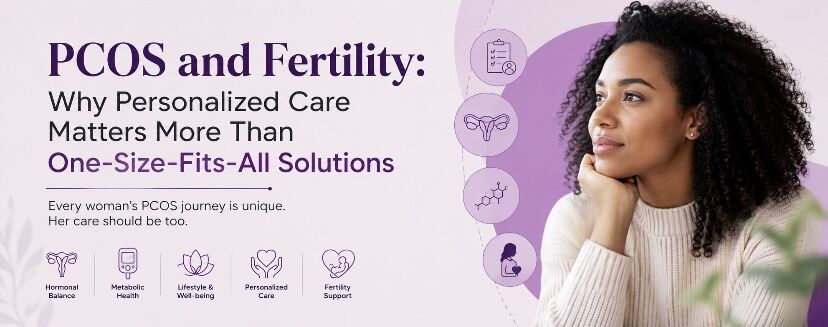
PCOS and Fertility: Why Personalized Care Matters More Than One-Size-Fits-All Solutions
For many women diagnosed with Polycystic Ovary Syndrome (PCOS), the first question that follows is often:
‘Will I ever be able to have children?’
It’s a question filled with uncertainty, fear, and sometimes misinformation.
The truth is this: PCOS does not automatically mean infertility. Many women with PCOS conceive naturally, while others may need medical support. What makes the biggest difference is understanding that PCOS is not the same for everyone.
That is exactly why personalized care matters.
PCOS Isn’t One Disease – It’s a Spectrum
PCOS affects millions of women worldwide, yet no two women experience it in the same way.
One woman may have irregular periods but a healthy weight.
Another may struggle with insulin resistance and weight gain.
Someone else may experience elevated androgen levels, acne, excessive hair growth, or recurrent ovarian cysts.
Some women ovulate occasionally. Others rarely ovulate.
Because every woman’s presentation is different, their fertility journey is different too.
Treating every woman with PCOS the same ignores the complexity of the condition.
Fertility Is More Than Ovulation
When people think about PCOS and fertility, they often focus only on ovulation.
While ovulation is certainly important, fertility involves much more than that.
Successful conception depends on several interconnected factors, including:
- Hormonal balance
- Egg quality
- Metabolic health
- Insulin sensitivity
- Body weight (where applicable)
- Uterine health
- Thyroid function
- Male partner fertility
- Lifestyle and overall health
Looking at only one piece of the puzzle may delay the identification of the real barriers to pregnancy.
Why One-Size-Fits-All Advice Can Be Harmful
Women with PCOS frequently hear advice such as:
- ‘Just lose weight.’
- ‘Take this supplement.’
- ‘Try this diet.’
- ‘Everyone with PCOS should do this.’
Although these recommendations may help some women, they are not universal solutions.
For example:
- Not every woman with PCOS is overweight.
- Not every woman has insulin resistance.
- Not everyone needs the same medications or supplements.
- Different reproductive goals require different treatment approaches.
What works well for one woman may be ineffective – or even inappropriate – for another.
This is why individualized assessment is so important.
Personalized Care Means Understanding the Whole Person
Personalized fertility care begins with asking the right questions rather than making assumptions.
It may involve evaluating:
- Menstrual patterns
- Ovulation status
- Hormone levels
- Blood glucose and insulin metabolism
- Thyroid function
- Lifestyle habits
- Mental well-being
- Age and reproductive goals
- Other medical conditions that may affect fertility
Instead of asking,
‘What works for PCOS?’
A better question is,
‘What is driving this woman’s PCOS symptoms?’
That shift can lead to more targeted, effective care.
Education Is Part of Treatment
One of the most overlooked aspects of PCOS management is education.
When women understand what PCOS is – and what it isn’t – they are better equipped to:
- Track their menstrual cycles.
- Recognize signs of ovulation.
- Make informed lifestyle choices.
- Ask meaningful questions during medical appointments.
- Understand their treatment options.
- Advocate for themselves throughout their fertility journey
Knowledge doesn’t replace medical care, but it empowers women to participate actively in their healthcare decisions.
A Message of Hope
A diagnosis of PCOS is not the end of the road.
It is the beginning of understanding your body more deeply.
With an accurate diagnosis, individualized care, evidence-based management, and appropriate support, many women with PCOS go on to achieve healthy pregnancies.
Every fertility journey deserves care that reflects the individual – not just the diagnosis.
Because women are unique.
Their bodies are unique.
And their care should be too.
As women’s health educators and healthcare professionals, our responsibility extends beyond sharing information. It includes helping women understand that evidence-based, personalized care often leads to better outcomes than generic advice found online.
Every woman with PCOS deserves to feel heard, understood, and supported – not placed into a one-size-fits-all box.
What has been the biggest misconception about PCOS and fertility that you’ve encountered? Let’s continue the conversation in the comments.”
Stay informed with the latest updates in fertility and reproductive medicine on Fertility News.
-
Aug 2, 2026, 16:54Esther Eleboh: Challenges That Keep Us Refining How We Select Embryos for Transfer
-
Aug 2, 2026, 16:40Aritra Pradhan: Standing in Front of Living History – India’s 1st Test Tube Baby
-
Aug 2, 2026, 15:09Stella Dzotsenidze: Celebrating World IVF Day with an Incredible Team at Silk Medical
-
Aug 2, 2026, 14:583 Key Actions to Protect Fertility – Montgomery Fertility Center
-
Aug 2, 2026, 14:35Asma Khalil: A Step-by-Step Guide to Performing Ophthalmic Artery Doppler for Pre-Eclampsia Screening
-
Aug 2, 2026, 14:11Islam Badr: Delivering a Masterclass on Transperineal Ultrasound of the Female Pelvic Floor
-
Jul 29, 2026, 01:03Seeking a Second Opinion Is Not Being Difficult, It Is a Valid Part of Informed Care – PCOS Awareness Association
-
Jul 29, 2026, 00:57Szabo Gabor: IOTA Day 2026 Advancing Ultrasound in Gynaecological Oncology
-
Jul 29, 2026, 00:55Islam Badr: A Simple Approach to Fetal Heart Screening