
Marie-Blanche Tchetgen: 7 Out of 10 Women Will Get Fibroids – Most Won’t See It Coming
Marie-Blanche Tchetgen, Physician at Texas Health Physician Group and Founder of Namouna Health Solutions, shared on LinkedIn:
“This one is personal for me, in more ways than one.
I’m a urogynecologist. I also know what ‘it’s just fibroids’ feels like from the other side of the exam table.
Just. As if bleeding through your clothes at work is nothing. As if being too tired to get off the couch is nothing. As if years of pain, or trouble getting pregnant, is something to wave away.
Seven or eight out of ten women will develop fibroids. Half will have symptoms. And so many spend years being told it’s something else, a gut thing, stress, just a bad period, before anyone says the actual word.
That gap is exactly what I see in my clinic: women whose bladder and bowel symptoms trace back to fibroids no one connected the dots on. So I wrote the explanation I wish every patient got at the first visit: what fibroids really feel like, why they press on the bladder and bowel and not just the uterus, why diagnosis takes so long, and the full range of treatment options, because hysterectomy is not the only answer, and guidelines say it shouldn’t be the first.
If you’ve ever been handed that word with a ‘just’ in front of it, this is for you.
Seven Out of Ten Women Will Get This. Most Won’t See It Coming
If you asked a room of 10 women whether they have uterine fibroids, most would say no. Statistically, seven or eight of them will develop them.
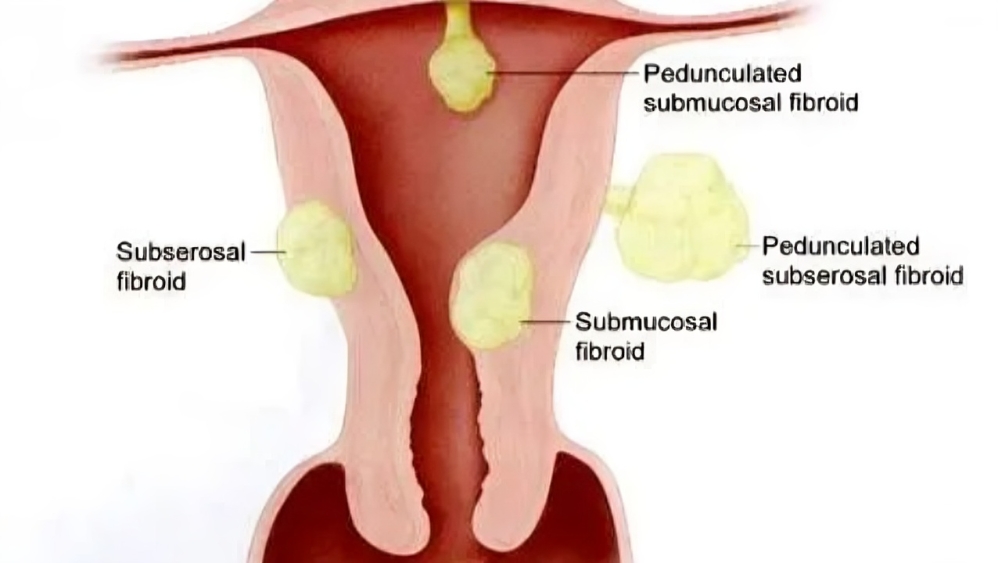
Fibroids (medically, leiomyomas) are benign growths in the muscular wall of the uterus. An estimated 70–80% of people with a uterus develop them, and they are the number one reason hysterectomies are performed. Yet for something this common, fibroids remain remarkably under-discussed and under-diagnosed.
What fibroids actually feel like
About half of people with fibroids have symptoms. The most common:
- Heavy, prolonged periods: soaking through protection, bleeding over a week, large clots
- Fatigue from anemia: chronic blood loss depletes iron, causing exhaustion and brain fog
- Pelvic pressure: a heavy, bloated, ‘always pregnant’ fullness
- Pain: during periods and outside of them
The pressure problem
Here’s what surprises most people: fibroids affect everything around the uterus, not just the uterus itself. As they grow, they push against neighboring organs. Doctors call these ‘bulk symptoms’:
- Bladder – urinary frequency, urgency, trouble emptying. Lower urinary tract symptoms affect roughly 48% of women with fibroids.
- Bowel – constipation
- Vagina – pain during sex
- Kidney drainage tubes and pelvic veins – backed-up urine, aching, heaviness
Pelvic pain of some kind affects about 34% of people with fibroids.
Location matters enormously. Fibroids growing into the uterine cavity are the ones most tied to heavy bleeding and difficulty conceiving. Roughly 27% of women with fibroids experience fertility effects. So ‘just fibroids’ is a phrase worth retiring. A small fibroid in the wrong place can cause more trouble than a large one somewhere harmless.
Why does diagnosis take so long?
Here’s the statistic that we cannot ignore: one in three people waits five years or longer for a diagnosis. Some wait more than eight.
Why? Fibroid symptoms impersonate other conditions. Constipation gets worked up as a gut problem. Fatigue gets treated as a blood problem. Heavy periods get normalized (‘that’s just how my periods are’). Those lost years affect fertility, careers, and finances.
The psychological toll is rarely named: in one study, 95% of people with symptomatic fibroids reported effects like depression, anxiety, and distress about their body. And between 50% and 72% of people found to have fibroids on ultrasound had no idea they had them.
The disparity we can’t talk around
Fibroids don’t affect everyone equally. Black women are diagnosed at significantly higher rates, develop them earlier, carry a higher lifetime risk of symptoms, and present with more severe disease. They’re also more likely to undergo major surgery, yet more likely to prefer less invasive options. That gap between preference and delivered care isn’t biology. It’s a health-system problem, and it’s fixable.
What treatment actually looks like
The encouraging news: hysterectomy is not the only answer, and modern guidelines favor trying uterus-sparing approaches first. Treatment depends on symptom severity, fibroid size and location, fertility goals, and (crucially) patient preference.
- First-line medications: combined oral contraceptives, the hormonal IUD, NSAIDs, tranexamic acid. Good for bleeding and pain, but they don’t shrink fibroids.
- Second-line medications: GnRH agonists and antagonists (leuprolide, elagolix, relugolix) with ‘add-back’ hormones. These reduce bleeding and size, but are short-term due to side effects.
- Procedures: myomectomy (removing fibroids while keeping the uterus, often for fertility), uterine artery embolization, radiofrequency ablation, MR-guided focused ultrasound.
- Hysterectomy: the definitive cure, and right for some. But it belongs at the end of a conversation, not the beginning.
One piece skipped far too often: iron. Treating a fibroid without correcting iron-deficiency anemia leaves half the job undone.
What to take from this
If you have symptoms like heavy bleeding, pelvic pressure, urinary changes, constipation, painful sex, or unexplained fatigue, ask directly whether fibroids could explain the pattern. A pelvic ultrasound is straightforward.
If you’re a clinician: the woman with recurrent iron deficiency or new urinary urgency deserves the uterus on the differential.
Fibroids are common, treatable, and come with more options than most patients are offered. The main thing standing between people and relief is how rarely anyone says the word out loud.”
Stay informed with the latest updates in fertility and reproductive medicine on Fertility News.
-
Oct 10, 2026, 16:11Abieyuwa Ehigiamusoe: Starting Your Embryology Journey?
-
Oct 10, 2026, 16:10Hajar Vahabzadeh: Embryo Quality – The Science Behind the Laboratory Environment
-
Oct 10, 2026, 16:08Karthik Raj: The POSEIDON Concept – Moving Beyond “Poor Responder”
-
Oct 10, 2026, 16:05Marking 15 Years of Fakih IVF Fertility Center
-
Oct 10, 2026, 16:04Eleni Polychronidou: How Men Feel About Infertility
-
Oct 10, 2026, 16:01Philippos Edimiris: Comparing Programmed Ovulatory FET with Modified Natural Cycle FET
-
Oct 10, 2026, 15:57Baby Caleb and His Mom Made the Day – Caperton Fertility Institute
-
Oct 10, 2026, 15:53Marga Esbert Algam: A Constructive and Engaging Visit to the Reproductive Medicine Laboratory and Cryobank
-
Oct 10, 2026, 15:50Why Mental Health Matters on the Fertility Journey – Egg Donor and Surrogate Solutions