
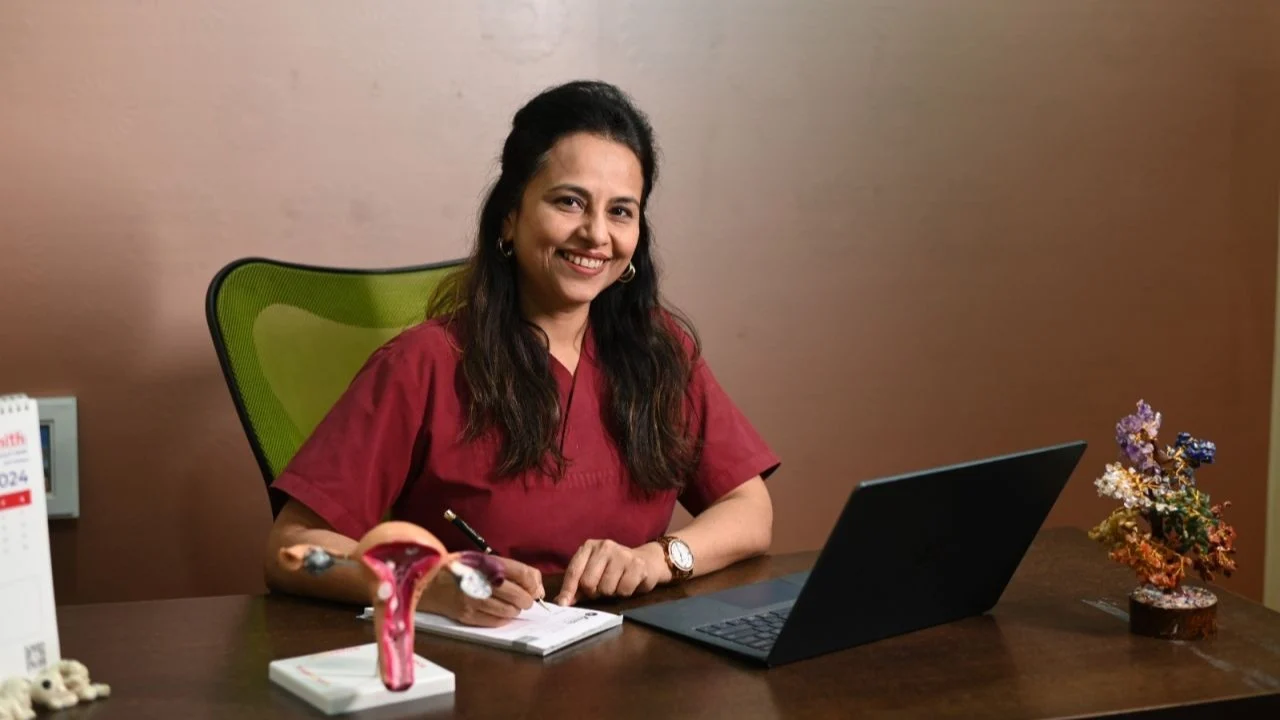
Mamta Vernekar Dighe: Can Technology Make IVF Safer Without Replacing Human Vigilance?
Mamta Vernekar Dighe, Founder and Director at Xenith Advanced Fertility Centre, shared on LinkedIn:
”Can Technology Make IVF Safer, Without Replacing Human Vigilance?
In IVF, one small identification error can have consequences far beyond the laboratory.
Can technology make these errors preventable?
I think about this question more than most people realise.
In almost every other part of medicine, a mix-up can often be caught, corrected, or explained. In IVF, the margin for error is different.
A single mislabelled dish, a single missed verification step, and the consequence is not a delay or a redo.
It is someone’s embryo, someone’s genetic material, someone’s chance at a child. That is why identification and traceability are not just protocol in our labs; they are the foundation everything else stands on.
Electronic witnessing systems are changing what is possible here.
Real-time alerts, digital traceability, automatic cross-checks at every critical step – these tools are designed to catch things a tired human eye might miss at 7pm after a long day.
But I want to be honest about something. Technology is not a replacement for vigilance. It is a support for it.
An alert that gets acknowledged without being understood is just as dangerous as no alert at all. A system can flag a mismatch, but it cannot ask the second question an experienced embryologist instinctively asks.
It cannot pause, think, and say ‘something about this does not feel right,’ the way a trained human can. If we start treating electronic witnessing as a substitute for attention rather than a partner to it, we have actually created a new category of risk, just a quieter one.
My view is simple. The best labs will not be the ones with the most advanced technology.
They will be the ones where technology and human responsibility reinforce each other instead of competing.
Where every embryologist still double-checks, still thinks critically, still treats every dish as if it were the only one in the room, even with a system watching alongside them.
Because at the end of the day, no algorithm carries the weight of what we do.
We do.”
Other articles featuring Mamta Vernekar Dighe on Fertility News.
-
Oct 12, 2026, 16:55Karthik Raj: True Biological Embryo Mosaicism vs. Technical Detection
-
Oct 12, 2026, 16:50Nagi Rostom: Sharing Insights on Reproductive Health and Fertility at a Women’s Health Open Morning
-
Oct 12, 2026, 16:44Katy Encalade: Why Early Education Matters in Egg Donation and Surrogacy
-
Oct 12, 2026, 16:31It’s Time to Talk about Fertility-Aware Workplaces – ESHRE
-
Oct 12, 2026, 16:23Anu Chawla: WHO’s Global Roadmap for Hypertensive Disorders of Pregnancy Is a Significant Step Forward
-
Oct 12, 2026, 16:11Devyanshi Dixit: Behind Every Breakthrough Is a Reason to Keep Going
-
Oct 12, 2026, 16:01Suganya Venkat: The Kindest Thing to Say After a Failed IVF Cycle Is Not “Try Again”
-
Oct 12, 2026, 15:58Lucy Froese: When You Lose a Pregnancy, You Don’t Just Lose Your Baby…
-
Oct 12, 2026, 15:56Beata Blazkova: What Actually Makes an Embryo Keep Going?