

Kim Bruno: Why Sex-Specific Science Is Reshaping Neurology and Alzheimer’s Risk?
Kim Bruno, Associate Director Medical Science Liaison at Sera Prognostics, shared a post on LinkedIn:
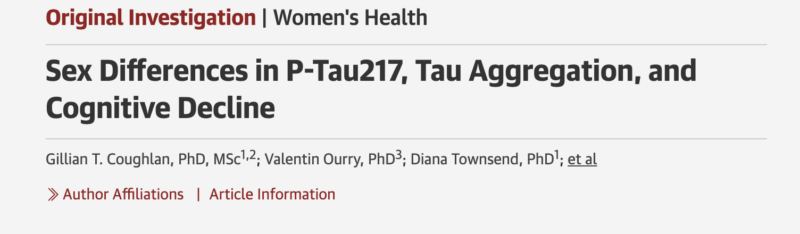
“A recent study in JAMA Neurology reinforces something medicine is only beginning to fully appreciate: sex-specific biology profoundly shapes disease risk, progression, and outcomes.
The research highlights how hormonal and reproductive factors influence neurological disease pathways, particularly those related to Alzheimer’s disease and neurodegeneration. For example, prior findings show that female sex, earlier menopause, and hormone therapy timing are associated with differences in tau deposition in the brain, a key pathological marker of Alzheimer’s disease.
This helps explain why women represent nearly two-thirds of Alzheimer’s disease cases worldwide, suggesting that hormonal transitions—especially menopause—may play a critical role in brain vulnerability later in life.
The implications are significant:
- Sex hormones influence brain biology—affecting inflammation, neuronal growth, and neurodegenerative processes across the lifespan.
- Reproductive history matters: factors like age at menopause and hormone therapy timing may modify neurological disease risk.
- Sex differences in disease biology are measurable, including differences in tau deposition and other neurodegenerative markers.
But perhaps the most important message is broader.
As you have all heard me say before, and I will continue to bring up – For decades, women were underrepresented in biomedical research, and even when included, results were rarely analyzed by sex. Studies show that fewer than 15% of clinical trials report sex-specific outcomes, despite known biological differences.
We are only now beginning to understand how deeply hormones, chromosomes, and sex-specific physiology influence disease across nearly every field of medicine—from neurology to immunology to cardiometabolic health.
This is why sex-specific research is fundamental to precision medicine.
If we want better diagnostics, more effective treatments, and truly equitable care, research must move beyond treating women as a subgroup analysis and instead design studies that start with sex differences in mind.
When we study women’s biology seriously, we don’t just improve women’s health, we improve medicine for everyone.
Stay updated on all scientific advances in the field of fertility with Fertility News.
-
Apr 11, 2026, 17:24Marco Zaccaria: Discussing Interstitial Myolisis on Second Day of Society of Endometriosis and Uterine Disorders Conference
-
Apr 11, 2026, 17:14Amanpreet Kaur: Looking for a Fresher Embryologist to Join Our IVF Team
-
Apr 11, 2026, 17:10Khalil Faaed: Honored to Have Participated in the SAS e-Summit 2026 Organised by AndroNet
-
Apr 11, 2026, 17:08Ting Yuan: Two patients, Same outcome, Completely Different Mechanisms!
-
Apr 11, 2026, 17:04Connie Stark: Fertility Clinics Spend $3,000 to Acquire Patients and Lose $50,000 When They Leave
-
Apr 11, 2026, 16:59Patti Yik: Reproductive Immunology as a Missing Link in Unexplained Infertility and Pregnancy Loss
-
Apr 11, 2026, 16:48Nardhy Gomez-Lopez: The Maternal-Fetal Interface as an Immunological Barrier
-
Apr 11, 2026, 16:41Carleigh Fedorka: Synthetic Progestin Treatment Alters Cytokine Expression and Impairs Vaccine Response
-
Apr 11, 2026, 16:37Dharini Mahendira Leads Care Across Pregnancy and Rheumatic Disease – RheumAcademy