
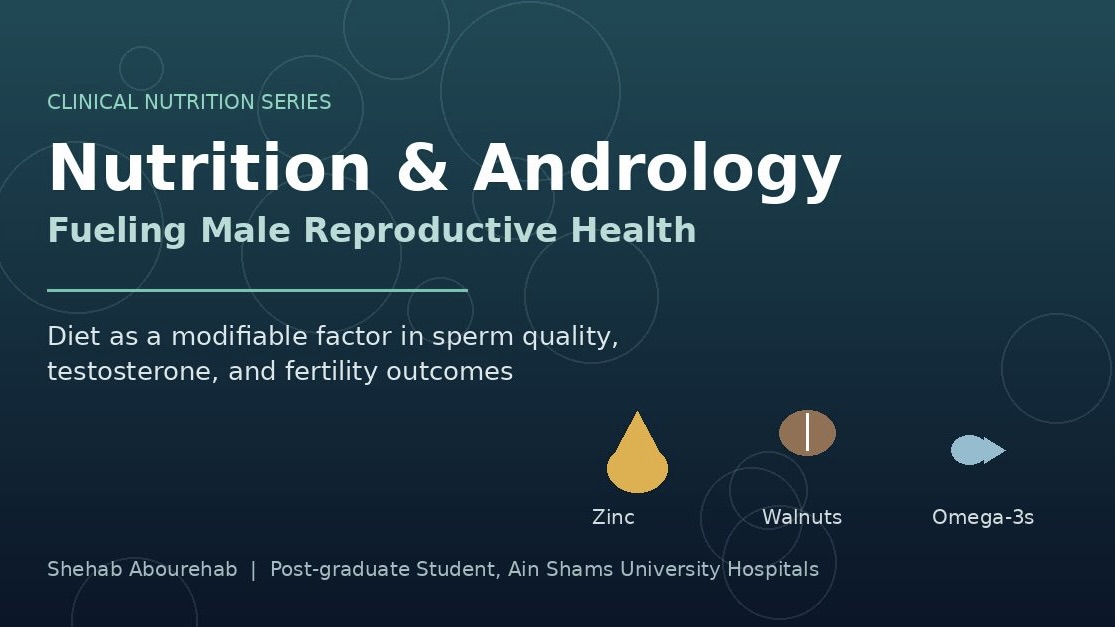
Shehab Gamal: Your Fertility Might Be Sitting in Your Fridge
Shehab Gamal, Operational Specialist at Talabat, shared on LinkedIn:
“Your Fertility Might Be Sitting in Your Fridge
We talk a lot about diet and heart health, diet and weight – but diet and sperm quality? Barely ever.
Turns out, andrology (the study of male reproductive health) has just as strong a nutrition connection as anything else in medicine.
Let’s dig in.
- The MVP: Nuts (especially walnuts)
Studies have shown walnuts can improve sperm motility and morphology thanks to their omega-3 content and antioxidant load. A daily handful might be doing more than you think.
- The antioxidant squad: Vitamin C and E-rich foods
Citrus, berries, almonds, sunflower seeds – antioxidants help protect sperm DNA from oxidative stress, which is one of the biggest (and most underrated) culprits in male infertility.
- The mineral heavyweight: Zinc
Oysters, red meat, pumpkin seeds – zinc is essential for testosterone production and sperm formation. Low zinc levels show up again and again in infertility research.
- The repeat offender (in a good way): Omega-3 fatty acids
The same fish that helps your heart and your prostate also supports sperm membrane integrity. Salmon really is doing overtime for men’s health.
- The saboteurs: Trans fats and processed foods
Frequent fast food and trans-fat-heavy diets have been associated with lower sperm counts and reduced testosterone. Convenient, but costly.
- The moderation zone: Alcohol and soy
Heavy alcohol use is consistently linked to lower testosterone and impaired sperm production. Soy is more debated – some studies suggest high intake may affect hormone levels, though evidence isn’t conclusive.
- The bonus factor: Body weight
Obesity is tied to hormonal imbalances that can disrupt sperm production altogether – proof that ‘nutrition and andrology’ isn’t just about specific foods, it’s about the whole picture.
Why this matters: male infertility contributes to roughly half of all infertility cases worldwide, yet nutrition counseling is rarely part of that conversation. As future clinicians, this is exactly the kind of practical, everyday knowledge we should be bringing into patient care – not just treating the problem once it’s already showing up on a lab report.
So next time someone jokes about ‘eating for two,’ maybe men should start thinking the same way – just for very different reasons.
What’s a men’s health topic you wish got more airtime?”
Stay informed with the latest updates in fertility and reproductive medicine on Fertility News.
-
Oct 23, 2026, 17:34Breast Cancer Awareness Month: Supporting Women Through Every Journey – Egg Donor and Surrogate Solutions
-
Oct 23, 2026, 17:28Demián Glujovsky: What Happens to Fertility Patients Between Visits?
-
Oct 23, 2026, 17:21Stephen Parker Ellington: Empathetic Fertility Care Can Scale, Even When Your Team Can’t
-
Oct 23, 2026, 17:16ACOG Releases New Guidance on the Use of GLP-1s in Pregnancy and Lactation
-
Oct 23, 2026, 17:06Emad Sedeek: ESHRE Recommendations on Good Practice in the IVF Laboratory 2026 – Part 2
-
Oct 23, 2026, 16:59Nitiz Murdia: Guiding You Through IVF – Your Journey’s Pilot
-
Oct 23, 2026, 16:56Ben Peipert: Come See My Poster Presentation at ASRM 2026
-
Oct 23, 2026, 16:50New RBMO Review Examines Benefits and Risks of Freeze-All IVF Strategies Across Ovarian Response Groups
-
Oct 23, 2026, 16:381 Week and Counting to the Next Campus Course on Male Infertility – ESHRE