
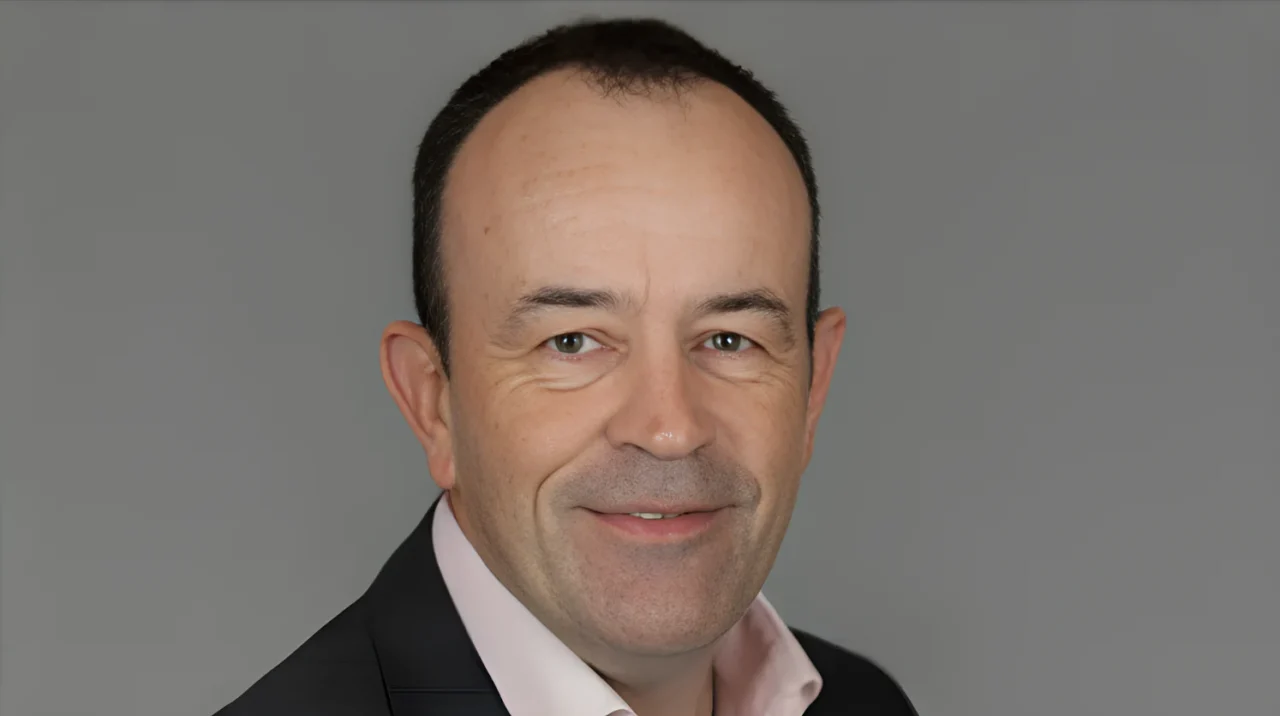
Tony Gordon: What Is the Most Successful Form of Fertility Treatment?
Tony Gordon, Senior Director of Clinical Strategy and Market Development at CooperSurgical Fertility Solutions, shared a post on LinkedIn about an editorial by Richard Paulson published in FandS Reports:
“What is the most successful form of fertility treatment?
Well, a recent fertility and sterility editorial by Richard Paulson claims, ‘cumulative live birth rates after sequential single-embryo transfers, using what is now accepted as the most successful form of fertility treatment: the transfer of preimplantation genetic testing for aneuploidy (PGT-A)–tested euploid blastocysts’. Rick is a very considered and thoughtful scientist-clinician, so it’s really interesting to see his thoughts in the editorial.
This claim is part of an editorial that looks at a number of papers that have shown that the cumulative live birth rate of three sequential euploid transfers results in an approximate 92-93% live birth rate. The data from these papers, across multiple IVF labs, is very clear. The main discussion point of the editorial is actually how real repeat implantation failure is and his conclusion that it’s much rarer than is often suggested.
So is sequential single-embryo transfers the most successful form of fertility treatment? You could probably get a higher cumulative live birth rate if you transferred multiple euploid embryos per cycle but that would run a very high twinning risk, and most IVF labs look to avoid this outcome due to the complications seen with twin births or are mandated to achieve low twinning rates. Is sequential single-embryo transfers the most successful form of fertility treatment for oocyte donation cycles or for non-advanced maternal age patients? The evidence is far from clear for these patients.
In my 20 years in the field of PGT-A, across the numerous and heated debates pro/con, the controversies surrounding PGT-A, the data is really showing how successful PGT-A can be. This seems like a landmark statement about the effectiveness of PGT-A, especially for an editorial in Fertility and Sterility. It’s definitely worth a read, Open Access.”
Title: What does life-table analysis of sequential euploid blastocyst transfers tell us about recurrent implantation failure–or lack thereof?
Authors: Richard J. Paulson.
You can read the Full Editorial in FandS Reports.
Other articles featuring Tony Gordon on Fertility News.
-
Oct 13, 2026, 16:58Slavian Bumbu: A Low AMH Is Not an Infertility Diagnosis
-
Oct 13, 2026, 16:43Keshav Malhotra: No Embryologist or Laboratory Technique Can Guarantee Euploid Embryos
-
Oct 13, 2026, 16:29IVI RMA Global Introduces IVI Fertility
-
Oct 13, 2026, 16:12Devyanshi Dixit: PCOS May Be One Diagnosis, But Is It One Biological Disease?
-
Oct 13, 2026, 16:00Rajeev Agarwal: Age and Male Fertility, Through the PREPARE Method
-
Oct 13, 2026, 15:505 Years of the Patient Engagement Forum – HFEA
-
Oct 13, 2026, 15:41Cell-Free Fetal DNA Testing for Single-Gene Conditions – RCOG
-
Oct 13, 2026, 15:24Somil Singhal: Method for Enhancing Embryo Implantation Using Embryo Glue and Its Importance
-
Oct 13, 2026, 15:06Clare Mansfield: Pregnancy Loss Is Grief, and Grief Looks Different for Everyone…