

Vipin Chandra: L-Leucine in Controlled Ovarian Hyperstimulation
Vipin Chandra, Director of Matcare Maternity, shared a post on LinkedIn:
“L-Leucine in Controlled Ovarian Hyperstimulation (COH):
A Metabolic Adjuvant Worth Serious Clinical Attention
Poor ovarian response remains one of the most frustrating challenges in ART. Despite protocol refinement and gonadotropin escalation, outcomes often plateau—especially in women with diminished ovarian reserve (DOR) and hypo-responsive follicles.
Increasingly, attention is shifting upstream—from hormones alone to the intracellular metabolic pathways that govern follicular competence.
One nutrient drawing justified mechanistic interest is L-Leucine.
Why L-Leucine Matters Biologically
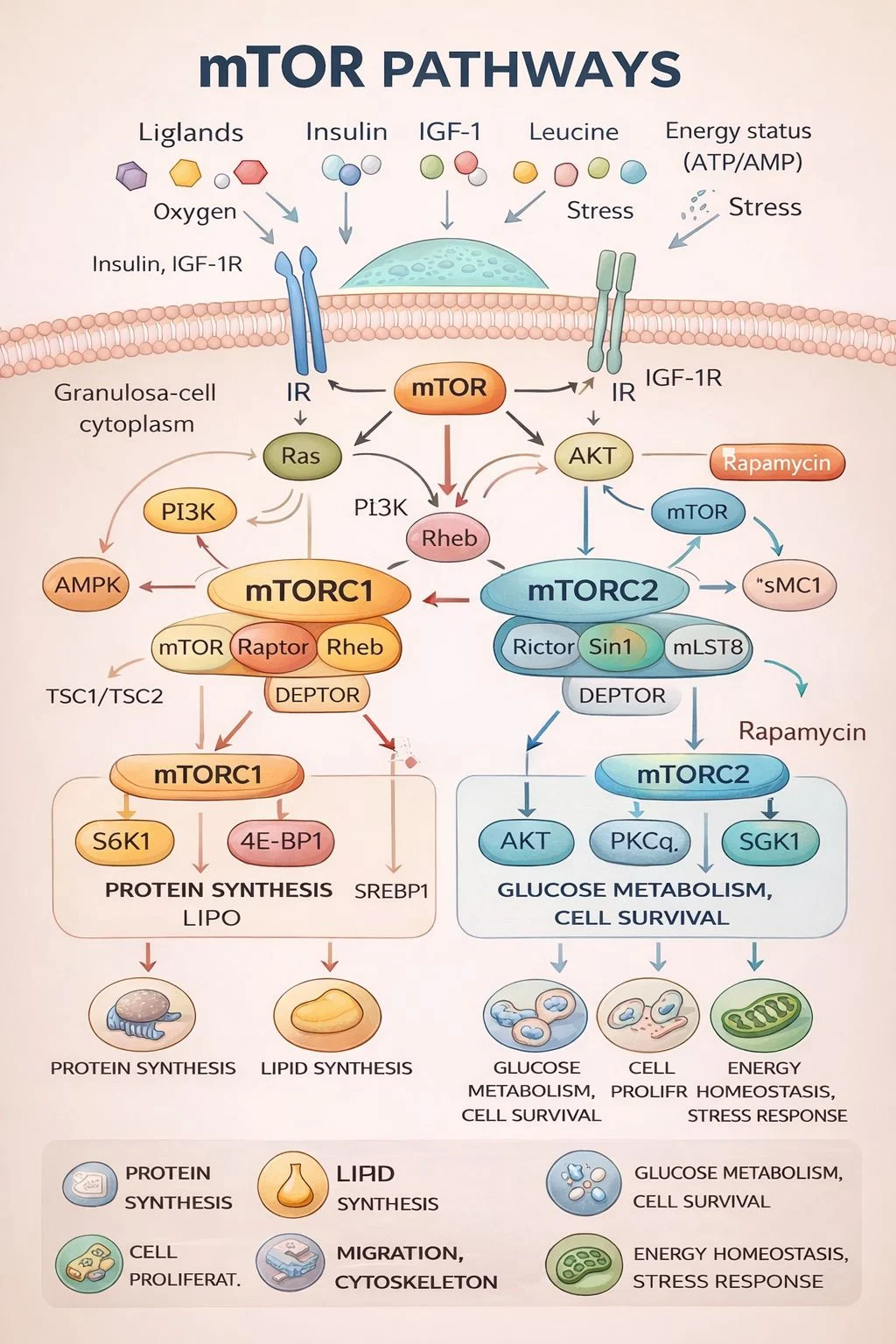
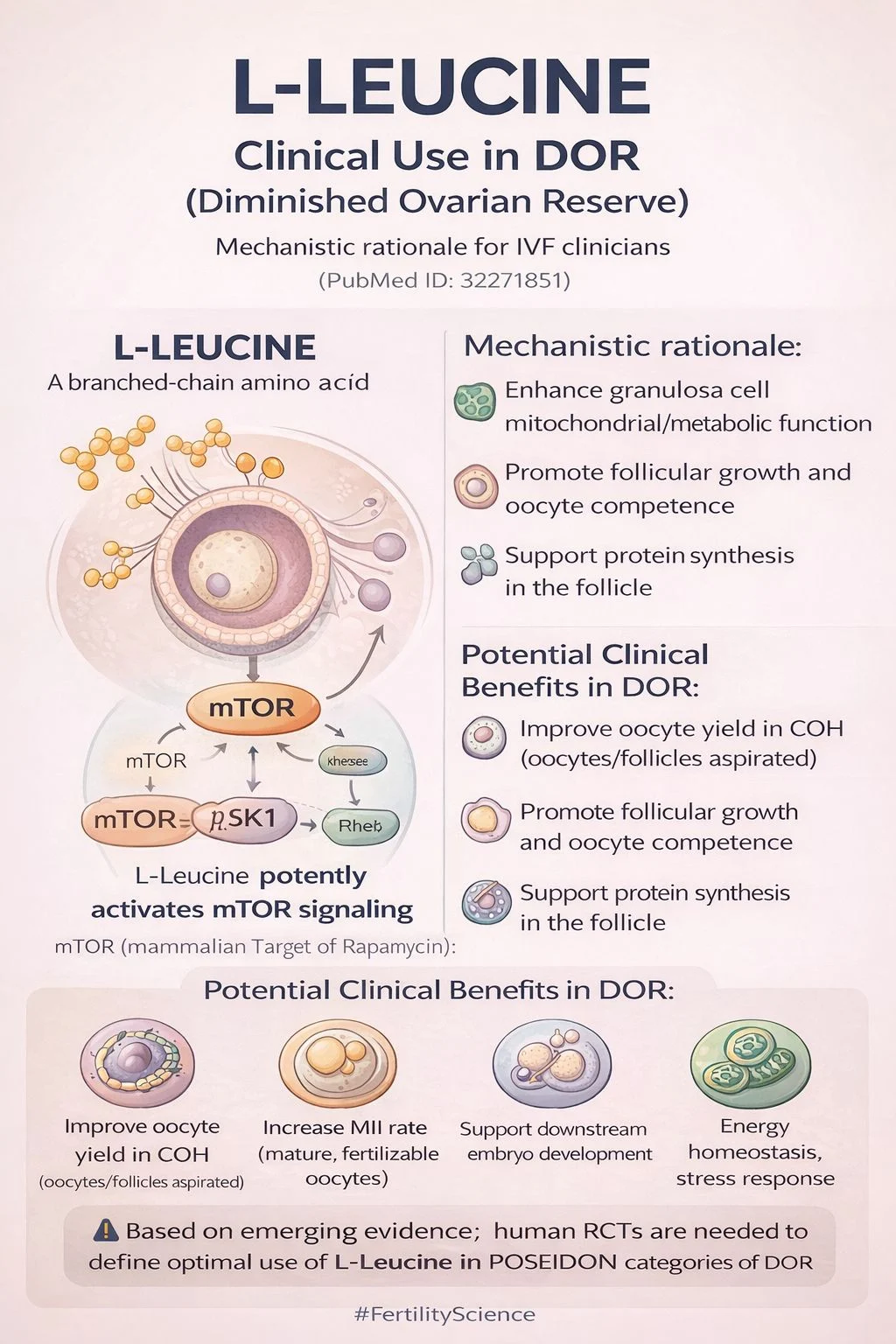
L-Leucine is a branched-chain amino acid and the most potent physiological activator of the mTOR pathway, a central regulator of:
- granulosa cell proliferation
- protein synthesis
- mitochondrial function
- steroidogenesis
- follicular growth and survival
mTOR signaling is now well established as essential for follicular activation and oocyte competence.
Adhikari et al., PNAS 2010
Mechanistic Advantage in Low-Reserve Ovaries
Unlike insulin-dependent activators, L-Leucine directly activates mTORC1 via Rag-GTPase signaling, supporting cellular metabolism even under stress conditions—precisely the environment seen in aging or hypo-responsive ovaries.
Wolfson et al., Science 2016
Granulosa cells are highly amino-acid sensitive, and preclinical work shows leucine improves:
- mitochondrial activity
- steroidogenic capacity
- granulosa cell survival
Zhang et al., Biology of Reproduction 2017
What Clinical Data Suggest So Far
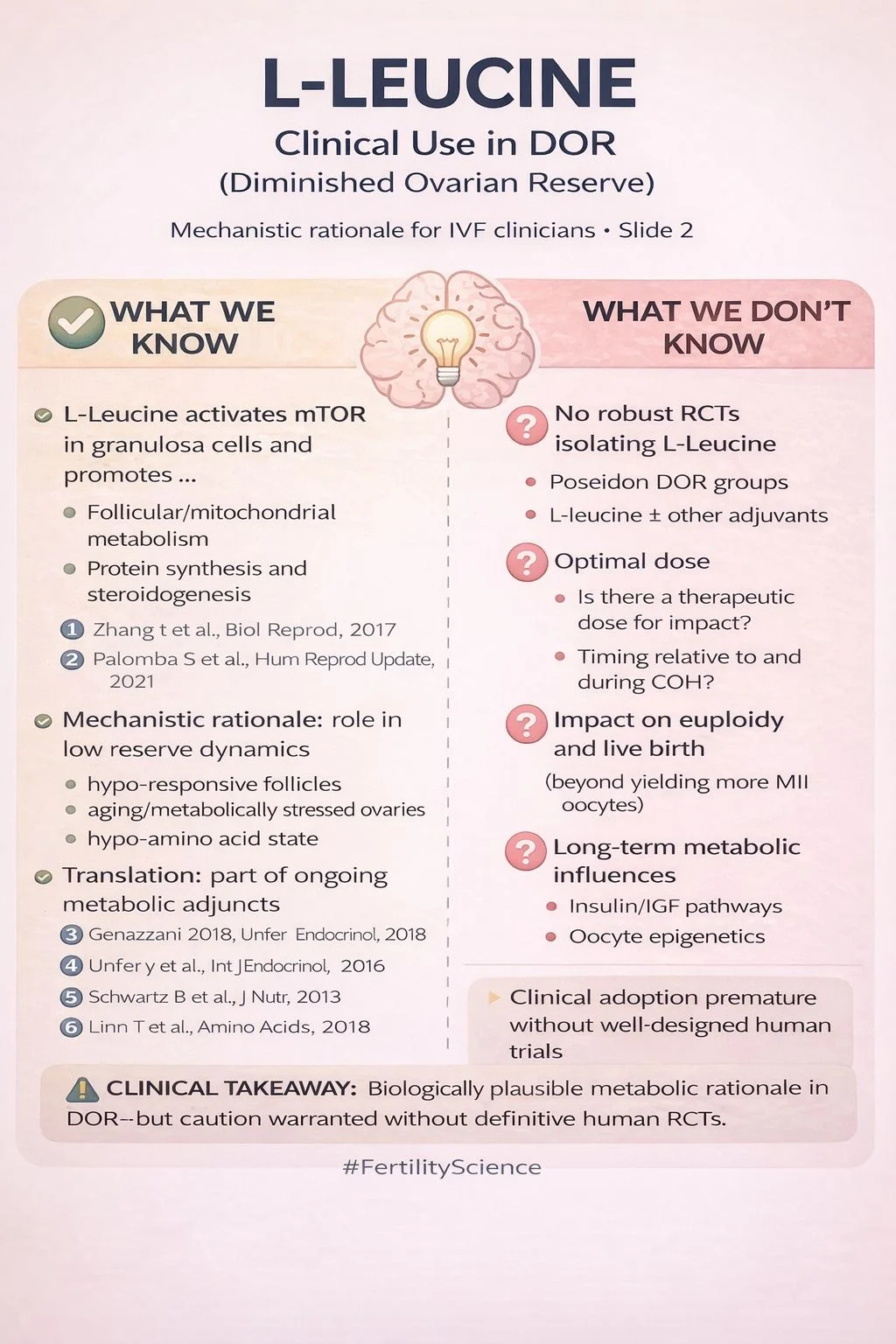
While IVF-specific RCTs isolating L-Leucine are limited, human nutritional and metabolic studies consistently suggest that optimizing amino-acid–mTOR signaling improves ovarian responsiveness.
L-Leucine has also been studied as part of multi-nutrient metabolic strategies, commonly combined with:
- myo-inositol (FSH/insulin signaling, oxidative stress reduction)
- selenium (steroidogenesis, antioxidant support)
Genazzani et al., Gynecological Endocrinology 2018
Palomba et al., Human Reproduction Update 2021
Clinical Interpretation (Balanced, Not Hype)
At present, L-Leucine should be viewed as a metabolic adjuvant—not a standalone solution.
Its potential role appears strongest in:
- DOR / POSEIDON low-prognosis patients
- hypo-responsive granulosa cell environments
- aging ovaries with metabolic stress
When combined thoughtfully with agents like myo-inositol and selenium, L-Leucine may offer dual-pathway support:
mTOR activation + insulin/FSH signaling optimization
What is urgently needed:
- well-designed RCTs isolating L-Leucine
- follicular-fluid and granulosa-cell human studies
- POSEIDON-stratified outcome analysis.”
Stay updated on all scientific advances in the field of fertility with Fertility News.
-
Sep 18, 2026, 20:27Hrishikesh Pai: Rethinking Male Infertility
-
Sep 18, 2026, 20:25Eric Verdin: Wrapping Up the Reproductive Aging Summit at the Center for Healthy Aging in Women
-
Sep 18, 2026, 20:21Investigating Pregnancy Outcomes in Women with Idiopathic POI – RBMO
-
Sep 18, 2026, 20:18Sue Ritchie: Why Aren’t We Talking About Male Fertility More?
-
Sep 18, 2026, 20:13Salma Yasin: Every Day of BFS Study Week 2026 Has Been an Exceptional Learning Experience
-
Sep 18, 2026, 20:01Qingcai Wang: Over 35 and Torn Between Trying Longer and Starting IVF?
-
Sep 18, 2026, 19:58Bhumika: Can a Woman Become Pregnant Again While Already Pregnant?
-
Sep 18, 2026, 19:5215 More Experts Join the International Fertility Forum Mumbai 2026
-
Sep 18, 2026, 19:50Curious About What Happens Behind the Scenes in the Labs? – Sims IVF