
Akansha Negi: Why Oxygen Levels Matter for IVF Embryos
Akansha Negi, Trainee Embryologist – Akanksha Ivf Centre at Mata Chanan Devi Hospital, shared a post on LinkedIn:
“The Air We Breathe Can Be Harmful for an IVF Embryo
In the IVF laboratory, one of the most important decisions we make is something that seems very simple: how much oxygen the embryo is exposed to.
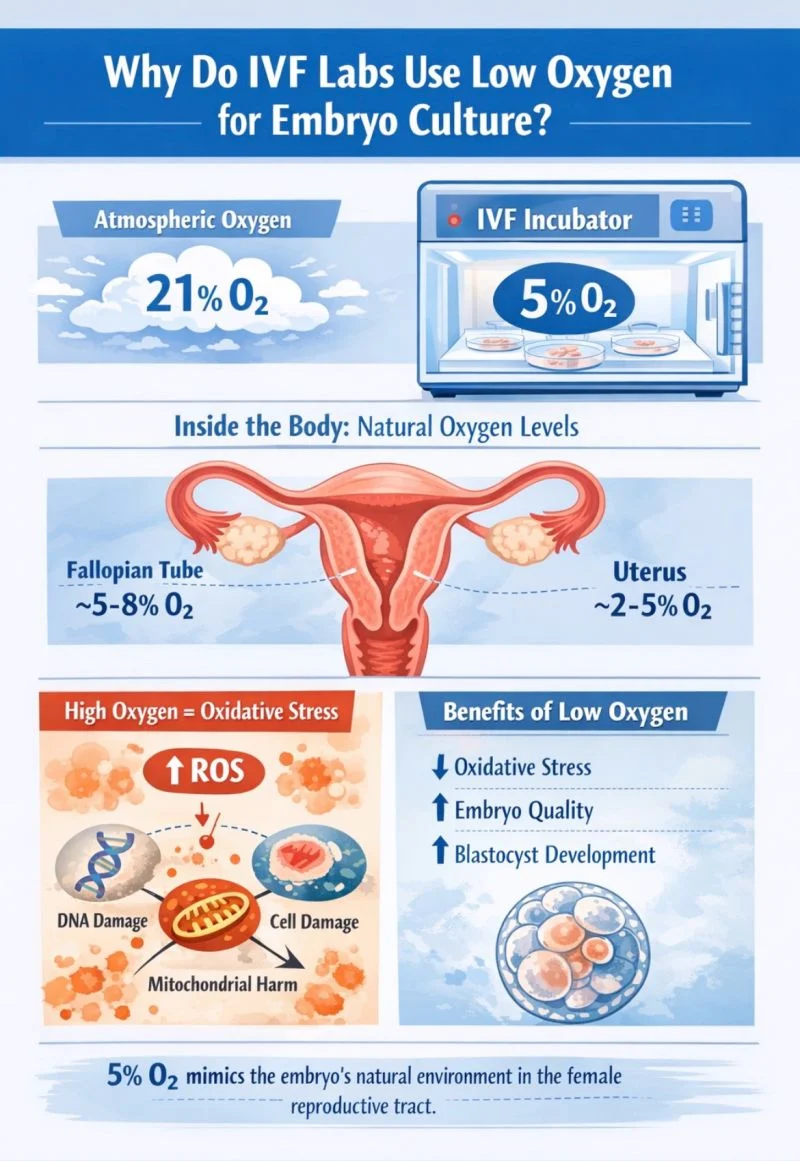
Interestingly, the oxygen level that is normal for humans to breathe (~21%) is actually much higher than what an early embryo naturally experiences inside the body.
So why do IVF laboratories typically culture embryos at ~5% oxygen instead of atmospheric oxygen?
The Embryo’s Natural Environment Is Surprisingly Low in Oxygen
Early embryos develop within the female reproductive tract where oxygen levels are significantly lower than atmospheric air.
Studies measuring oxygen tension have shown:
- Fallopian tube: ~5–8% oxygen
- Uterine cavity: ~2–5% oxygen
This means that when embryos are cultured at 21% oxygen, they are exposed to conditions that are 4–5 times higher than their natural environment.
To replicate physiological conditions more closely, modern IVF laboratories use low-oxygen incubators (~5%).
The Hidden Problem: Reactive Oxygen Species (ROS)
Higher oxygen levels increase the production of reactive oxygen species (ROS) during cellular metabolism.
ROS can damage critical cellular structures, including:
- DNA
- Cell membranes
- Proteins
- Mitochondria
Early embryos are particularly vulnerable because their antioxidant defense systems are still immature.
Even small increases in oxidative stress during the first few days of development can affect cell division, embryo quality, and developmental competence.
How Low Oxygen Helps Embryos
Reducing oxygen concentration to ~5% helps:
- Reduce oxidative stress
- Maintain cellular integrity
- Support normal metabolic activity
- Improve blastocyst development
Several studies have reported that embryos cultured in low oxygen environments show higher blastocyst formation rates and better developmental outcomes.
A Reminder of How Sensitive Early Life Is
Embryos spend only a few days in the IVF laboratory, but during this time they are extremely sensitive to their surroundings.
Parameters like temperature, pH, culture media, and oxygen concentration can significantly influence early development.
Sometimes, improving outcomes in embryology is not about complex technology but about carefully recreating the environment that nature already designed.
Question for fellow embryologists:
Does your IVF lab culture embryos under low oxygen (~5%) or atmospheric oxygen (~21%)? Have you observed differences in blastocyst development?”
Stay updated on all scientific advances in the field of fertility with Fertility News.
-
Oct 3, 2026, 18:27Non-Invasive Prenatal Testing: Science, Counselling, Global Access and Equity – IJGO
-
Oct 3, 2026, 18:19Erica Marsh: Congratulations to the 4 Doctors Who Were Named 2026 Top Docs by Hour Detroit Magazine
-
Oct 3, 2026, 18:16Shizuko Takahashi: What about the “Biological Clock” in Men?
-
Oct 3, 2026, 18:11Devyanshi Dixit: Call for Speakers for GFWH 2026
-
Oct 3, 2026, 18:06Shaun Greenaway: The More We Understand Male Fertility, the Better Decisions We Can Make
-
Oct 3, 2026, 17:55Reproductive BioMedicine Online’s Latest Issue, 53.4, Is Out
-
Oct 3, 2026, 17:50Ananya Anand Kumar: Excited to Share that My Cryopreservation Abstract Was Accepted for Fertility 2027
-
Oct 3, 2026, 17:48Pregnancy of the Future: Predicting, Preventing, and Treating the Great Obstetric Syndromes – SMFM
-
Oct 3, 2026, 17:46PMOS Was Never Just About the Ovaries… – PCOS Awareness Association