

Alisha Tuck: Understanding Endometrial Carcinoma on Ultrasound
Alisha Tuck, OB Gyn, Sonographer at Sonopartners LLC, shared a post on LinkedIn:
“Understanding Endometrial Carcinoma on Ultrasound
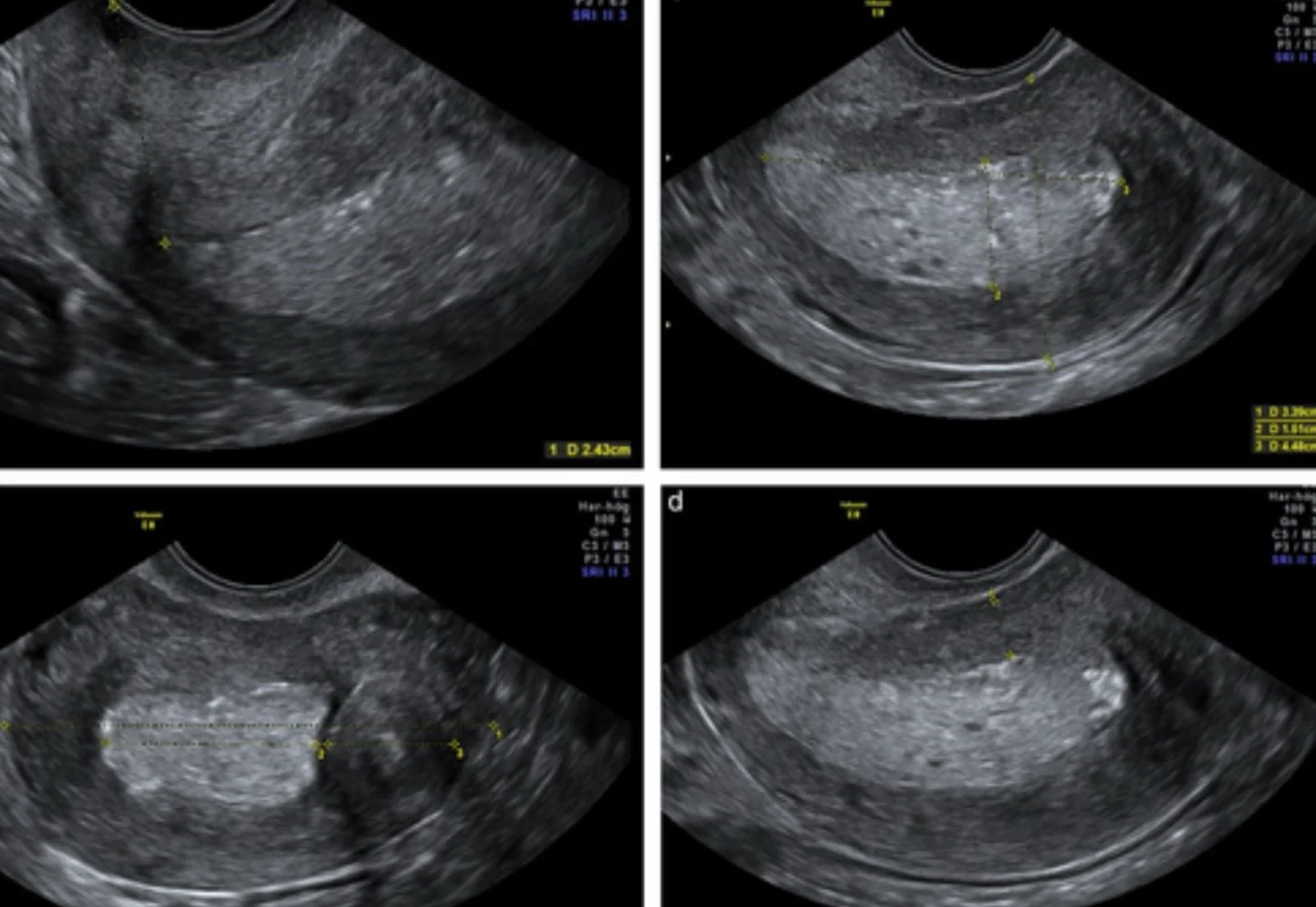
Endometrial carcinoma is the most common gynecologic malignancy in developed countries, primarily affecting postmenopausal women. While a definitive diagnosis requires a tissue biopsy (usually via dilation and curettage or office pipelle), Transvaginal Ultrasound (TVUS) serves as the primary frontline imaging tool for screening and staging.
1. Clinical Presentation and Risk Factors
The hallmark symptom of endometrial cancer is postmenopausal bleeding (PMB). In premenopausal patients, it may manifest as heavy, prolonged, or irregular menstrual cycles.
Key Risk Factors:
- Unopposed Estrogen: Obesity (where peripheral fat converts precursors to estrogen), estrogen-only hormone replacement therapy, or PCOS.
- Tamoxifen Use: Often used for breast cancer treatment, it can have a pro-estrogenic effect on the uterus.
- Lynch Syndrome: A genetic predisposition to various cancers.
2. Sonographic Hallmarks
When evaluating the uterus for malignancy, sonographers and radiologists look for several specific “red flags.”
- Endometrial Thickness (ET): In postmenopausal women with bleeding, an ET > 4 mm is generally considered the threshold for further investigation.
- In asymptomatic postmenopausal women, the threshold is higher (often > 8–11 mm), though this is debated.
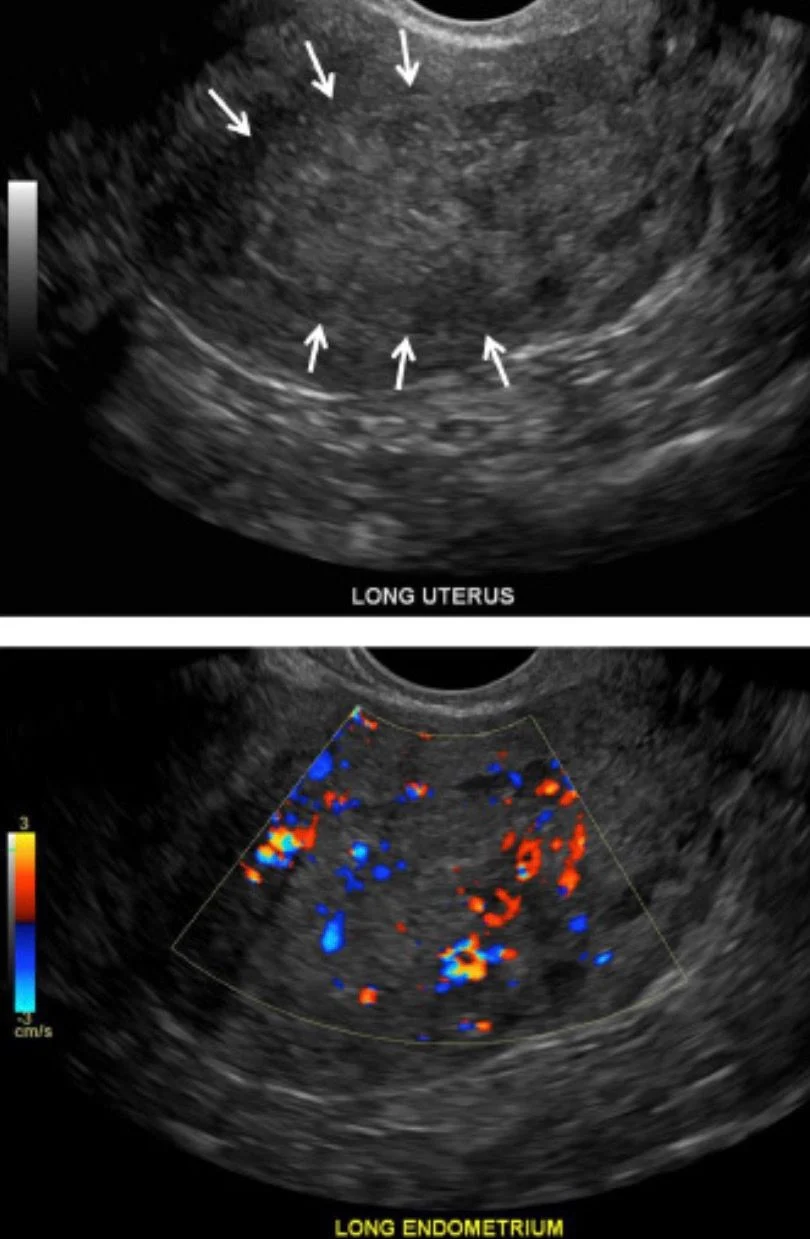
- Echogenicity: The endometrium often appears heterogeneous, thickened, and “dirty” or complex compared to the surrounding tissue.
- The Subendometrial Halo: A healthy uterus has a thin, hypoechoic (dark) zone between the endometrium and myocardium. Loss or blurring of this ‘halo’ suggests myometrial invasion.
- Fluid Collections: While simple fluid (hydrometra) can be benign, fluid containing echoes (hemometra or pyometra) in a postmenopausal patient is suspicious.
3. The Role of Doppler Imaging
Color and Power Doppler are essential for differentiating between benign polyps and malignant masses.
- Neovascularization: Malignant tumors often display ‘multiple vessel’ patterns with irregular branching.
- Resistive Index (RI): Malignant flow often exhibits low resistance.
The primary goal of the ultrasound, beyond detection, is to determine how deep the cancer has grown into the uterine wall. This is critical for surgical planning.
Note: MRI is often superior to ultrasound for precise staging (especially for cervical involvement), but TVUS remains the most cost-effective initial assessment.
4. Limitations of Ultrasound
It is important to remember that ultrasound cannot always distinguish between:
- Endometrial Polyps: Often more focal and have a single ‘feeding vessel.’
- Endometrial Hyperplasia: A precursor to cancer that can look identical to early-stage carcinoma.
- Submucosal Fibroids: These can distort the endometrial lining but usually have a distinct, striated appearance.
Disclaimer: For educational purposes only. Correlate with clinical symptoms and histopathological results.”
Stay updated on all scientific advances in the field of fertility with Fertility News.
-
Oct 3, 2026, 18:27Non-Invasive Prenatal Testing: Science, Counselling, Global Access and Equity – IJGO
-
Oct 3, 2026, 18:19Erica Marsh: Congratulations to the 4 Doctors Who Were Named 2026 Top Docs by Hour Detroit Magazine
-
Oct 3, 2026, 18:16Shizuko Takahashi: What about the “Biological Clock” in Men?
-
Oct 3, 2026, 18:11Devyanshi Dixit: Call for Speakers for GFWH 2026
-
Oct 3, 2026, 18:06Shaun Greenaway: The More We Understand Male Fertility, the Better Decisions We Can Make
-
Oct 3, 2026, 17:55Reproductive BioMedicine Online’s Latest Issue, 53.4, Is Out
-
Oct 3, 2026, 17:50Ananya Anand Kumar: Excited to Share that My Cryopreservation Abstract Was Accepted for Fertility 2027
-
Oct 3, 2026, 17:48Pregnancy of the Future: Predicting, Preventing, and Treating the Great Obstetric Syndromes – SMFM
-
Oct 3, 2026, 17:46PMOS Was Never Just About the Ovaries… – PCOS Awareness Association