
Yannick Hurni: Why Does Surgery for Endometriosis-Associated Infertility Fail to Improve Pregnancy Outcomes?
Yannick Hurni, Clinical and Research Fellow in Gynecologic Surgery at Dexeus University Hospital, shared a post on LinkedIn:
“Paper of the Week #09
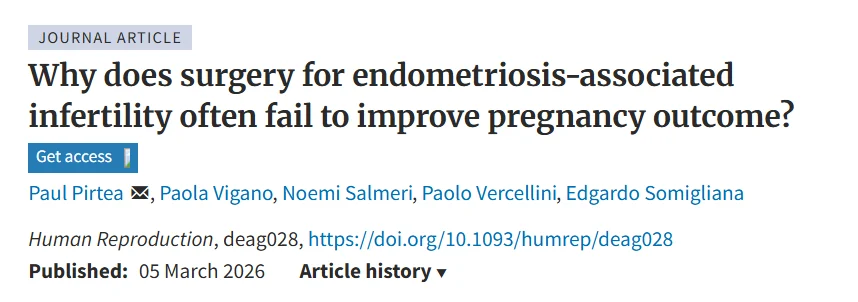
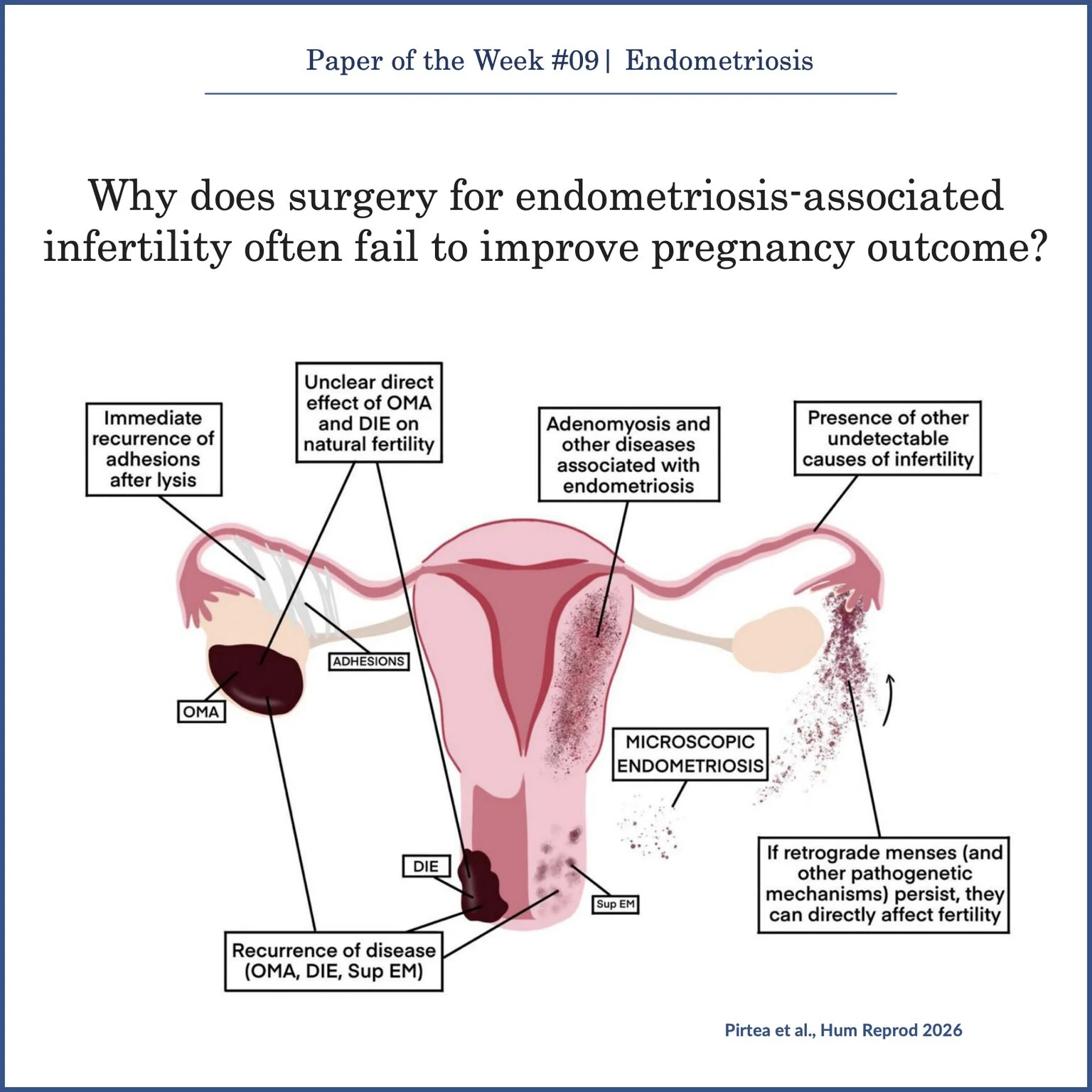
Why does surgery for endometriosis-associated infertility often fail to improve pregnancy outcomes?
A really enjoyable and thought-provoking review. Compliments to the authors Paul Pirtea, Paola Viganò, Noemi Salmeri, Paolo Vercellini, and Edgardo Somigliana for the clarity of the narrative, the careful appraisal of available evidence—and, equally important, the honest acknowledgment of where evidence is still lacking—beautifully balanced with expert opinion that only experienced voices can provide.
My take-home messages:
1. Endometriosis is not a homogeneous, ‘simple’ disease.
Too often we try to simplify it to make it more ‘studyable,’ but this paper reminds us that such simplifications may be misleading—and clinically dangerous—especially when we deal with fertility, where so many variables are inherently difficult to control.
2. The impact of endometriosis goes far beyond visible lesions.
What we see (or remove) surgically is only part of the story. The discussion on microscopic endometriosis is particularly fascinating, but even beyond that, the disease likely acts through multiple mechanisms—altered immunity, inflammatory milieu, and associated conditions such as adenomyosis—none of which are fully addressed by surgery.
3. Counseling, counseling, and… more counseling.
Given the modest benefits of surgery and the complexity of the disease, transparent, realistic, and individualized patient counseling is absolutely central.
There are probably subgroups of patients who may benefit more from surgery—but identifying them is extremely challenging given the heterogeneity of the disease. With the current evidence, it remains difficult to clearly position surgery versus ART. Of course, when other symptoms (e.g., pain) are present and not responsive to medical therapy, the discussion changes.
4. We need more research—much more.
Despite decades of work, we are still far from truly understanding this complex and fascinating disease… and honestly, I’m very excited about all the opportunities ahead in this field.
In the end, this review challenges one of our most intuitive assumptions: that removing lesions should restore fertility. Reality, as always, is much more complex.
I strongly recommend reading this paper from start to finish—and I’d really love to hear your thoughts!”
Title: Why does surgery for endometriosis-associated infertility often fail to improve pregnancy outcome?
Authors: Paul Pirtea, Paola Vigano, Noemi Salmeri, Paolo Vercellini, Edgardo Somigliana
Stay updated on all scientific advances in the field of fertility with Fertility News.
-
Sep 13, 2026, 15:11Sachintha Alwis: From Impaired Sperm Motility to Microrobotics
-
Sep 13, 2026, 15:08Laurence Orbuch: Before Endometriosis Surgery, Ask…
-
Sep 13, 2026, 15:05Ademola Ayodele: IUI, IVF or Egg Freezing – Which One Is Right for You?
-
Sep 13, 2026, 14:59Fiona Pathiraja-Møller: Tennis Players No Longer Have to Choose Between Career and Family
-
Sep 13, 2026, 14:571-Day Virtual Experience for People Impacted by PMOS – PCOS Awareness Association
-
Sep 13, 2026, 14:53Ozor Victor: Behind Every Embryo Is a Story of Science, Precision, and Hope
-
Sep 13, 2026, 14:50Diana Kayal: What They Don’t Tell You About IVF
-
Sep 13, 2026, 14:44Vikram Sinai Talaulikar: A Heartfelt Thank You to All Who Donated and Supported “Menopause and Cancer”
-
Sep 13, 2026, 14:41Nicole McPherson: Changing IVF Practices Is Hard – Integration Needs to Be Easy