

Eric Lameignere: Optimizing Sperm Handling Conditions in the IVF Laboratory
Eric Lameignere, Co-Founder of MovaLife Microrobotics, shared a post on LinkedIn about a paper by Péter Czétány et al. published in the International Journal of Molecular Sciences:
“Optimizing Sperm Handling Conditions in the IVF Laboratory: Often-Overlooked Parameters
A recent study evaluated the impact of various laboratory environmental factors on sperm quality by assessing motility, vitality, oxidation-reduction potential (ORP), and DNA fragmentation following just one hour of exposure.
The findings demonstrate that handling conditions can significantly influence both the functional and genetic integrity of spermatozoa. Among the parameters investigated, an atmosphere containing 5% oxygen, which more closely resembles the physiological conditions of the female reproductive tract, provided better preservation of sperm motility, vitality, and DNA integrity than conventional atmospheric conditions (21% O₂). Similarly, short-term exposure to 4°C showed beneficial effects on several sperm quality parameters.
In contrast, UV exposure produced the most pronounced deterioration across all measured parameters, leading to substantial increases in oxidative stress and sperm DNA fragmentation. Extreme thermal stress and prolonged centrifugation were also found to have detrimental effects on sperm quality.
One of the study’s most important findings was the strong correlation between oxidative stress and sperm DNA fragmentation, further supporting the hypothesis that controlling laboratory environmental conditions is a critical factor in preserving the fertilizing potential of male gametes.
These results highlight the need to reconsider certain operational standards in assisted reproductive technologies (ART), with the objective of bringing laboratory handling conditions as close as possible to the physiological environments naturally experienced by sperm cells.
At MovaLife microrobotics, we believe that optimizing ART outcomes depends not only on identifying the most competent gametes but also on maintaining their microenvironment throughout the entire process. Our approach integrates all IVF procedures within a single platform, allowing gametes and embryos to remain continuously within a stable, controlled incubator environment. By eliminating repeated transfers and minimizing exposure to environmental fluctuations, this strategy aims to preserve the functional and genetic integrity of reproductive cells throughout the IVF journey.”
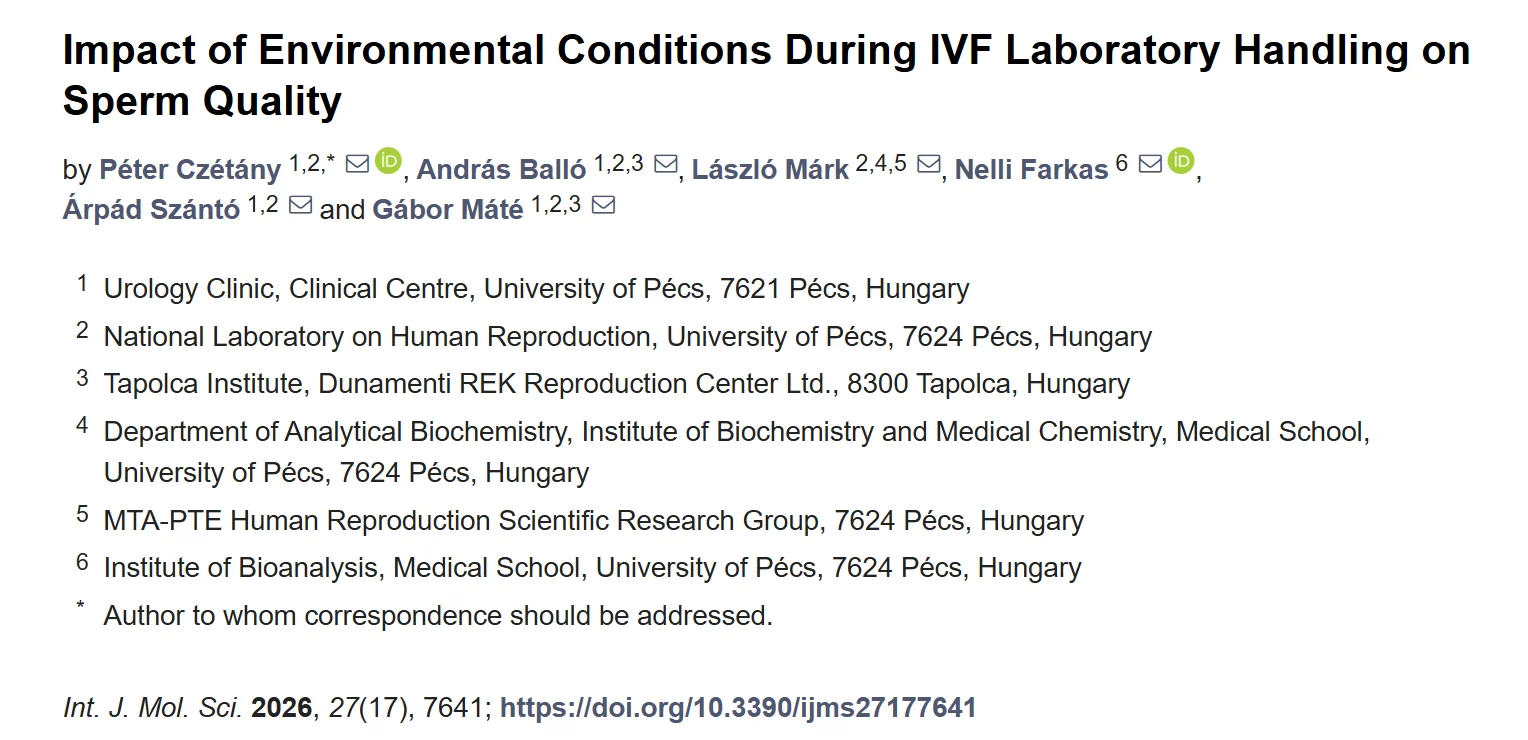
Title: Impact of Environmental Conditions During IVF Laboratory Handling on Sperm Quality
Authors: Péter Czétány, András Balló, László Márk, Nelli Farkas, Árpád Szántó, Gábor Máté
You can read the Full Article in the International Journal of Molecular Sciences.
Other articles featuring Eric Lameignere on Fertility News.
-
Oct 22, 2026, 17:36Filipa Rafael: A Woman Should Not Have to Be Trying for a Baby for Her Ovarian Insufficiency to Matter
-
Oct 22, 2026, 17:30Michele Boiani: New Insight on Zona Pellucida Proteins
-
Oct 22, 2026, 17:01Sean Lauber: New Review Assesses PGT-A Effectiveness and Safety
-
Oct 22, 2026, 16:49Rajeev Agarwal: Most Failed IVF Transfers Are About the Embryo, Not the Uterus
-
Oct 22, 2026, 16:44Devyanshi Dixit: Calling for Delegates for GFWH 2026
-
Oct 22, 2026, 16:35Kate Ryder: Headed to ASRM 2026 and Looking Forward to Spending Time with Clinic Partners
-
Oct 22, 2026, 16:27Can PCOS/PMOS Increase the Risk of Premature Death? – PCOS Millennials
-
Oct 22, 2026, 16:18Margaret Cali: Before IVF Begins, a Lot of Preparation Happens…
-
Oct 22, 2026, 16:11Beata Blazkova: Does Every IVF Laboratory Need AI for Embryo Selection?