
12 Important Fertility Tests and When They Are Done – Valley Fertility Centre
Valley Fertility Centre shared on LinkedIn:
“Fertility tests for women can help identify problems related to ovulation, ovarian reserve, hormones, the uterus, and fallopian tubes. However, no single fertility test can determine whether a woman will or will not become pregnant.
If you’ve been trying to conceive without success, or if you simply want to understand your reproductive health before you’re ready to start a family, a comprehensive fertility evaluation is the right first step. Fertility tests help identify the underlying cause of delays – and in most cases, the sooner they’re done, the more options remain open.
At Valley Fertility Centre, our specialists guide every patient through a structured, evidence-based fertility workup before recommending any line of treatment.
Here is a clear, clinically accurate overview of the ’12 most important fertility tests for women’.
Why Do Fertility Tests Matter?
Female fertility depends on several interconnected factors: egg quantity and quality, hormonal balance, fallopian tube function, uterine structure, and overall reproductive health. A fertility test – or more accurately, a ‘fertility panel’ – evaluates all these systematically.
Approximately 1 in 6 couples globally face difficulty conceiving. Among female-factor causes, ovulatory disorders account for around 25%, tubal or peritoneal factors for another 25%, and uterine or cervical issues for a further 10–15%. The remaining cases often involve multiple overlapping factors – which is why a single test is never sufficient.
The 12 important Fertility Tests for Women
1. Anti-Müllerian Hormone (AMH) Test
What it measures – Ovarian Reserve – How many eggs remain in your ovaries
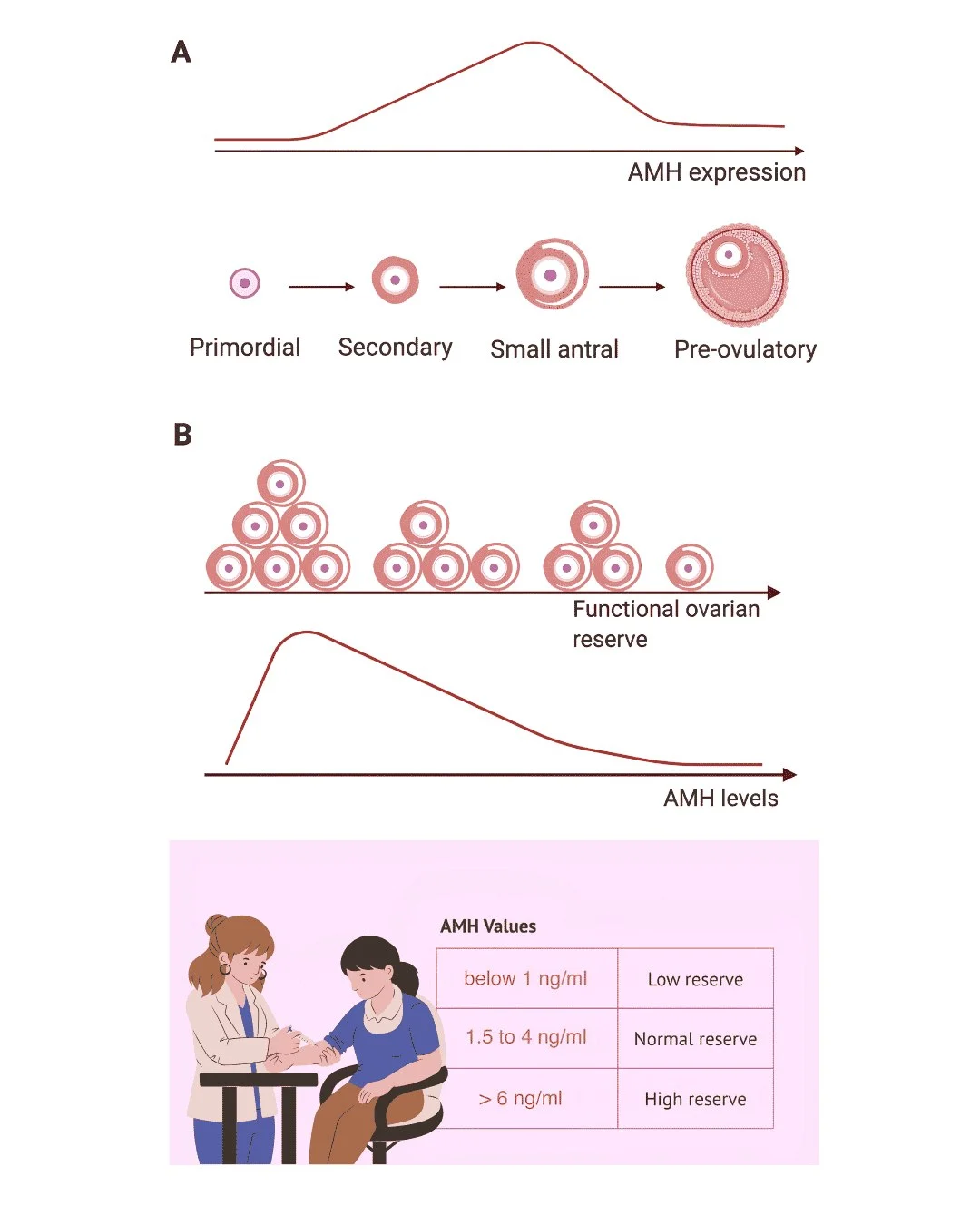
AMH is secreted by granulosa cells in small antral follicles. It is the most reliable single marker of ovarian reserve currently available. Unlike FSH or estradiol, AMH can be drawn on any day of the menstrual cycle making it highly convenient.
AMH is usually the first hormone test ordered during a fertility evaluation.
Result Range Meaning Normal Range Typically, 1.0 – 3.5 ng/mlVaries slightly by lab and ageLow AMHBelow 1.0 ng/mlSuggests diminished ovarian reserveHigh AHMAbove 3.5 ng/ mlMay indicate PCOS or a larger-than-normal follicle pool.
2. Follicle-Stimulating Hormone (FSH) Test
What it measures: The pituitary signal that stimulates follicle development.
FSH is drawn on Day 2 or Day 3 of the menstrual cycle (D1 = first day of full bleeding). A elevated FSH level suggests the pituitary is ‘working harder’ to stimulate the ovaries – a sign of declining ovarian reserve.
Normal Day 3 FSH<mIU/mLElevated FSH > 15 mIU/mL) indicates diminished ovarian reserve
3. Estradiol (E2) Test
What it measures: The primary estrogen produced by developing follicles.
Also drawn on D2 or D3, estradiol suppresses FSH secretion. An FSH result that looks ‘normal’ but is paired with an abnormally high estradiol (> 60–80 pg/mL) may falsely mask a poor ovarian reserve.
Estradiol also confirms that ovulation has occurred (mid-cycle surge) and supports luteal phase assessment when needed.
4. Luteinizing Hormone (LH) Test
What it measures: The midcycle surge that triggers ovulation.
An LH surge – typically 24–48 hours before ovulation – is what home ovulation predictor kits (OPKs) detect. In a clinical fertility workup, LH is assessed as part of the Day-3 hormone panel.
Elevated basal LH (especially when LH > FSH in a 2:1 or higher ratio) is a classical biochemical marker associated with PCOS.
5. Prolactin Test
What it measures: A pituitary hormone that regulates milk production – but can suppress ovulation when elevated outside of pregnancy or breastfeeding.
Hyperprolactinemia (elevated prolactin) is one of the more common and readily treatable causes of ovulatory dysfunction. Causes include benign pituitary adenomas, hypothyroidism, certain medications, and stress.
Symptoms may include irregular or absent periods, milky nipple discharge (galactorrhoea), and difficulty conceiving.
Normal prolactin: < 25 ng/mL (non-pregnant women).
6. Thyroid Function Tests (TSH, Free T3, Free T4)
What they measure: Thyroid activity and its hormonal output.
Both Hypothyroidism and hyperthyroidism can disrupt ovulation, implantation, and early pregnancy. Subclinical hypothyroidism – where TSH is only mildly elevated – is particularly common in women of reproductive age and often goes undiagnosed.
Current guidelines recommend a TSH target of < 2.5 mIU/L in women attempting conception or undergoing fertility treatment.
Anti-thyroid antibodies (anti-TPO) are also measured, as thyroid autoimmunity can affect implantation and early pregnancy outcomes even when TSH is normal.
7. Progesterone Test (Day-21 or Mid-Luteal)
What it measures: Confirmation that ovulation has occurred.
A progesterone level drawn approximately 7 days after presumed ovulation (Day 21 in a 28-day cycle, or 7 days post-LH surge) confirms ovulation and assesses luteal phase adequacy.
Range: Means Mid-luteal progesterone ≥ 3–10 ng/mLConfirms ovulation occurred. Levels < 3 ng/mL: Suggests anovulatory cycle or inadequate luteal phase.
8. Antral Follicle Count (AFC) – Transvaginal Ultrasound
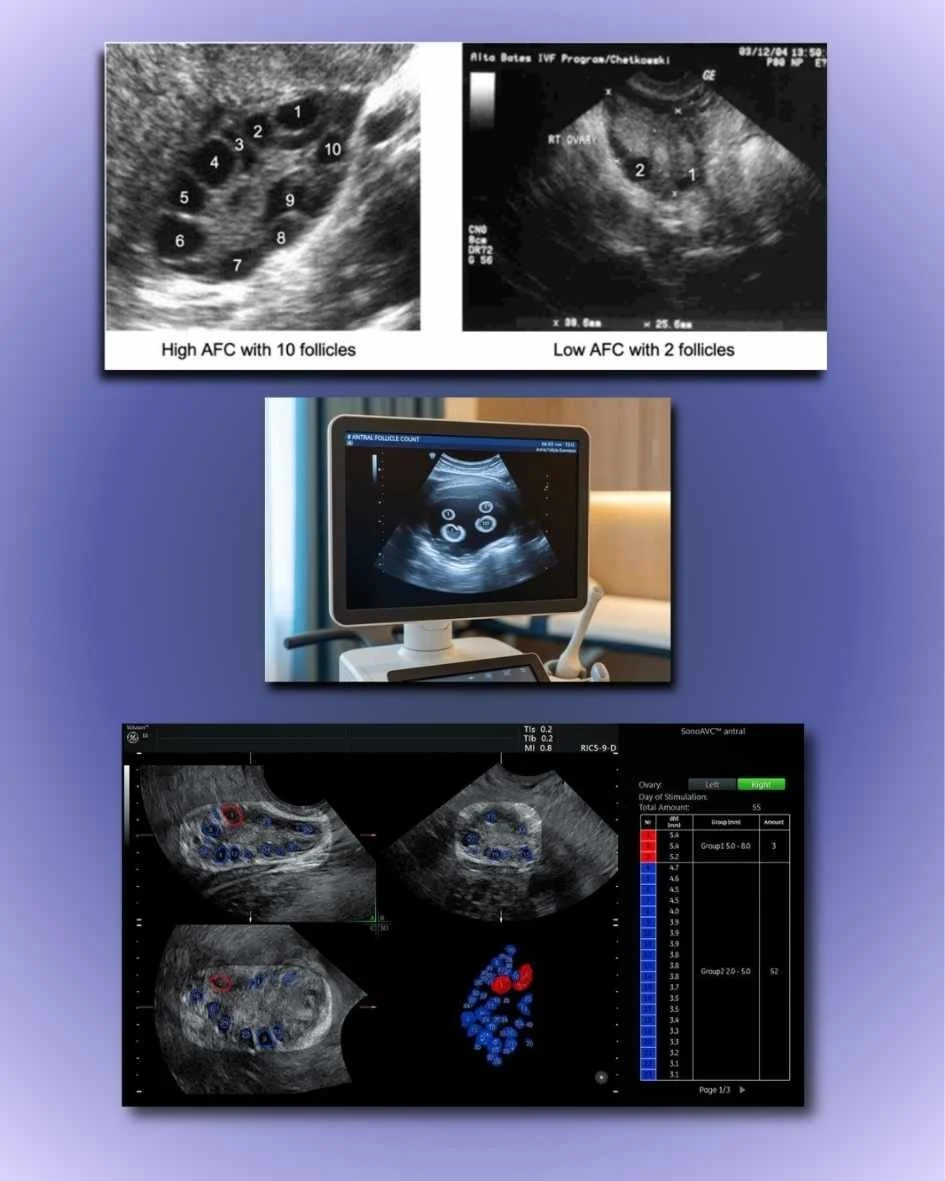
What it measures: The number of small (2–10 mm) resting follicles in both ovaries, assessed via transvaginal ultrasound on Day 2–4 of the cycle.
AFC is the second major marker of ovarian reserve alongside AMH, and the two are usually interpreted together for the most accurate picture.
ResultRange MeansNormal AFC10–20antral follicles across both ovariesLow AFC< 5–7 totalSuggests diminished ovarian reserveHigh AFC> 25Associated with PCOS
The ultrasound also evaluates ovarian volume, uterine morphology, and the presence of fibroids, polyps, or cysts.
9. Hysterosalpingography (HSG)
What it assesses: The patency (openness) of the fallopian tubes and the shape of the uterine cavity.
HSG is an X-ray-based procedure in which a contrast dye is injected through the cervix into the uterus and fallopian tubes. Images are captured to reveal whether the dye flows freely – indicating open tubes – or is blocked at any point.
Why it matters:
Tubal blockage is a major, and often silent, cause of infertility. HSG identifies: – Proximal or distal tubal occlusion – Hydrosalpinx (fluid-filled, blocked tube) – Uterine septum, bicornuate uterus, or other cavity abnormalities – Intrauterine adhesions (Asherman’s syndrome)
HSG is typically performed between Day 7–10 of the cycle (after menstruation, before ovulation.
10. Saline Infusion Sonography (SIS)/Sonohysterogram
What it assesses: The uterine cavity using saline contrast and ultrasound.
SIS is a less invasive alternative to HSG for evaluating the uterine cavity. Sterile saline is instilled into the uterus and a transvaginal ultrasound is performed simultaneously. It is excellent for identifying:
– Submucosal fibroids (protruding into the cavity) – Endometrial polyps – Intrauterine adhesions – Uterine septa
SIS does not evaluate fallopian tube patency – if tube assessment is needed, HSG is required.
11. Laparoscopy (Diagnostic or Operative)
What it assesses: A direct, surgical view of the pelvic organs – uterus, ovaries, fallopian tubes and peritoneum.
Laparoscopy is the gold standard for diagnosing
Endometriosis – often invisible on ultrasound in its early stages – Pelvic adhesions (scar tissue) – Ovarian cysts (endometriomas) – Tubal damage not detectable on HSG
It is performed under general anaesthesia and may be both diagnostic and therapeutic in the same sitting. Laparoscopy is typically recommended when: – Non-invasive investigations are inconclusive – Endometriosis is clinically suspected – Previous pelvic infections or surgeries have occurred
12. Genetic/Karyotype Testing
What it assesses: Chromosomal integrity and inherited genetic conditions affecting fertility.
Karyotyping analyses the number and structure of chromosomes in a blood sample. Abnormalities such as
Turner Syndrome (45, X), Fragile X premutation, or chromosomal translocations can cause premature ovarian insufficiency, recurrent miscarriage, or failed implantation.
When it is indicated
– Premature ovarian insufficiency (POI)/early menopause – Recurrent pregnancy loss (≥ 2 clinical miscarriages) – Severely reduced ovarian reserve at a young age – Family history of chromosomal conditions
How Are These Tests Sequenced?
A standard VFC fertility workup is typically structured as follows:
Steps Tests/Evaluation Initial Blood Panel (Day 2–3)AMH, FSH, LH, Estradiol, Prolactin, TSH, Anti-TPOMid-Luteal (Day 21) Progesterone Pelvic Ultrasound (Day 2–4)AFC, uterine morphology, ovarian volumeUterine/Tubal EvaluationHSG or SIS (based on indication) Surgical Evaluation (if indicated) | Laparoscopy Specialist Referral (if indicated)Karyotype, Fragile X, genetic counselling
When Should You Get a Fertility Evaluation?
- You have been trying to conceive for 12 months (or 6 months if you are over 35)
- You have irregular, absent, or very painful periods
- You have a known or suspected diagnosis of PCOS, endometriosis, or thyroid disease
- You have experienced recurrent miscarriage
- You are planning to delay pregnancy and want to know your current ovarian reserve
- You have had previous pelvic surgery, infections, or chemotherapy/radiation.”
Stay informed with the latest updates in fertility and reproductive medicine on Fertility News.
FAQ
Which fertility test should I get first?
Start with an AMH blood test and a transvaginal ultrasound for antral follicle count. These two give you the clearest picture of ovarian reserve and can be done at any point in your cycle.
Can fertility tests predict if I can get pregnant naturally?
Tests identify risk factors and diagnose specific conditions - they cannot predict pregnancy with certainty. Many women with low AMH or elevated FSH conceive naturally; others with normal results may still need treatment. Tests guide, not determine.
Are fertility tests painful?
Blood draws are routine. Transvaginal ultrasound is generally well-tolerated. HSG may cause moderate cramping for a few minutes during the procedure. Laparoscopy is a surgical procedure performed under anaesthesia.
-
Sep 16, 2026, 19:19What’s the Difference Between IUI and IVF? – Caperton Fertility Institute
-
Sep 16, 2026, 19:18Michal Kubis: Will Fertility Tech Actually Reverse Population Collapse?
-
Sep 16, 2026, 19:15Caroline Biddle: What Does Good Fertility Support Look Like in Your Organisation?
-
Sep 16, 2026, 19:04Rafael González: Sharing Days of Science and Reuniting with Good Friends at SAMeR2026
-
Sep 16, 2026, 18:56Saadat Hassan: Fathers’ Age Changes Sperm, but Does It Change the Embryo?
-
Sep 16, 2026, 18:53Carmen Mair: 5 Fertility Tests Often Missed
-
Sep 16, 2026, 18:50ESHRE Campus 2026, Comprehensive Approaches to Pregnancy Loss – ESHRE SIG Reproductive Genetics
-
Sep 16, 2026, 18:46Jan Daniels: The Embryologist Ceiling – The Growth Story, and the Thing Underneath It
-
Sep 16, 2026, 18:42Igbashio Faith: Do You Actually Know When You’re Most Fertile?