

Fertility Plus/LinkedIn
Apr 15, 2026, 16:38
Why an Ovulation Trigger Shot Sometimes Fails – Fertility Plus
Fertility Plus shared a post on LinkedIn:
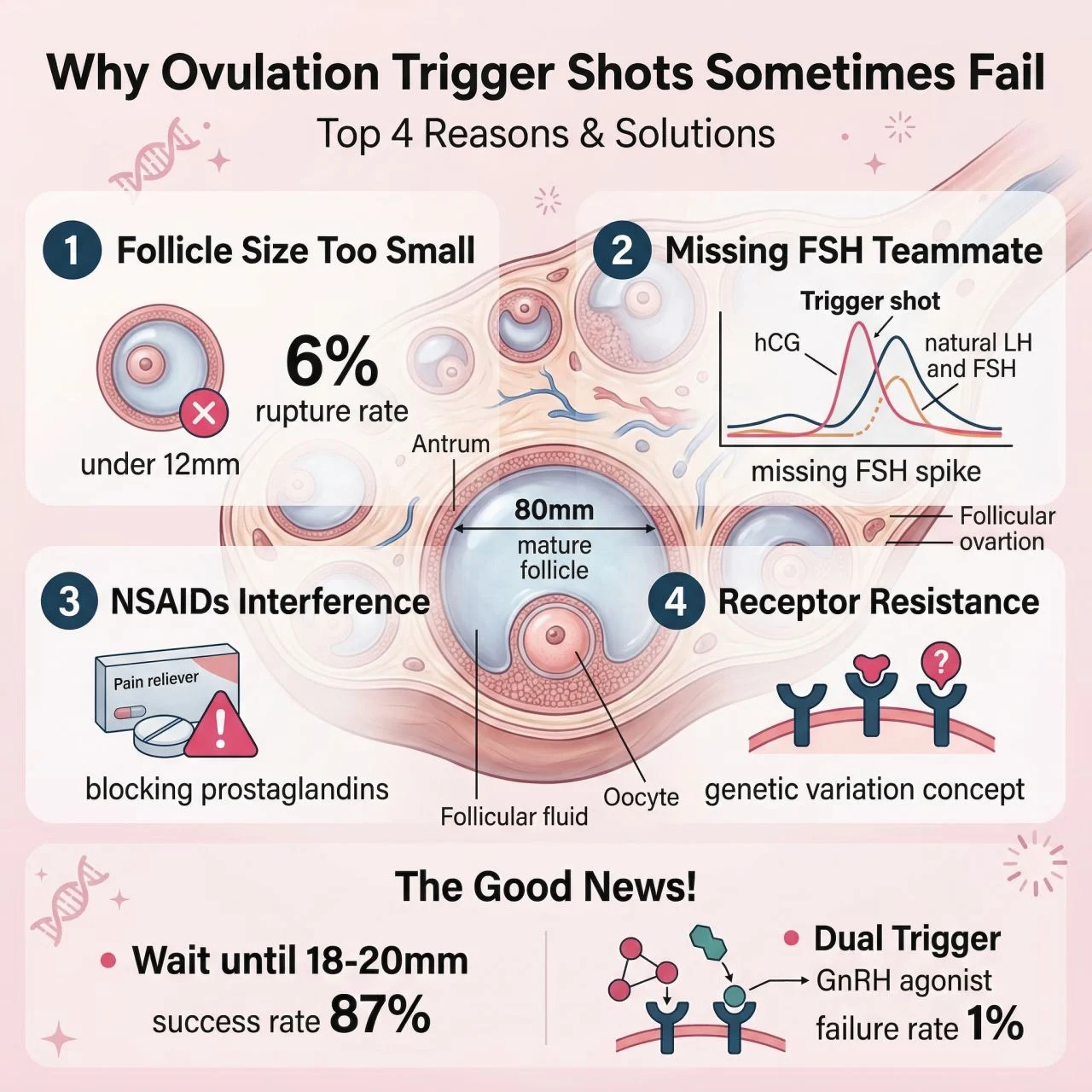
“Ever wonder why an ovulation trigger shot sometimes fails? Trigger failure happens in about 3% of IVF cycles and can be even higher in regular ovulation induction. Let’s break down the top 4 reasons!
- The follicle was too small! Size is the single most important factor. If a follicle is triggered when it’s under 12 mm, it only has a 6% chance of rupturing and releasing an egg. But if you wait until the follicle grows to 18 to 20 mm, the rupture rate jumps up to 87%! Timing is everything!
- It’s missing a key teammate: FSH. The standard hCG trigger shot acts like the hormone LH to tell your body to ovulate. However, a natural ovulation surge also includes a spike in FSH. Without that FSH surge, the follicle wall might not break down properly to let the egg out.
- Sneaky Pain Relievers. Did you know that taking NSAIDs (like ibuprofen) is a well-established risk factor for trigger failure? NSAIDs block prostaglandins, which are essential compounds your follicle needs in order to physically rupture.
- Stubborn Receptors. Sometimes, genetic variations make your hormone receptors less sensitive to the trigger shot. In other cases, the high dose of hormones from the trigger can actually overwhelm your receptors, causing them to temporarily shut down.
The Good News? There are solutions! Waiting until the follicle is at least 18 to 20 mm before triggering is the easiest fix. Your doctor might also recommend a ‘dual trigger’- combining the standard hCG shot with a GnRH agonist. This mimics that missing FSH surge and drops the trigger failure rate to around 1%!”
Stay updated on all scientific advances in the field of fertility with Fertility News.
-
Sep 18, 2026, 20:27Hrishikesh Pai: Rethinking Male Infertility
-
Sep 18, 2026, 20:25Eric Verdin: Wrapping Up the Reproductive Aging Summit at the Center for Healthy Aging in Women
-
Sep 18, 2026, 20:21Investigating Pregnancy Outcomes in Women with Idiopathic POI – RBMO
-
Sep 18, 2026, 20:18Sue Ritchie: Why Aren’t We Talking About Male Fertility More?
-
Sep 18, 2026, 20:13Salma Yasin: Every Day of BFS Study Week 2026 Has Been an Exceptional Learning Experience
-
Sep 18, 2026, 20:01Qingcai Wang: Over 35 and Torn Between Trying Longer and Starting IVF?
-
Sep 18, 2026, 19:58Bhumika: Can a Woman Become Pregnant Again While Already Pregnant?
-
Sep 18, 2026, 19:5215 More Experts Join the International Fertility Forum Mumbai 2026
-
Sep 18, 2026, 19:50Curious About What Happens Behind the Scenes in the Labs? – Sims IVF