
Beyond DNA: What Do Sperm and Oocytes Give the Embryo?
“At fertilization, sperm and oocyte meet to establish a new biological system. The classical description emphasizes the union of two haploid genomes. Modern reproductive biology shows that the gametes also deliver molecular and cellular components that support the earliest stages of embryonic development.
The oocyte provides maternal RNAs, proteins, organelles, and regulatory factors accumulated during oogenesis. The sperm contributes paternal chromatin, centriolar components, oocyte-activation factors, and RNA species. The resulting embryo therefore begins development with a biological inheritance that extends beyond DNA sequence.
Do sperm and oocytes contribute more than DNA?
Maternal-effect factors stored in the oocyte participate in cell-cycle regulation, DNA replication and repair, epigenetic reprogramming, and early embryonic development. These factors are closely linked to oocyte developmental competence (Innocenti et al., 2022).
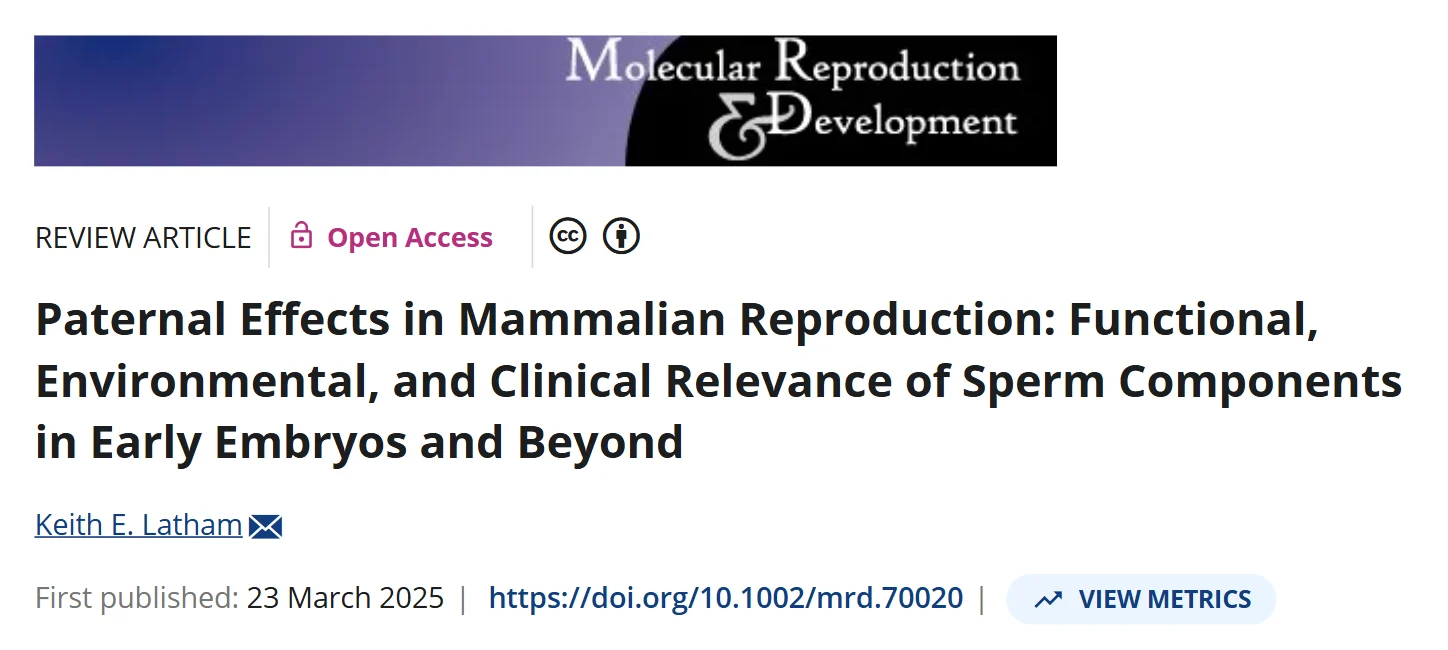
The sperm contribution is also broader than paternal genome delivery. Sperm provides highly compacted paternal chromatin, centriolar components, and factors involved in oocyte activation. Phospholipase C zeta (PLCζ), for example, participates in the calcium oscillations that activate the oocyte after fertilization (Tarozzi et al., 2021). Sperm also carries regulatory RNA species, although the functional contribution of individual RNAs in human embryos remains an active research question (Latham, 2025).
The evidence therefore supports a broader model of fertilization: two specialized cells contribute complementary molecular resources to the newly formed embryo.
What happens during the maternal-to-zygotic transition?
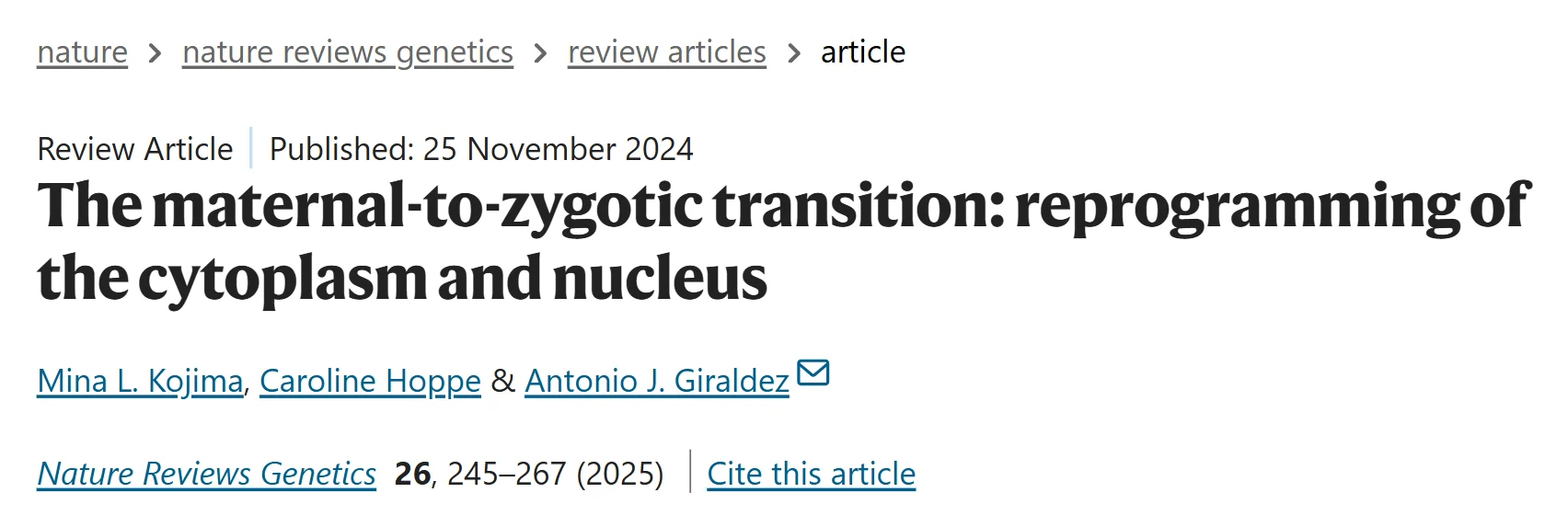
After fertilization, maternal RNAs and proteins initially support development while maternal transcripts are progressively regulated and cleared, and embryonic transcription becomes increasingly prominent. This maternal-to-zygotic transition involves coordinated changes in the cytoplasm, chromatin, and nucleus (Kojima et al., 2024).
Human studies have also challenged the simple textbook description of embryonic genome activation (EGA) as beginning only at the four- to eight-cell stage. Single-cell analysis has identified transcriptional activity at the human one-cell stage, with more extensive activation during later cleavage stages (Asami et al., 2022).
A 2025 human embryo study further identified the maternally provided transcription factor OTX2 as required for proper human EGA and early development. OTX2 promotes activation of EGA-associated genes including TPRX1 and TPRX2 (Wang et al., 2025).
These findings illustrate why oocyte competence cannot be reduced to what is visible under the microscope. Morphology remains clinically valuable, but molecular competence involves processes that are not directly observable by routine morphological assessment.
What does the sperm contribute beyond the paternal genome?
Human sperm contains messenger RNAs and multiple classes of small non-coding RNAs. Their biological significance in human reproduction is still being defined.
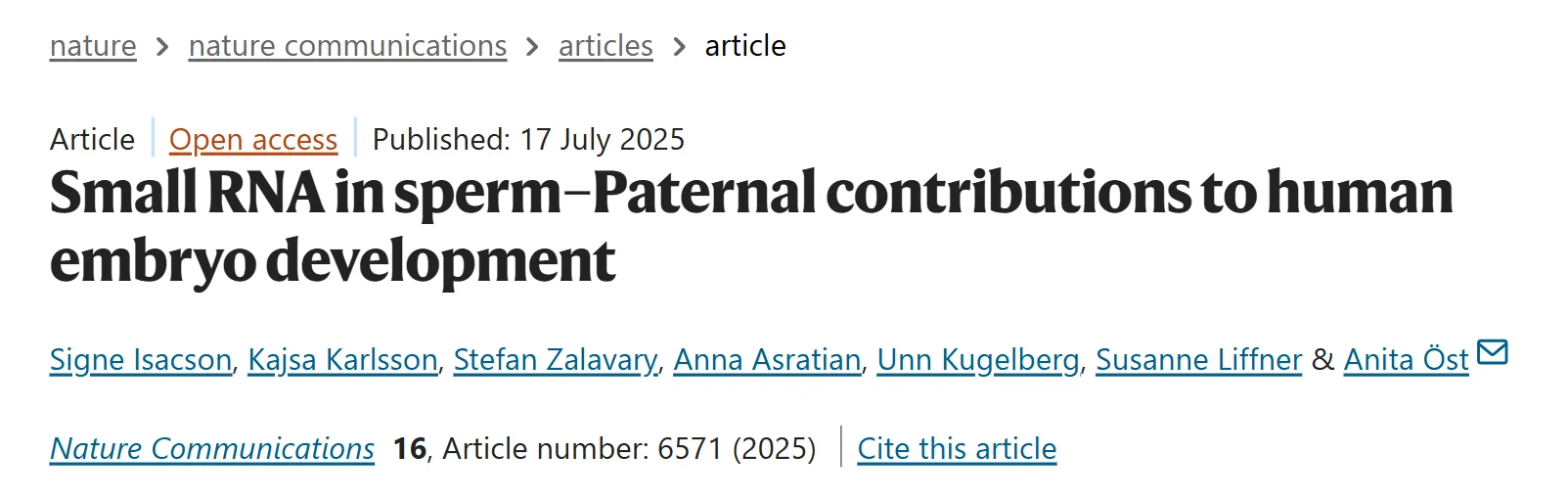
A 2025 IVF study analysed sperm small-RNA profiles and reported associations with fertilization and embryo-quality measures. Several microRNAs showed relationships with high-quality embryo outcomes, with predicted targets involved in developmental pathways (Isacson et al., 2025).
These findings are important but should not be overstated. An association between a sperm RNA profile and embryo outcome does not establish causation, and biomarker performance in a research cohort does not automatically establish clinical utility.
The key research questions are now more precise: which sperm RNAs persist after fertilization, which interact with maternal transcripts, and whether any molecular signatures can ultimately be validated as reproducible clinical biomarkers?
Can the embryo repair or compensate for inherited damage?
After fertilization, the embryo progressively deploys its own DNA-damage response and cellular quality-control mechanisms. However, repair, tolerance, and elimination are biologically distinct processes.
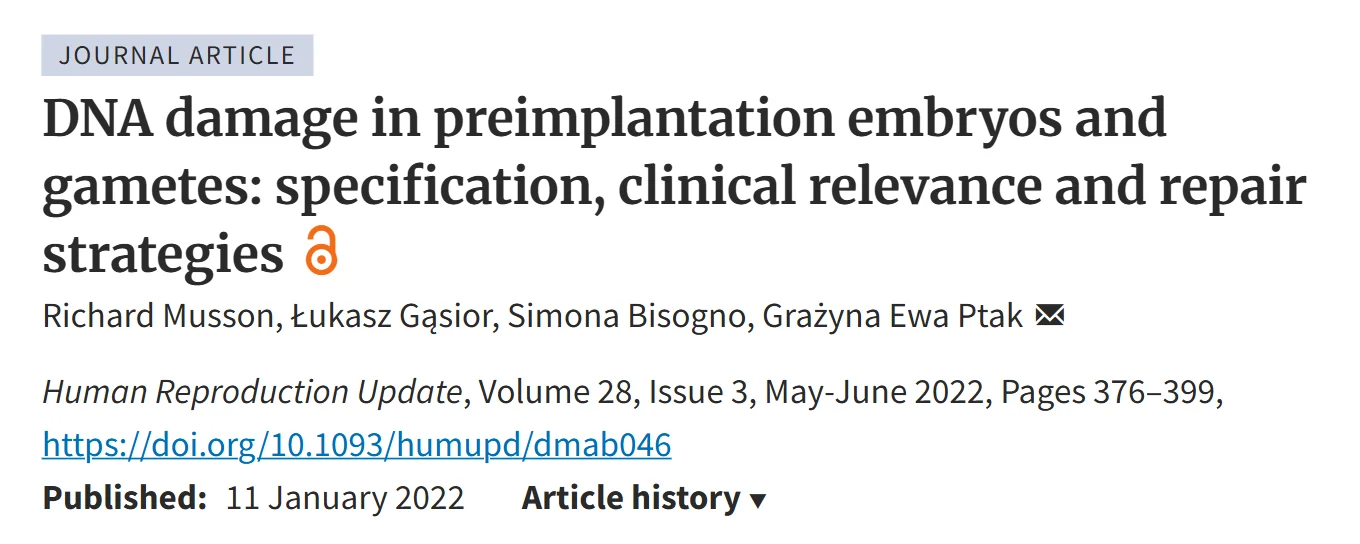
Preimplantation embryos possess components of several DNA-repair pathways. Maternal factors supplied by the oocyte contribute substantially to the processing of paternal DNA lesions after fertilization, and some forms of DNA damage can trigger repair, cell-cycle responses or cell-death pathways (Musson et al., 2022).
This does not mean that the embryo can universally repair inherited damage. The outcome depends on the type, extent, and location of the abnormality and on the developmental context.
A related concept is apparent embryonic self-correction in mosaic embryos, where abnormal cells may become less represented during subsequent development. This should not simply be described as molecular correction of aneuploidy. Selective cell survival, differences in proliferative behaviour and cellular elimination have all been proposed, and the mechanisms in human embryos remain incompletely resolved.
The scientifically safer model is therefore one of limited developmental resilience rather than unlimited self-repair. The embryo can respond to some forms of molecular and cellular stress, but the capacity and limits of these responses remain active areas of research.
What does this mean for the IVF laboratory?
The molecular starting point of the embryo reinforces the importance of protecting gamete and embryo integrity throughout the laboratory workflow.
Gamete handling should preserve cellular integrity, while claims that particular routine manipulations specifically alter sperm RNA cargo or PLCζ function should remain evidence-based rather than assumed.
Temperature, pH, osmolality, and other environmental conditions require controlled management during gamete and embryo handling. The 2026 ESHRE Good Practice recommendations provide current evidence-informed guidance across IVF laboratory activities (ESHRE Good Practice in the IVF Lab Working Group, 2026).
Assisted oocyte activation is another example of why mechanism and clinical evidence must be separated. It has been investigated in selected cases of fertilization failure associated with suspected oocyte-activation deficiency, but the evidence does not support treating it as a universally established intervention.
Future non-invasive molecular profiling and computational approaches may complement morphology and developmental kinetics. Before such approaches enter routine practice, their analytical validity, reproducibility, biological interpretation, and clinical utility require rigorous evaluation.
The developmental story therefore begins before the first cleavage-stage image. The oocyte and sperm provide molecular resources that interact with the embryonic genome as development becomes increasingly autonomous. Embryo competence is consequently not a single visible property, but the outcome of interacting genetic, cellular and molecular processes.”
Written by Saadat Hassan
Senior Clinical Embryologist/IVF and Embryology
BSc (Hons) Medical Laboratory Technology
King Edward Medical University, Lahore, Pakistan
References
Title: Human embryonic genome activation initiates at the one-cell stage
Authors: Maki Asami, Brian Y.H. Lam, Marcella K. Ma, Kara Rainbow, Stefanie Braun, Matthew D. VerMilyea, Giles S.H. Yeo, Anthony C.F. Perry
You can read the Full Article in Cell Stem Cell.
Title: ESHRE recommendations on Good Practice in the IVF laboratory
Authors: ESHRE Good Practice in the IVF Lab Working Group, Gemma Arroyo, Amy Barrie, Giovanni Coticchio, Thomas Ebner, Jackson Kirkman-Brown, Nathalie Le Clef, Kersti Lundin, Cristina Magli, Marina Quesada Martinez, Maria José de los Santos Molina, Kelly Tilleman, Ioannis Sfontouris
You can read the Full Article in Human Reproduction.
Title: Maternal effect factors that contribute to oocytes’ developmental competence: an update
Authors: Federica Innocenti, Giulia Fiorentino, Danilo Cimadomo, Daria Soscia, Silvia Garagna, Laura Rienzi, Filippo Maria Ubaldi and Maurizio Zuccotti on behalf of SIERR
You can read the Full Article in the Journal of Assisted Reproduction and Genetics.
Title: Small RNA in sperm – Paternal contributions to human embryo development
Authors: Signe Isacson, Kajsa Karlsson, Stefan Zalavary, Anna Asratian, Unn Kugelberg, Susanne Liffner, Anita Öst
You can read the Full Article in Nature Communications.
Title: The maternal-to-zygotic transition: reprogramming of the cytoplasm and nucleus
Authors: Mina L. Kojima, Caroline Hoppe, Antonio J. Giraldez
You can read the Full Article in Nature Reviews Genetics.
Title: Paternal Effects in Mammalian Reproduction: Functional, Environmental, and Clinical Relevance of Sperm Components in Early Embryos and Beyond
Author: Keith E. Latham
You can read the Full Article in Molecular Reproduction and Development.
Title: DNA damage in preimplantation embryos and gametes: specification, clinical relevance and repair strategies
Authors: Richard Musson, Łukasz Gąsior, Simona Bisogno, Grażyna Ewa Ptak
You can read the Full Article in Human Reproduction Update.
Title: The paternal toolbox for embryo development and health
Authors: Nicoletta Tarozzi, Marco Nadalini, Giovanni Coticchio, Carlotta Zacà, Cristina Lagalla, Andrea Borini
You can read the Full Article in Molecular Human Reproduction.
Title: Maternal factor OTX2 regulates human embryonic genome activation and early development
Authors: Qiuyan Wang, Chuanxin Zhang, Yanna Dang, Jiaqi Sun, Zhuoning Zou, Cheng Li, Shuiying Ma, Zongyu Li, Hui Liu, Xiaonan Ma, Zhen Yang, Lijuan Wang, Keliang Wu, Zi-Jiang Chen, Wei Xie, Han Zhao
You can read the Full Article in Nature Genetics.
Other articles featuring Saadat Hassan on Fertility News.
-
Sep 24, 2026, 16:05New Funding Opportunity for Reproductive Medicine Researchers – ASRM
-
Sep 24, 2026, 16:02Writing Scientific Abstracts in Women’s Health։ Congress Submissions and Beyond – IJGO
-
Sep 24, 2026, 16:00Devyanshi Dixit։ Can 2 Women with the Same Disease Have Completely Different Biology?
-
Sep 24, 2026, 15:56Robert Borowczyk: Why IVF Clinics Lose Patients on Pricing Page
-
Sep 24, 2026, 15:45It’s World Mitochondrial Disease Week – HFEA
-
Sep 24, 2026, 15:38Comprehensive Approaches to Pregnancy Loss – ESHRE SIG Reproductive Genetics
-
Sep 24, 2026, 15:27Abdelrahman H. Daifalla: Is the Couple Clinically Ready to Proceed with IVF or ICSI?
-
Sep 24, 2026, 15:15Komal Rashid Khan: Freezing of Embryos – Preserving Today, Building Tomorrow
-
Sep 24, 2026, 13:39Fertility Preservation Before Cancer Treatment: What Patients Should Know