
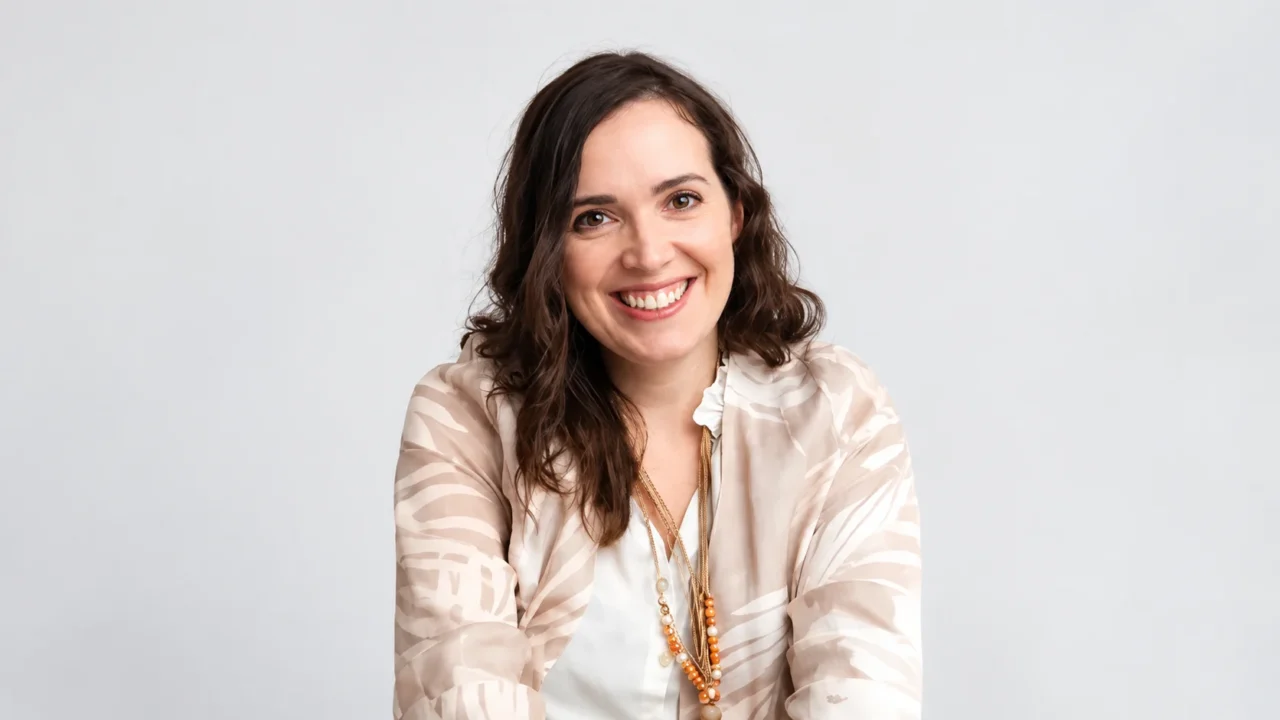
Filipa Rafael: Freezing Eggs When You’re Already Trying to Conceive?
Filipa Rafael, Founder and Scientific Director at Fertilidade em Foco (Focus on Fertility), shared on LinkedIn:
“Freezing eggs when you’re already trying to conceive?
We often associate egg freezing with postponing pregnancy.
But I’ve also been seeing it used by women who are trying for a baby now – sometimes with the next attempt in mind, sometimes a second child.
In November’s Focus on Fertility, I share four situations in which this comes up in practice, what needs to be considered, and a calculator that can help put the possibilities into context.
There is also a little of what October brought: teaching, writing, the app I’m building, and the close of Lado Beta’s first season.
Freezing eggs when you’re already trying to conceive?
Hello,
When we talk about freezing eggs, we often think of saving them for a pregnancy five or ten years from now. Or of preserving fertility before chemotherapy or surgery that could affect it.
But I’ve also been seeing it used by women who are already trying to conceive or having fertility treatment.
We can be trying for a child now and saving eggs for what comes next.
Let me give you a few examples.
While waiting for publicly funded treatment.
Some women freeze eggs privately while waiting for publicly funded IVF.
- If treatment does not work, they have eggs collected at a younger age available for another attempt.
- If it does work, those eggs may be kept for a second child.
There is an important detail specific to Portugal: under the rules of our national assisted reproduction council, CNPMA, a new IVF/ICSI cycle generally cannot begin while embryos belonging to the same beneficiaries remain frozen, except in clinically justified circumstances.
Storing eggs is different.
Even so, the plan needs to be discussed with the public treatment team.
Freezing eggs does not guarantee access to treatment through Portugal’s National Health Service.
When both women want to contribute their eggs.
I’ve also seen couples where both partners are women and would like their first child to be conceived using one partner’s eggs, and their second using the other’s.
While one partner has IVF, the other may freeze her eggs.
Two or three years later, she will have eggs stored from a younger age.
With a good response to stimulation, we may also discuss fertilising some of the eggs and freezing the rest unfertilised.
If the plan is to try for the second child using the other partner’s eggs, it helps to think this through before creating embryos.
The frozen eggs are, in a sense, a plan B.
This needs to be discussed before treatment, without assuming how many embryos we will obtain.
Trying for a first child, while hoping for a second.
Another example is a younger woman with low ovarian reserve for whom intrauterine insemination, or IUI, is an appropriate first treatment.
In some circumstances, she may choose to freeze eggs first, with a second child in mind as well.
- If insemination works, she has saved some eggs for the future.
- If it does not and she needs IVF, those eggs may be used then.
So fertility preservation can happen while someone is already trying to conceive.
That does not mean everyone should do it: we need to weigh up the time, the cost and the burden of another treatment.
Collecting eggs across more than one retrieval.
Sometimes we carry out more than one stimulation, freezing eggs to fertilise later.
We may discuss this when each retrieval yields only a few eggs, or in certain cases of severe male factor infertility where sperm needs to be retrieved surgically from the testicle.
The aim is to have more eggs available when it is time for fertilisation.
Freezing does not improve the quality of each egg, and it does not guarantee embryos or a baby.
DuoStim, for example, allows two stimulations within the same menstrual cycle.
That does not mean it will give better results than two conventional stimulations.
All of this is to say that egg freezing can also be part of treatment that is already happening.
We may be thinking about the next attempt, a second child, or another option if things do not go as we hope.
Save this: What might your frozen eggs mean?
Here is a calculator that can help make this more concrete: with a given number of mature eggs frozen at a particular age, what is the estimated chance of having at least one child?
BWH Egg Freezing Counseling Tool.
Try changing the number of eggs while keeping the age the same.
Then do the opposite: keep the number of eggs fixed and see what changes if they were collected at an older age.
Use your age at egg retrieval, even if you plan to use the eggs years later.
Enter the number of mature eggs frozen, not the number of follicles or embryos.
Of course, this calculator does not account for uterine or male factors in your own situation.
It cannot tell us how many eggs you will obtain in another stimulation either.
It is an estimate to help explore possibilities.
We need extra caution with low ovarian reserve: the model was developed using women without compromised ovarian reserve, and the tool notes that it has not been externally validated.
The point is to consider whether saving eggs now might fit what you hope for, both for this pregnancy and for a future one.
Let’s look at your own situation.
If you are starting to explore your fertility or considering treatment, you can book a first fertility consultation with me.
If your journey has been more complex, including previous unsuccessful treatments, you can book a complex fertility/second opinion consultation.
What I’ve been doing: October
Alongside consultations, October brought teaching, writing and projects still taking shape.
Here are a few highlights from my month:
On 23 and 24 October, I co-coordinated the Clinical Embryology course at Ginemed Portugal in Porto, with embryologist Filipa da Silva Barbosa.
I taught ovarian stimulation and preimplantation genetic testing.
I really enjoy teaching, from preparing the sessions to hearing questions that make me look at a subject differently.
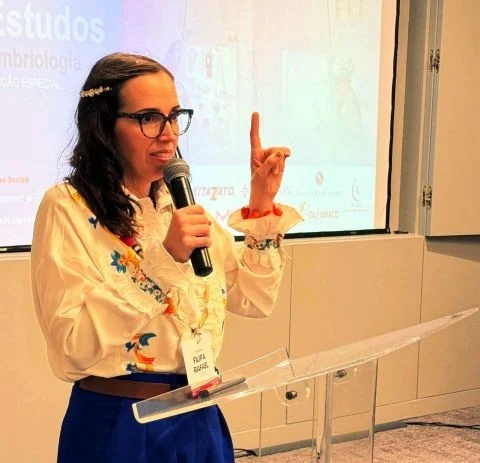
Teaching at the Clinical Embryology course, Ginemed Porto: 23-24 October 2026.
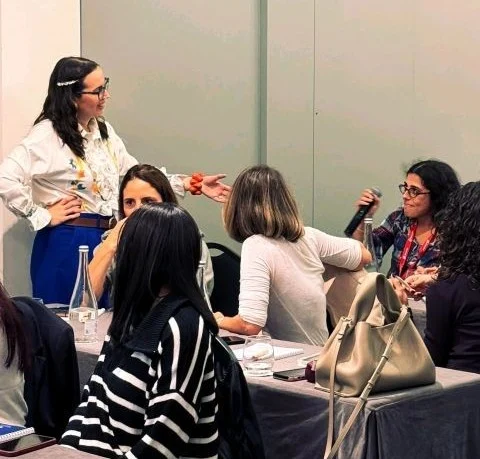
Questions and discussion with course participants.
I also worked with Slobodan Vasković on a report about the ESHRE Campus in Lisbon, published in October in Focus on Reproduction.
We explored the techniques, but also how we decide when to use them and what those decisions mean for people having treatment.
Read our report in Focus on Reproduction.
With Matilde Vieira, I prepared a session on diagnosis, treatment and assessment of the menopause transition for the Lagoa Gynaecology and Obstetrics meeting.
This meeting means a lot to me: I helped create it and was also a founding member of AFIMBA.
And I started sharing a little of the app I’m developing to bring test results, treatments and fertility history together in one place. I’m still building and testing it. As I share what I’m learning and what changes along the way, I also want to understand what people need most.
From Lado Beta this month.
In October, we closed the first season of Lado Beta: 17 conversations to discover or listen to again.
Daniela and I are already preparing season two, which returns in January 2027.
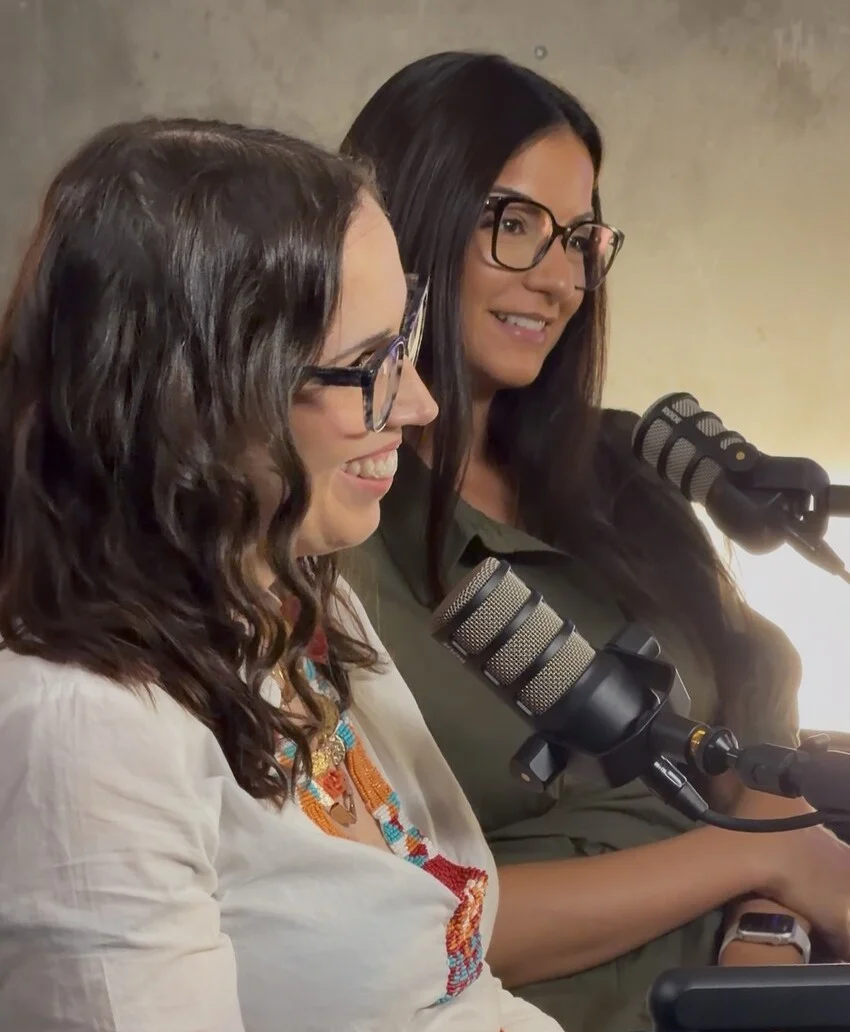
Behind the scenes of Lado Beta, with Daniela.
These conversations are in Portuguese.
Here are the two episodes that closed the season, with English translations of their titles:
Episode 16 – ‘They looked at us like a credit card’ (‘Olharam para nós como um cartão de crédito’), with Joana and Patrick.
Episode 17 – ‘I was born without a uterus’ (‘Nasci sem útero’), with Joana Freire.
You can find Lado Beta on Spotify, Apple Podcasts and YouTube.
Stay in touch.
Subscribe to Focus on Fertility here on LinkedIn for the next edition in English.
My email newsletter is in Portuguese; you can sign up separately here.
Until next month, Filipa Rafael · Focus on Fertility/Fertilidade em Foco
This newsletter provides general information about fertility and reproductive health.
It does not replace an individual medical assessment.”
Other articles featuring Filipa Rafael on Fertility News.
-
Nov 4, 2026, 17:41Asima Ahmad: A Few Recommendations Worth Understanding This Movember
-
Nov 4, 2026, 17:36Clare Mansfield: Helping Parents Find the Words to Tell Their Child’s Story
-
Nov 4, 2026, 17:32Lucy Froese: What Male Infertility Can Feel Like
-
Nov 4, 2026, 17:25Diana Kayal: Treating Your Body Without Seeing the Rest of You Is Only Half the Job
-
Nov 4, 2026, 17:20Margaret Cali: Sometimes Grief Simply Sits Beside the Joy
-
Nov 4, 2026, 17:11Hossam Elzeiny: Distinguishing Recurrent IVF Failure from True Recurrent Implantation Failure
-
Nov 4, 2026, 17:00Resa Nabor: Fighting Cancer – A Woman’s Brave Journey
-
Nov 4, 2026, 16:22Hannah Travers: Saying Goodbye to the Reproductive Medicine Research Group at the University of Dundee
-
Nov 4, 2026, 16:17Natalie Sutherland: Sharing My Story in Support of the National Fertility Awareness Week