
Adenomyosis Doesn’t Look the Same at 16, 46, or 60 – The Lancet Obstetrics, Gynaecology, and Women’s Health
The Lancet Obstetrics, Gynaecology, and Women’s Health shared a post on LinkedIn about a paper by Silvia Vannuccini et al.:
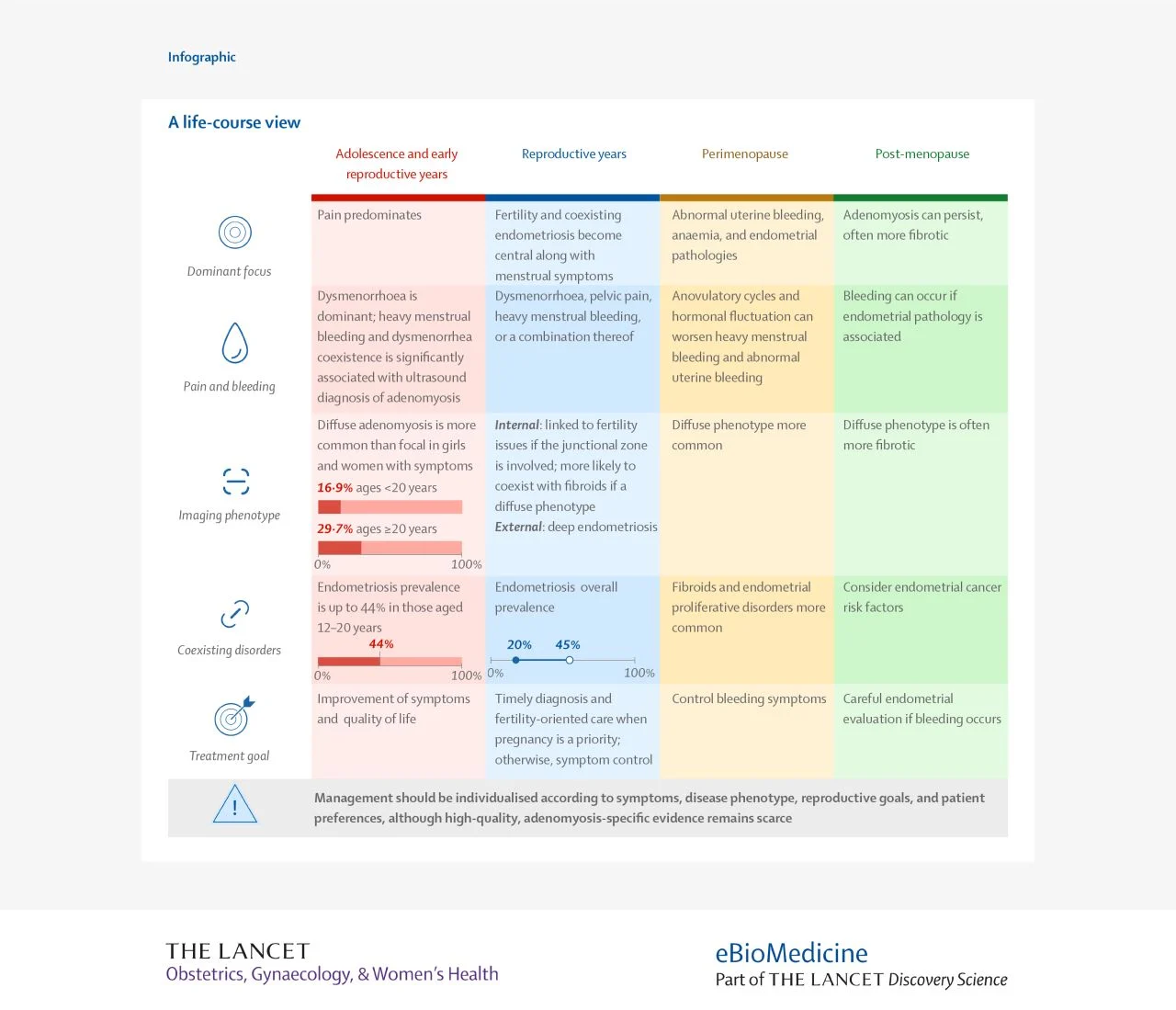
“Adenomyosis doesn’t look the same at 16 as it does at 46, or at 60.
Paper 1 of our Adenomyosis Series, published in The Lancet Obstetrics, Gynaecology, and Women’s Health, reframes Adenomyosis as a life-course condition.
Silvia Vannuccini, Francesco La Torre, and Felice Petraglia trace how:
- symptoms, imaging phenotypes, comorbidities, and treatment goals change over time from adolescence and early reproductive life when pain predominates,
- later reproductive life and perimenopause during which time abnormal bleeding, anaemia, and endometrial pathologies become more prominent,
- after menopause when adenomyosis can persist, often with a more fibrotic phenotype.
Other key messages include:
- Diagnosis should not rely on imaging alone. Combine it with history, symptoms, and assessment of coexisting disorders.
- Iron deficiency is common and often under-recognised in heavy menstrual bleeding. Iron replacement should be part of management.
- Treatment should be individualised and adapted over time. High-quality trials and dedicated guidelines are still needed.”
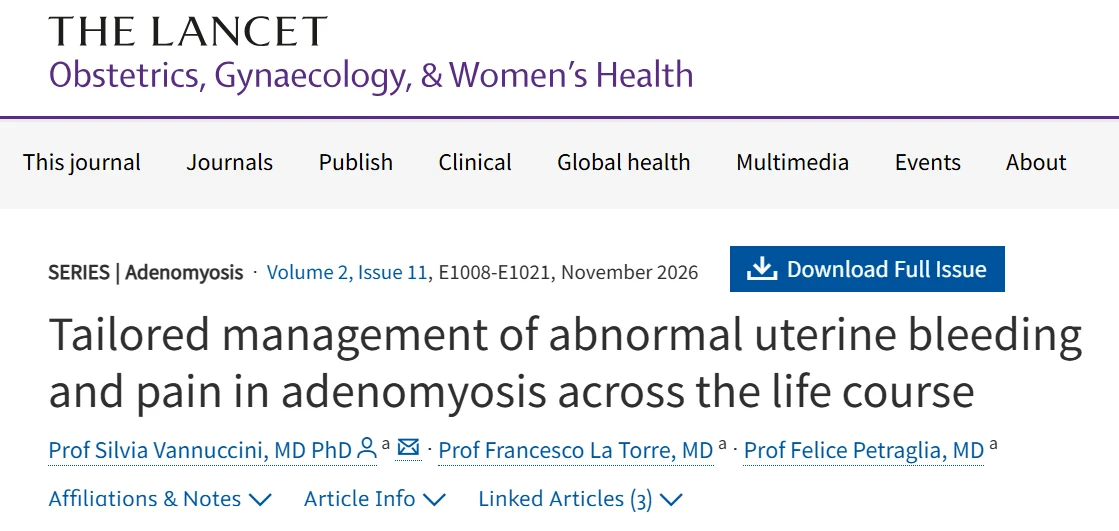
Title: Tailored management of abnormal uterine bleeding and pain in adenomyosis across the life course.
Authors: Silvia Vannuccini, Francesco La Torre, Felice Petraglia.
You can read the Full Article in The Lancet Obstetrics, Gynaecology, and Women’s Health.
Stay informed with the latest updates in fertility and reproductive medicine on Fertility News.
-
Nov 5, 2026, 17:55Arsiak Vartenian: I Spent 8 Years Trying to Become a Mother
-
Nov 5, 2026, 17:48Anita Guru: My IVF Journey Series, Part 2 of 5
-
Nov 5, 2026, 17:40Lucy Froese: Your Emotional Wellbeing Matters, Whatever Happens Next
-
Nov 5, 2026, 17:35Resa Nabor: What You Need to Know About PCOS and PCOM
-
Nov 5, 2026, 17:23Alejandro Chavez-Badiola: First-in-Human Cohort – 42 Cycles Treated with Conceivable’s Automation-Assisted Systems
-
Nov 5, 2026, 17:11Karen Czeloth: Introducing Myself and the Thinking Behind My Work This Movember
-
Nov 5, 2026, 17:08David Crosby Has Been Appointed Clinical Associate Professor at the UCD School Of Medicine – Merrion Fertility Clinic
-
Nov 5, 2026, 17:03Iris Lam: Moderating “AMA-Navigating Fertility and IVF After 35” On November 19
-
Nov 5, 2026, 16:49A Press Release Roundup Fresh Off the Heels of ASRM 2026