
Devyanshi Dixit: Can We Really Pause the Biological Clock?
Devyanshi Dixit, Program Manager at CLS Event and Publication and Conference Manager at the 12th Global Summit on Gynecology, shared on LinkedIn:
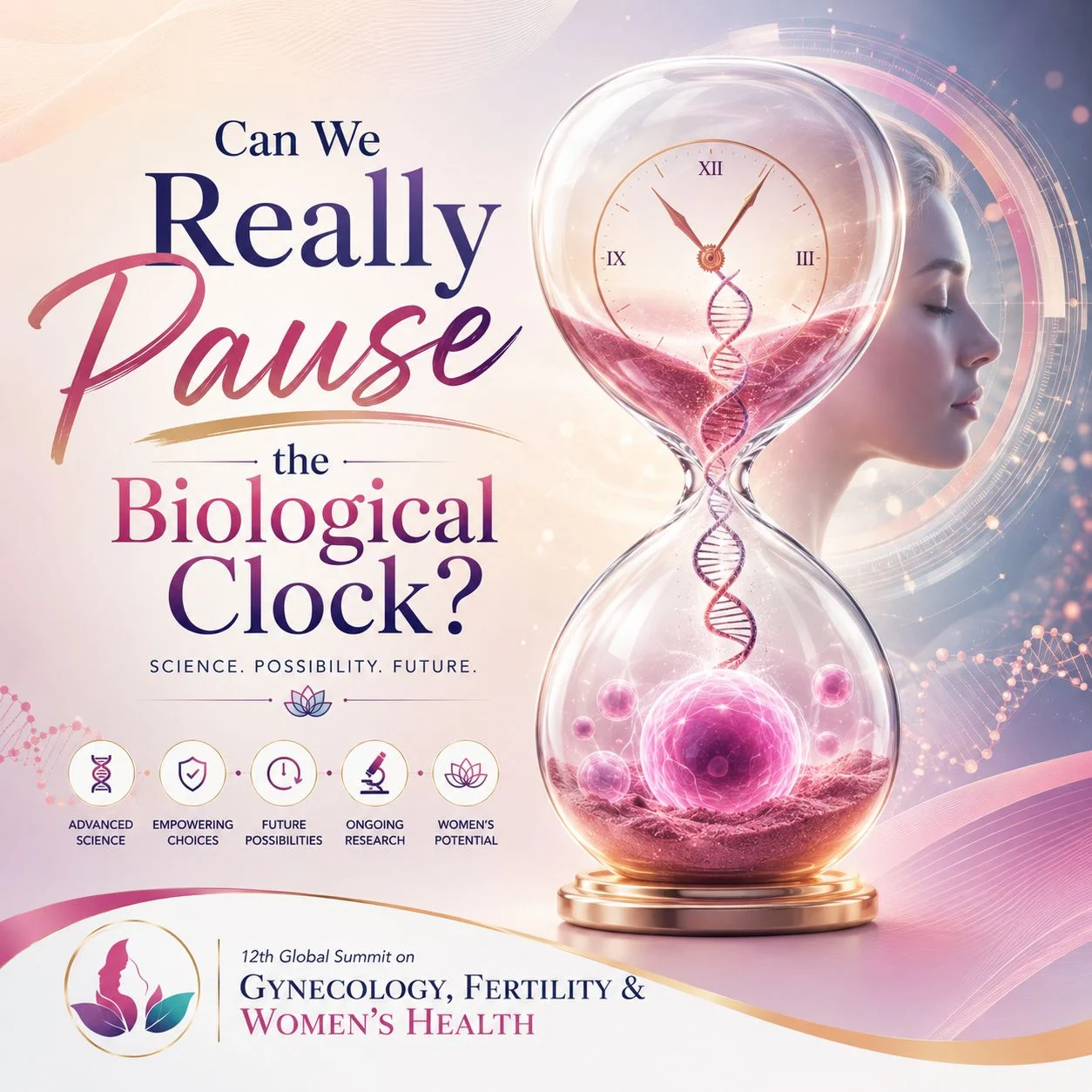
”Can We Really Pause the Biological Clock?
For years, women have been told that fertility comes with a ticking biological clock.
But modern reproductive medicine is challenging one important question:
Can we pause the clock – or only preserve what we have today?
The answer is more nuanced than a simple yes or no.
- Ovarian aging continues
Egg quantity and quality naturally change with age. Fertility preservation does not stop the biological aging process.
- Egg freezing can preserve potential
Vitrification allows unfertilized eggs to be stored for future use. The important point? We preserve the eggs-not fertility itself.
- Embryo freezing offers another pathway
For some individuals, embryos created through IVF can be cryopreserved for future treatment.
- Ovarian rejuvenation is being investigated
PRP, stem-cell approaches, and other regenerative strategies are being studied-but many remain experimental and require stronger evidence.
- Ovarian reserve testing provides information – not a crystal ball
Markers such as AMH and antral follicle count can help assess ovarian reserve, but they cannot precisely predict an individual’s natural fertility or guarantee future pregnancy.
So, Can We Really Pause Time?
Not yet.
But reproductive medicine can increasingly help us preserve reproductive options, understand ovarian health earlier, and make more informed decisions about family planning.
The future may not be about stopping the biological clock.
It may be about understanding it earlier – and using science wisely before time becomes the limiting factor.
At the 12th Global Summit on Gynecology, Fertility and Women’s Health (GFWΗ 2026), experts will explore advances in fertility preservation, IVF, reproductive endocrinology, cryopreservation, precision fertility, and emerging reproductive technologies.
- November 23 – 24, 2026
- Bangkok, Thailand
We may not be able to stop the biological clock – but we may be learning how to plan better around it.”
Other articles featuring GFWH 2026 on Fertility News.
-
Aug 26, 2026, 19:16Peta Titter: We Prepare Women for Birth, Not for Who They Are after It…
-
Aug 26, 2026, 19:07Bob Miglani: Why Fertility Patients Walk Away
-
Aug 26, 2026, 18:56Entisar Elmuntasar: 2 Oocytes Within 1 Zona Pellucida
-
Aug 26, 2026, 18:46David Huang: The Largest Real-World Study of GLP-1s in Women with PCOS
-
Aug 26, 2026, 18:31Akinrolayo Faith: Can Technology See What the Human Eye Might Miss?
-
Aug 26, 2026, 18:20Marco Zaccaria: Archimyometrium – The Innermost and Phylogenetically Oldest Layer of the Myometrium
-
Aug 26, 2026, 18:14Marian (Dani) Steininger: Menopause Is So Simple, But It’s Also So Complicated
-
Aug 26, 2026, 16:15Dana Culp: You’re Waiting for Hot Flashes – That’s Not What Most Women in Perimenopause Report First
-
Aug 26, 2026, 16:08Dairo David: The Embryo Is Important, but What About the Endometrium?