

Susanne Mitschke: Weight-Loss Drugs for Endometriosis?
Susanne Mitschke, CEO and Co-Founder of Citruslabs, shared on LinkedIn:
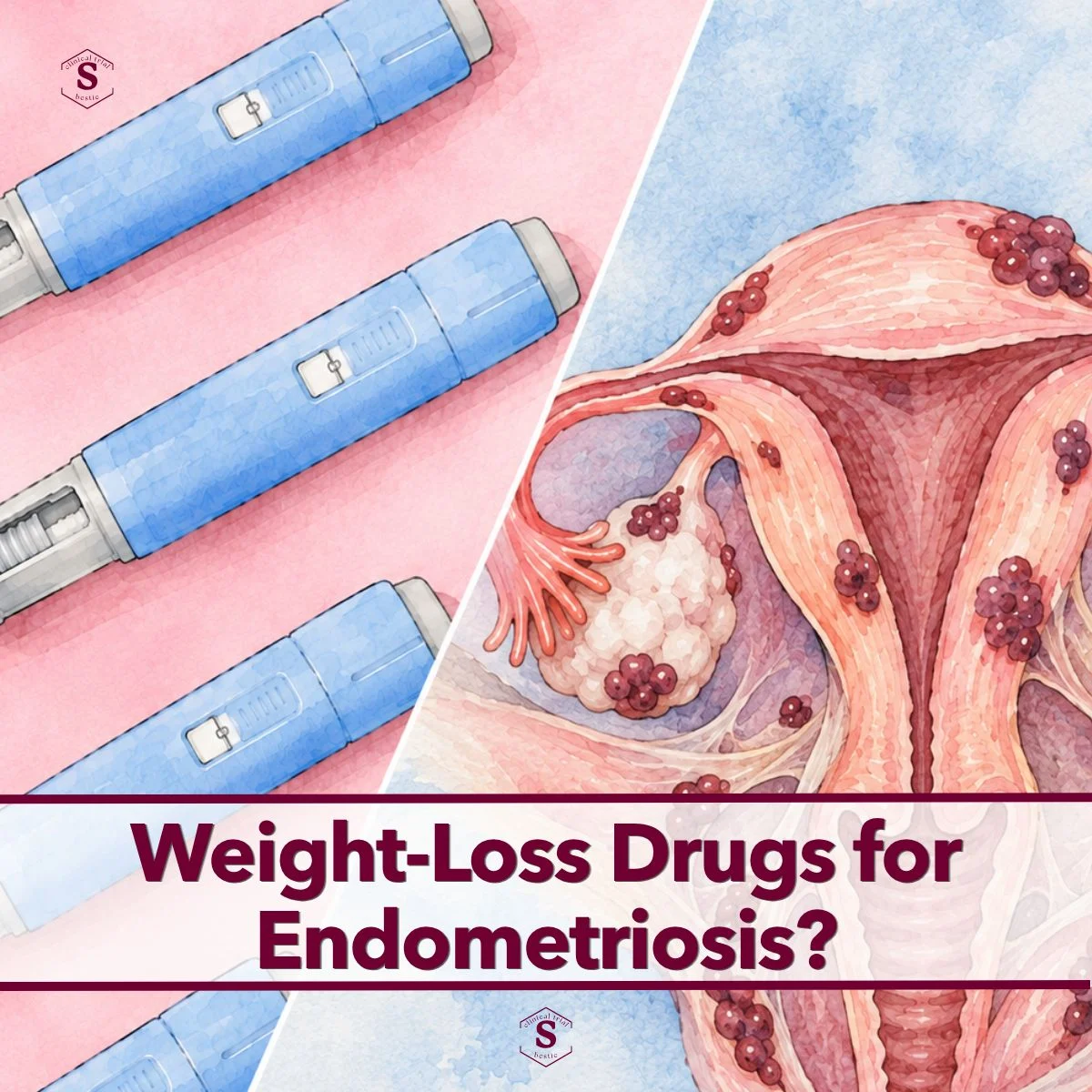
“2 out of 3 women with endometriosis who take a GLP-1 drug say at least one of their symptoms got better.
1/3 say one symptom went away completely.
And of course, nobody designed these drugs for endometriosis.
That comes from a survey led by Mathew Leonardi at McMaster University, posted as a preprint in February 2026:
- 161 women with confirmed or suspected endometriosis who were taking semaglutide or tirzepatide, mostly for weight loss.
- 64.6% reported an improvement in at least one endometriosis symptom, most often pelvic pain, the bloating women call endo belly, and lower back pain.
- 33.7% of those said a symptom had resolved entirely.
- And among the women who stopped the drug, 60% said the symptoms came back.
Before anyone gets excited (I admit I did), this is a survey of people who chose to answer it.
It is not peer-reviewed yet, and it cannot tell you whether the drug did this, the weight loss did this, or feeling better in general did this.
I would treat this as a loud signal, though, and there is a reason it might be real.
For a long time, endometriosis was treated as a hormone problem in the pelvis: tissue that behaves like uterine lining growing where it shouldn’t, fed by estrogen.
The newer view is that it is an inflammatory disease of the whole body, with immune cells, scar tissue, and oversensitized pain nerves doing a lot of the damage.
Every approved drug for endometriosis still works by shutting off estrogen. But none of them touch the inflammation.
GLP-1 drugs, on the other side, do touch the inflammation.
In lab models, they lower the same inflammatory signals that keep lesions alive, they reduce the proteins that turn lesions into stiff scar tissue, they seem to switch progesterone receptors back on in endometrial tissue (which matters, because many women stop responding to standard progestin treatment for exactly that reason).
And, they act on the immune cells in the brain and spinal cord that keep chronic pain going.
Separately, fat tissue makes estrogen, so losing it lowers the fuel supply. Five different ways to reach a disease that currently has one.
A few things to know if you are on one of these drugs and have endometriosis.
They slow down your stomach, so oral progestins, the pill, and pain medication may not be absorbed the way they used to.
Endometriosis affects women of every body size, so the weight loss part of the story does not apply to everyone.
And none of this means you should start a GLP-1 for your endometriosis.
What I would love to see, though, is that someone should fund the trial. 190 million women have this disease; it currently takes 7 to 10 years to get diagnosed; half the women who have surgery need another one within five years; and the last genuinely new idea in treatment is from a long time ago.
If you have endometriosis and happen to be on a GLP-1, I would like to hear what you noticed.
Please share your experience in the comments.”
Other articles featuring Susanne Mitschke on Fertility News.
-
Oct 22, 2026, 15:58Saadat Hassan: Oil-Free Embryo Culture – Is Oil Still Essential?
-
Oct 22, 2026, 15:35Devyanshi Dixit: What If the Next Clue to Endometriosis Is Already Circulating in the Blood?
-
Oct 22, 2026, 15:33Andrew Kelleher: Looking to Grow Kelleher Lab at the University of Missouri
-
Oct 22, 2026, 15:22Beth Zoneraich: Pinnacle Fertility Team Is Heading to the ASRM 2026
-
Oct 22, 2026, 15:18Kim Schamroth: Honored to Be Representing EraBorn and EDN at ASRM 2026
-
Oct 22, 2026, 15:13Becca DiCondina Has Been Appointed Clinical Science Specialist at CooperSurgical
-
Oct 22, 2026, 15:11Devyanshi Dixit: Can a Pap Smear Help You Get Pregnant?
-
Oct 22, 2026, 15:08Registration for RISE 2027 Is Open – ASRM
-
Oct 22, 2026, 15:04New RBMO Study Suggests Ethnic and Genetic Differences May Influence Ovarian Stimulation Response