

Kevin Lee: Bridging the Recognition Gap for ME/CFS Patients
Kevin Lee, Specialist physician (nuclear medicine and endocrinology) at Qscan Group, shared a post on LinkedIn:
“The Common Chronic Disease We Aren’t Talking About
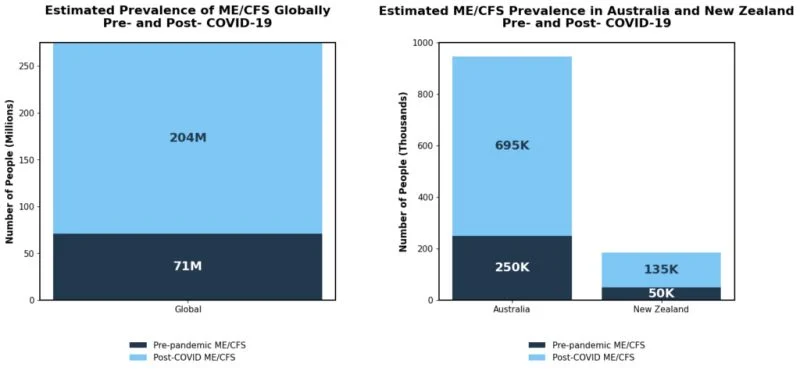
As a physician who sees many patients referred for Long COVID and MECFS (Myalgic Encephalomyelitis), one of the most challenging aspects isn’t just the misdiagnosis or the delayed diagnosis – it’s the persistent misconception that this condition is rare.
Based on current estimates, there are potentially 900,000+ Australians living with an ME/CFS features since the pandemic began.
The Scale of the Challenge
If these estimates are correct, ME/CFS has surged into one of the most common chronic diseases in Australia:
- All Cancer Survivors (5-year): ~528,000 (ME/CFS is nearly double)
- Endometriosis: ~830,000–850,000 (ME/CFS has surpassed even this widespread condition)
- Rheumatoid Arthritis (RA): ~450,000 (ME/CFS is double)
- Stroke (Survivors): ~450,000 (ME/CFS is double)
- All forms of Dementia: ~433,000 (ME/CFS is double)
- Myocardial Infarction (Heart Attack Survivors): ~430,000 (ME/CFS is double)
- Inflammatory Bowel Disease (IBD): ~180,000 (ME/CFS is 5x more common)
- Type 1 Diabetes: ~120,000 (ME/CFS is 7.5x more common)
- Multiple Sclerosis (MS): ~38,000 (ME/CFS is roughly 23x more common)
- Lupus (SLE): ~20,000 (ME/CFS is roughly 45x more common)
- Motor Neuron Disease (People may remember the Ice Bucket challenge): ~2,800 (ME/CFS is over 300x more common)
Why this matters to us as Endocrinologists
While ME/CFS is a multi-systemic illness, these patients frequently present to endocrinologists with symptoms that mimic or overlap with primary hormonal dysfunction:
- HPA axis dysregulation, male hypogonadism, ‘flat’ cortisol profiles, low T3 syndrome.
- Dysmetabolism, weight gain/loss, bioenergetic dysfunction.
- Autonomic dysregulation and orthostatic intolerance (POTS).
The Recognition Gap
Despite being more prevalent than many conditions that have alot more funding, that have better access to hospitals, specialised clinics, and massive research budgets, ME/CFS remains disproportionally much much disadvantaged and under-recognised.
Patients are still fighting for:
Validation: Moving beyond the ‘it’s just fatigue’ stigma.
Clinical Infrastructure: Our current system is not built for a patient load of a million people.
Research Funding: We need the science to move from ‘diagnosis’ to ‘treatment.’
We can no longer treat ME/CFS as a ‘niche’ concern. It is a mainstream public health priority. As clinicians, we must bridge the gap between these statistics and the quality of care provided on the ground.”
Stay updated on all scientific advances in the field of fertility with Fertility News.
-
Oct 11, 2025, 06:44The Global IVF Market Is Set to Reach $65B by 2032 – Meddilink
-
Feb 22, 2026, 17:50New Research on Oocyte Quality Challenges in DOR – RBMO
-
Feb 22, 2026, 06:58Ronell Martz: Fertility Preservation CME with Maria Costantini-Ferrando
-
Feb 22, 2026, 06:25Master Embryo Transfer Techniques at EFRE Conference 2026 – EFRE
-
Feb 22, 2026, 06:11New Insights into Comorbidities in Adenomyosis Patients – RBMO
-
Feb 22, 2026, 06:02New Evidence-Based Recommendations on Infertility – ESHRE
-
Feb 22, 2026, 05:54Sadashiva Pai: Breakthroughs in Ovarian Microenvironment for Infertility
-
Feb 22, 2026, 05:47Revolutionizing Uterine Drug Development with Dynamic Imaging – Fidēs Imaging
-
Feb 22, 2026, 04:58Christy Kenady: Innovations in Women’s Health for Military Servicewomen
-
Feb 21, 2026, 10:18Ashok Yadav: Placental Syncytial Microparticles Release into Maternal Circulation