
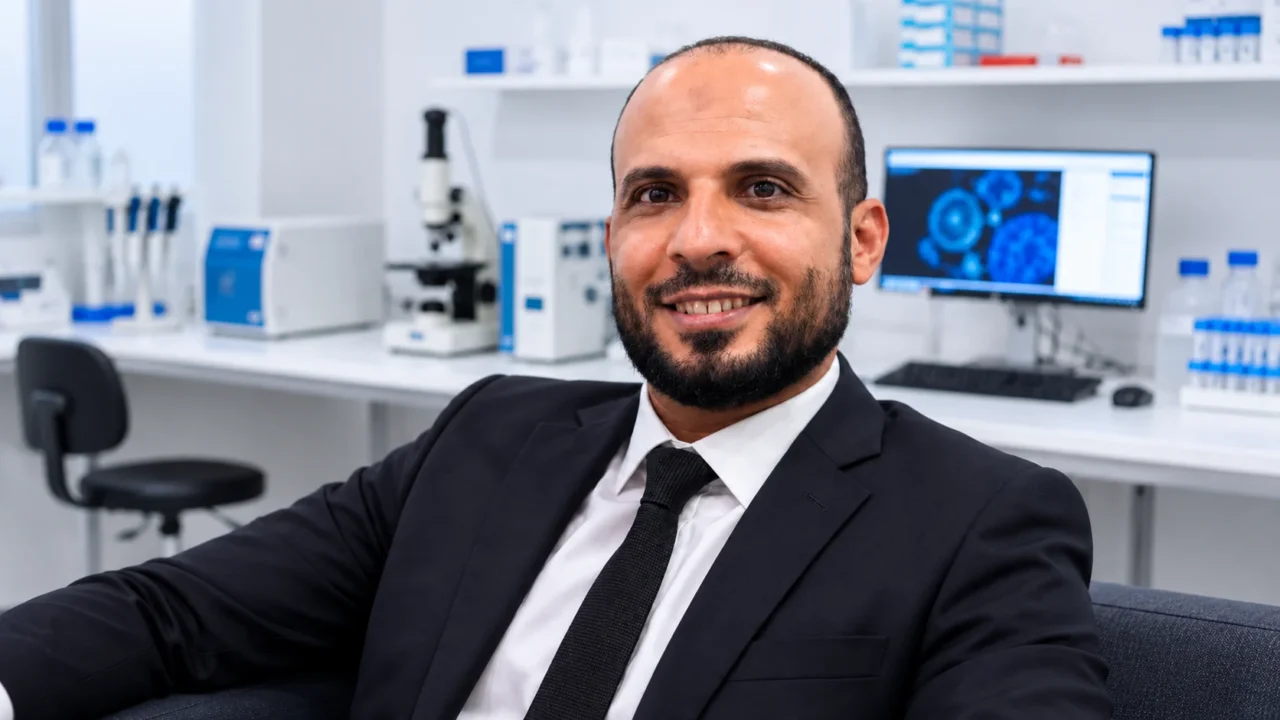
Khalil Faaed: The Hidden Genetic Defects That Can Stop Human Embryo Development
Khalil Faaed, Embryologist at Modern IVF Center, shared on LinkedIn։
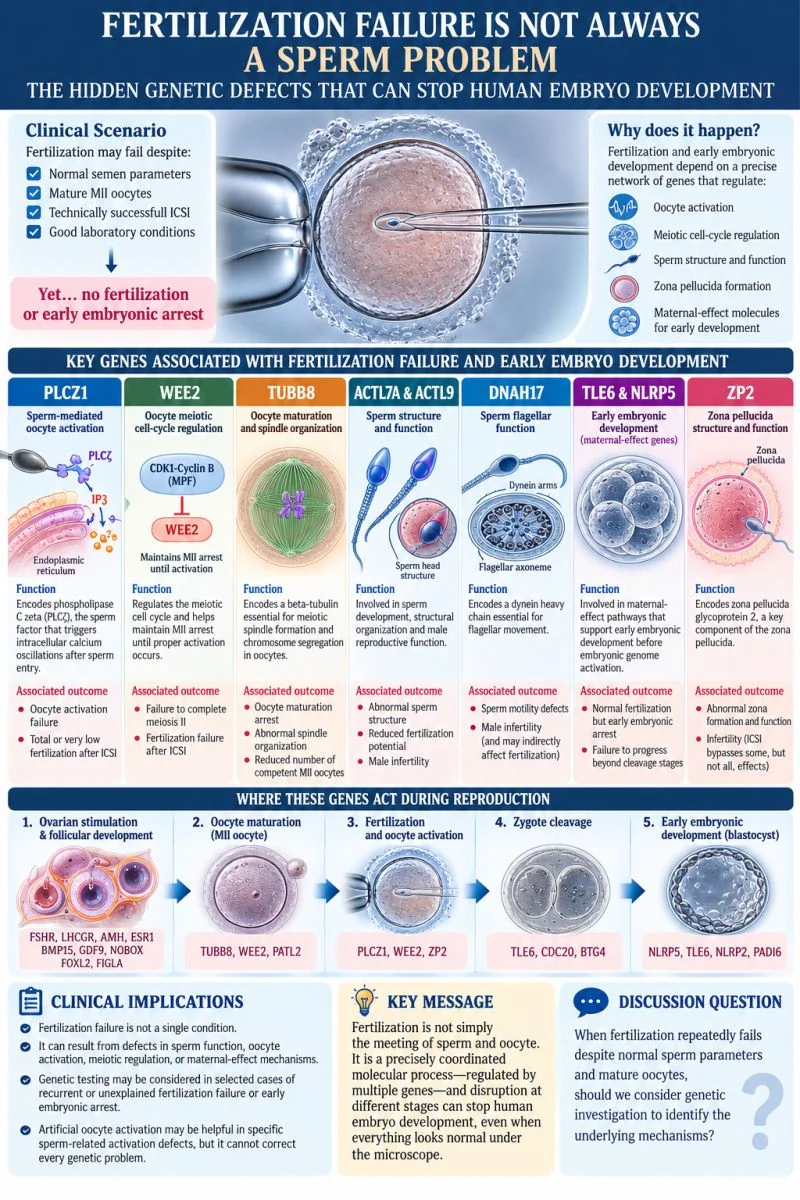
“Fertilization failure is not always a sperm problem: the hidden genetic defects that can stop human embryo development․
Normal sperm. Mature oocytes. ICSI performed. Yet fertilization fails. WHY?
Sometimes, the answer lies beyond what we can see under the microscope in the genes controlling the most fundamental events of human reproduction.
The hidden genetic players․
- PLCZ1: When the sperm fails to trigger the calcium signals required for oocyte activation.
- WEE2: When the oocyte’s cell-cycle machinery cannot respond appropriately.
- TUBB8: When defects in spindle organization disrupt oocyte maturation.
- ACTL7A, ACTL9 and DNAH17: When genetic abnormalities affect sperm structure or function.
- TLE6 and NLRP5: When the molecular machinery supporting early embryonic development is disrupted.
- ZP2: When abnormalities in the zona pellucida affect reproductive function.
The most important lesson? Fertilization is not simply the meeting of sperm and oocyte. It is a precisely coordinated molecular process – and disruption at different stages can lead to very different reproductive outcomes.
For clinical embryologists, the challenge is to look beyond the fertilization result and investigate the biological mechanism behind it.
A question for the IVF community: When fertilization repeatedly fails despite apparently adequate sperm parameters and mature oocytes, are we looking deeply enough at the underlying genetic mechanisms?”
Other articles featuring Khalil Faaed on Fertility News.
-
Oct 13, 2026, 16:58Slavian Bumbu: A Low AMH Is Not an Infertility Diagnosis
-
Oct 13, 2026, 16:43Keshav Malhotra: No Embryologist or Laboratory Technique Can Guarantee Euploid Embryos
-
Oct 13, 2026, 16:37Tony Gordon: What Is the Most Successful Form of Fertility Treatment?
-
Oct 13, 2026, 16:29IVI RMA Global Introduces IVI Fertility
-
Oct 13, 2026, 16:12Devyanshi Dixit: PCOS May Be One Diagnosis, But Is It One Biological Disease?
-
Oct 13, 2026, 16:00Rajeev Agarwal: Age and Male Fertility, Through the PREPARE Method
-
Oct 13, 2026, 15:505 Years of the Patient Engagement Forum – HFEA
-
Oct 13, 2026, 15:41Cell-Free Fetal DNA Testing for Single-Gene Conditions – RCOG
-
Oct 13, 2026, 15:24Somil Singhal: Method for Enhancing Embryo Implantation Using Embryo Glue and Its Importance